JEE Main 2026 Results Analysis: Prime Academy Pune Delivered Nearly 10x More 99 Percentilers. Here’s How
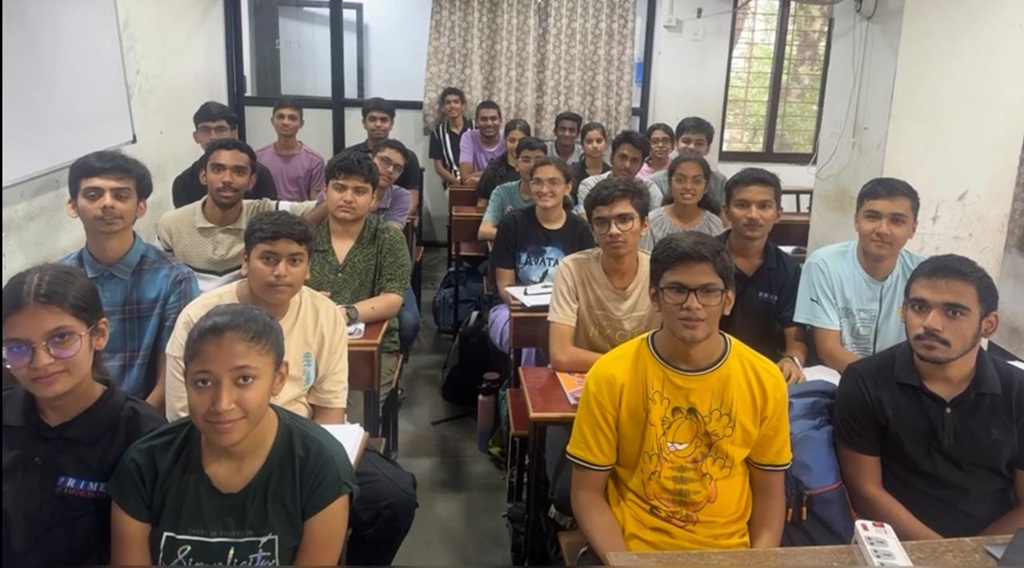
Pune, 21st April 2026: The JEE Main 2026 results are out, and this year’s paper was significantly tougher than recent years. Chemistry questions, in several cases, went beyond direct NCERT lines, Mathematics was unusually time-consuming, and students across the country reported feeling rattled after the exam. Attempt rates dropped, and the gap between those who kept their composure and those who panicked has never been wider.
But here’s what’s interesting: the students who scored high in 2026 didn’t necessarily know more content than everyone else. They approached the exam differently. They attempted fewer questions, not more. They stayed calm when the paper looked difficult. And they used a handful of simple strategies that anyone can learn.
Why This Year’s Paper Caught Everyone Off Guard
JEE has been quietly changing. It’s no longer just about how much of the syllabus you’ve covered. It’s becoming a test of how well you handle pressure. Chemistry, in particular, has become unpredictable. This year’s paper included questions that required deeper thinking rather than simple formula recall, and many well-prepared students were caught off guard.
And if JEE Main 2026 was tough, JEE Advanced is showing even bigger changes. Recently, JEE Advanced 2025 included a large proportion of questions without options, making them high-risk attempts and the cut off dropped to as low as 22%. This is part of a longer trend. Decades ago, the exam was subjective. If your approach was correct but you made a small error at the end, you still got partial marks. Then came the multiple-choice format. Partial marking was gone, but options still gave you a way to catch your own mistakes. A quick 10-second recap of the choices could help you spot a dropped unit or a sign error. Smart techniques like elimination or substituting values back into the problem could save you on tricky questions. Now, with these “unassisted” problems where you type in a numerical answer with no options at all, even that last line of defence is gone. The result is that cutoffs in recent years have dropped significantly. Students today have neither the partial credit of the subjective era nor the debugging help of multiple-choice options. Every answer has to be exactly right, on its own, with nothing to fall back on. That demands a level of carefulness that previous generations of JEE aspirants simply didn’t need.
How Prime Academy Pune Prepared for Exactly This
One coaching institute that saw this shift coming is Prime Academy in Pune. Their 2026 results reflect this preparation: Avishi Pandey scored 99.97 percentile, Ishan Bushana scored 99.93 percentile, over 15 out of 176 students scored above the 99th percentile, and almost half of the batch qualified for JEE Advanced. That’s a qualification ratio that ranks among the highest in the country.
So what did they do differently? Lalit Kumar, CMD of Prime Academy, says the key was training students for the temperament required in a tough exam, not just the content.
“The students who scored the best weren’t the ones who knew the most; they were the ones who had the discipline to slow down,” he says.
“When a paper is difficult, rushing leads to negative marking and wasted time. A calm approach helps you prioritise accuracy over volume.”
What Students Should Do Next
As the focus shifts to JEE Advanced, Prime Academy is maintaining its momentum with daily revision lectures and mock tests designed to keep students on this precise track.
“Since the same team of teachers has been with these students from the beginning of the course, we know every student’s strengths and weaknesses clearly,” says Lalit Kumar. “Accordingly, the frequency and structure of mock tests are tailored to each student. At this stage, it is crucial to identify your strongest topics and double down on them. Knowing a few topics in depth matters far more than knowing every topic superficially. High-scoring areas like Modern Physics, Thermodynamics, Coordinate Geometry, Biomolecules, and Surface Chemistry must be done thoroughly.”
Equally important is what happens after each mock test. A proper test analysis, Kumar emphasises, should not treat every question the same. Ignore the questions you solved easily and the ones that were completely out of reach. Instead, focus on the problems you almost got right but missed by a small margin, maybe because a concept was 90% clear but not fully locked in. Go back to your notes specifically for these middle-ground problems. This targeted approach ensures that a minor conceptual gap doesn’t become a lost mark on exam day.
“JEE Advanced is an exam where, more than the result itself, it is the preparation that makes a student special,” says Lalit Kumar. “The analytical skills, time management, and the ability to handle stress at this age are qualities that stay with you for life. So keep your head down and continue focusing on the hard work.”