Journalism Course in India: How AAFT University Raipur Mentors the Next Media Voices
Raipur (Chhattisgarh), 26th August 2026: What does it take to become the next credible voice in journalism? It takes more than reporting and media theory. A journalist also needs the confidence to face a camera, ask the right questions and tell stories that matter. A good journalism and mass communication course in India should build all of this. It should help a student find their voice and use it well. AAFT University Raipur is built for exactly that, and students report, anchor, produce and edit from the first semester.
They also learn from real mentors. The School of Journalism and Mass Communication is guided by Industry Dean Faye D’Souza, one of India’s most respected broadcast journalists, along with working media professionals. For anyone looking at a mass communication course with real practice and real guidance, this is a strong choice.
The degrees are taught at the AAFT University Raipur campus in Chhattisgarh, through the School of Journalism and Mass Communication. Admissions for the 2026 batch are now open.
Is Journalism a Good Career in India?
Yes. News, digital media and OTT are all growing fast. Newsrooms, brands and agencies all need trained media people. So a media course opens many career paths today.
A few figures show the scale:
- India’s media and entertainment sector is set to reach about US$36 billion by 2027 (FICCI-EY).
- Digital news and OTT are among the fastest-growing parts of this sector (FICCI-EY).
- The shift to digital keeps creating new roles in content, video and social media.
Where Do You Find Your Media Voice?
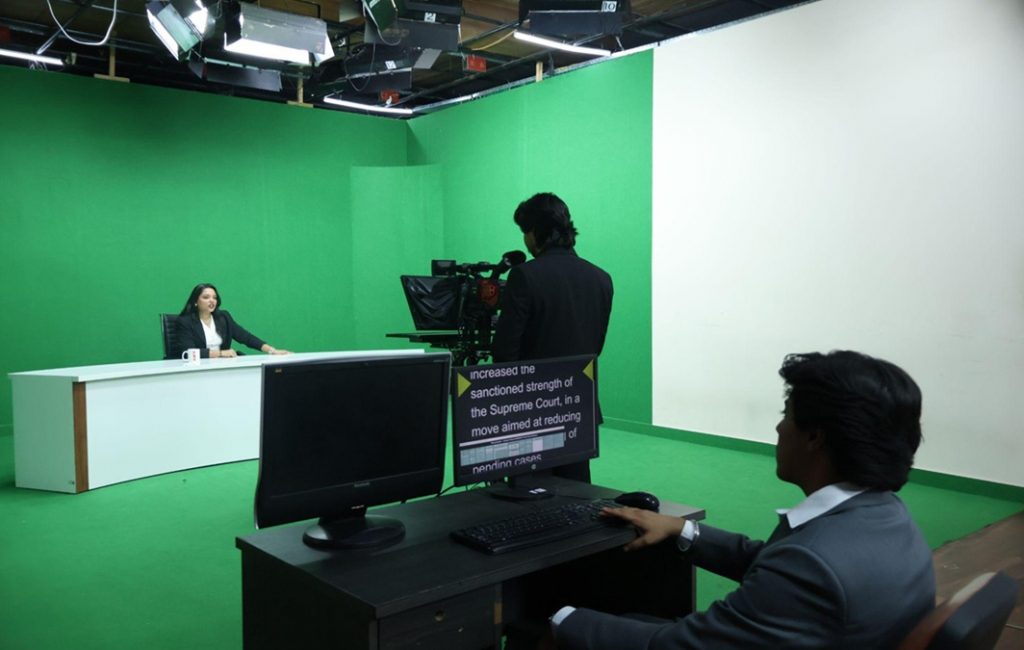
The campus works like a real media house. Students do not wait to practise. They create real content on the university’s own platforms from early on.
| In-House Platform | What You Create |
| TV Studio | Live news bulletins and shows |
| Radio Raipur | Radio shows and podcasts |
| Newsroom | Reporting, writing and editing |
| Digital Desk | Web content and social media |
Students also take part in field reporting, newsroom simulations, film festivals and media conclaves. By the final year, working on real media feels normal, not new.
Who Mentors You?
The School’s Industry Dean is Faye D’Souza, one of India’s most respected journalists. She is known for fearless, people-first reporting and for building independent journalism in India. Formerly the face of Mirror Now, she now runs her own independent digital news platform, Beatroot News.
Her role as Industry Dean brings real newsroom standards to the classroom. Students also get regular masterclasses, mentorship and practical insights from working media professionals. This mentorship is one of the reasons AAFT is recognised as one of the best journalism colleges in Raipur, Chhattisgarh.
Which Journalism Degrees Can You Study?
AAFT University Raipur offers full degrees, not short courses. Whether you want a journalism course after 12th or a postgraduate route, there is a clear path. The BA in Journalism and Mass Communication is the main entry point, with an Honors option for extra depth.
| Programme | Level | Duration | Credits |
| B.A. (Journalism and Mass Communication) | Undergraduate | 3 Years | 120 credits |
| B.A. (Honors) (Journalism and Mass Communication) | Undergraduate | 4 Years | 160 credits |
| M.A. (Journalism and Mass Communication) | Postgraduate | 2 Years | Advanced level |
Eligibility is a 10+2 pass with 50% marks (45% for reserved categories). Admission is through the AAFT Global Entrance Exam (AAFT GEE).
What Will You Learn and Master?
The course covers the full media field. You learn reporting and editing, TV production, radio, public relations and advertising. You also learn video editing, sound recording, development communication and media entrepreneurship.
The course is also built for today’s media. It covers AI and data-driven journalism, mobile journalism (MOJO), and social media. You train on tools like Adobe Premiere Pro, Audition, DaVinci Resolve and Avid Media Composer, plus radio software. You can also earn short certifications in fact-checking, media ethics and social media management. This modern mix suits anyone taking a BJMC course in Raipur.
What Jobs and Salary Can You Expect?
Journalism graduates work as reporters, anchors, producers, PR specialists and content creators, and pay grows with your skills and your portfolio. Pay grows with your skills and your portfolio. Junior roles usually start around ₹3 to 5 LPA. This rises to ₹6 to 12 LPA with experience, and higher for senior editors and communication leads. These are industry estimates, not figures promised by AAFT University.
| Career Role | Where They Work | Typical Salary (industry estimate) |
| Reporter / News Anchor | TV news, digital news, radio | ₹3–5 LPA |
| Content Creator / Video Journalist | Digital media, OTT, social | ₹3–6 LPA |
| PR / Corporate Communication | PR agencies, corporates, government | ₹4–8 LPA |
| Producer / Editor / Media Planner | Newsrooms, media houses | ₹6–12 LPA |
Who Teaches at the School of Journalism?
Alongside Industry Dean Faye D’Souza, students learn from faculty with real media experience:
- Ms. Ankisha Mishra — Assistant Professor with 8+ years across academia and media, formerly with Sahara News and Red News Network. An expert in radio, new media, PR and documentary, she leads Radio Raipur.
- Ms. Rashmi Priya — Assistant Professor at the School of Journalism and Mass Communication.
In Their Own Words
Dr. Sandeep Marwah, Founder, AAFT University, said: “Journalism is about finding your voice and using it with responsibility. Our Raipur campus gives students the tools and the mentors to do this from day one. They report, anchor, produce and edit on real studios and on our own radio station. With an Industry Dean like Faye D’Souza guiding them, they learn the craft from someone who has lived it. That is how we prepare the next media voices of Central India.”
Placements and Industry Connect
A dedicated Career Resource Cell works with students from the start. Its placement network includes news channels and media houses such as R Bharat, India TV, NDTV and News India. Students also intern with media houses, production studios, and corporate and government communication teams.
As part of the AAFT group, the university connects students to a 30,000+ alumni network across India and abroad. For students looking at a journalism course in Raipur, that mix of real studios, strong mentors and a wide network is hard to match.
Admissions Open for 2026
Students who have finished 10+2 from any recognised board can apply for the B.A. in Journalism and Mass Communication. Graduates can apply for the M.A. Applicants need at least 50% marks in 10+2 (45% for reserved categories) and must clear the AAFT Global Entrance Exam (AAFT GEE).
Seats are limited for the 2026 batch. Students can apply at admissions.aaft.edu.in or visit the AAFT University Raipur campus for a studio tour and a free counselling session.
About AAFT University Raipur
AAFT University of Media and Arts is a UGC-approved private university in Raipur, Chhattisgarh. It was founded in 1993 by Dr. Sandeep Marwah and is part of the AAFT group’s 33-year legacy in media and arts education.
The university runs 100+ programmes across 15 schools from a 27-acre campus in Raipur. It is ranked among the top 10 globally in media education, with a 30,000+ alumni network worldwide. Its journalism school has an in-house TV studio, a radio station, a film production house and digital newsroom labs, so students train in a real media setup.
For Admission and Media Inquiries, Contact:
AAFT University, Raipur
Campus: Vill. Manth, Kharora, District Raipur, Chhattisgarh – 493225
Admission Office: GF-18, Shyam Plaza, Pandri, Raipur, Chhattisgarh – 492001
Phone: +91-9109112078 / +91-8064057209
Website: www.aaft.edu.in
Apply: admissions.aaft.edu.in