LPG Price Hike Hits Pune Street Food Vendors Hard, Businesses See 50% Drop
Reported by Radhika Sharma
Viman Nagar, 20th March 2026: Eateries remain closed, student accommodations are suspending food service, and the hospitality industry is in shambles. But there is a sector that remains unheard.
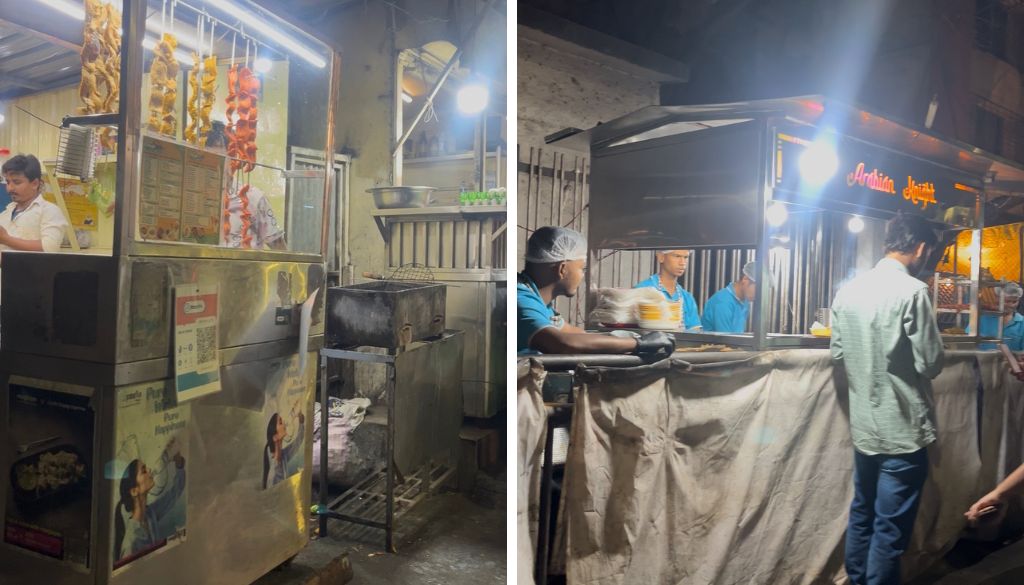
This demographic of street-food vendors comes from local households who rely heavily on the supply of affordable LPG cylinders suffers from this lack of business and a hike in prices for cooking fuel.
There has been an approximately 50 per cent drop in overall business, with some having to suspend major menu options as they lack the resources to offer anything else.
Some are heavily rationing their previous stock of LPG cylinders because buying a new one would require investing Rs. 1200 from their day’s earnings. “We’ll switch to coal and burners if these prices prevail. I will also have to increase the prices of the food; anyway, I’m not making half the things like samosa chaat or ragda pattice, which has cut my earnings almost in half.”
Another vendor had similar concerns after building his business for about seven years and expanding the stall to sell Chinese street food. Because of the scarcity of LPG cylinders and those available being too expensive, he’s back to selling just tea again.
At Delhi Chaap Express, when asked about the LPG crisis and the blow their business might have taken, “The owner shuts the shop when there’s no cylinder, all 18 of them. We get food supplies and everything from them, but the salary only comes for the days the shop was open.”
We speak of this at a time when the Government of India has recently announced Additional Allocations for the setup of City Gas Distribution (CGD) Committees to oversee and fast-track the distribution timeline of Piped Natural Gas (PNG) for both commercial and domestic usage. So, the question arises, does this initiative really help those at the bottom of the “food” chain?
With prices hiking at a rapid pace, from a steady Rs 856 throughout 2025, and well into February 2026, the prices have now reached Rs 916 in Pune, to a striking Rs 964 in Aurangabad. In cases of small business owners and vendors, local suppliers are raising prices as a last resort, ultimately widening the gap between what these vendors can afford and what they need to stay open.
The Government of India has recently (18 March 2026) announced additional allocations for the setup of City Gas Distribution (CGD) Committees, aimed at fast-tracking the rollout of Piped Natural Gas (PNG) for both commercial and domestic use. In principle, PNG offers a cleaner and more cost-stable alternative to LPG cylinders, a permanent supply line rather than a purchased canister. For struggling vendors, it sounds like a solution. In practice, the gap between policy and pavement is vast. PNG infrastructure requires fixed installation and a formal connection, neither of which suits the mobile, informal nature of street vending. Commercial connections also come at rates far higher than domestic ones. “It might help, but for that, it should reach us, and we cannot even get it at domestic rates, for a business, they won’t let us,” one vendor said plainly. Another acknowledged the initiative could benefit households, but saw little in it for stall owners like himself. Without targeted provisions for the informal sector, flexible connections, subsidised commercial rates, or mobile distribution points, the PNG rollout risks becoming another reform that helps those already connected while leaving the most vulnerable behind.
As of now, no specific provisions under the CGD rollout address the informal vending sector. Commercial PNG rates remain inaccessible to small operators, and there is no announced timeline for subsidised connections or mobile distribution. LPG prices in Pune have risen by roughly 7 per cent since February alone, with no indication of a rollback. On the street, that math is simple: the man who spent seven years building a Chinese food stall is back to selling tea, and the vendor who made Rs 2000 per day is stretching his last cylinder. The policy gap and the practical one, for now, are the same.