New Career Opportunities for Youngsters in Underwater Domain
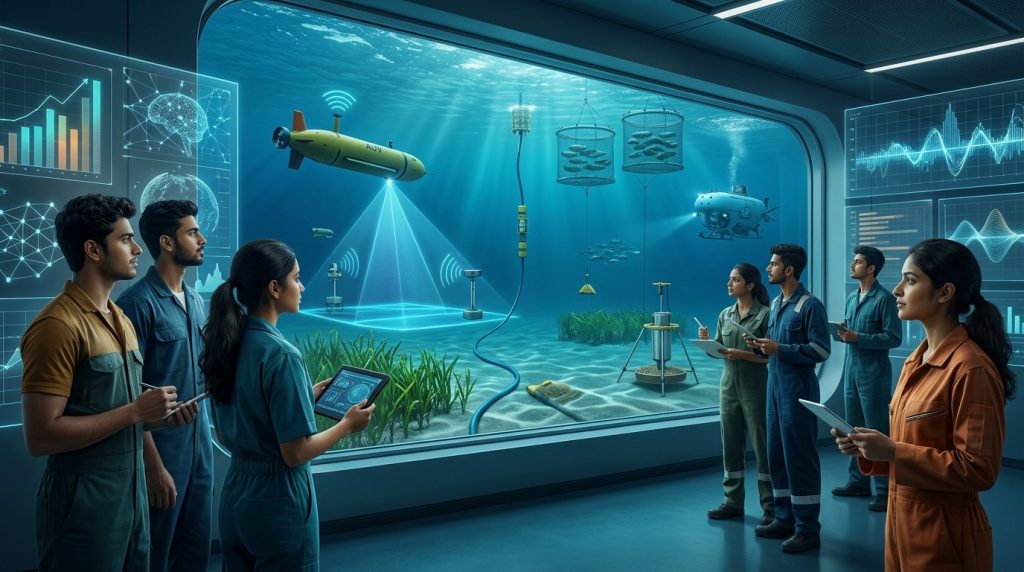
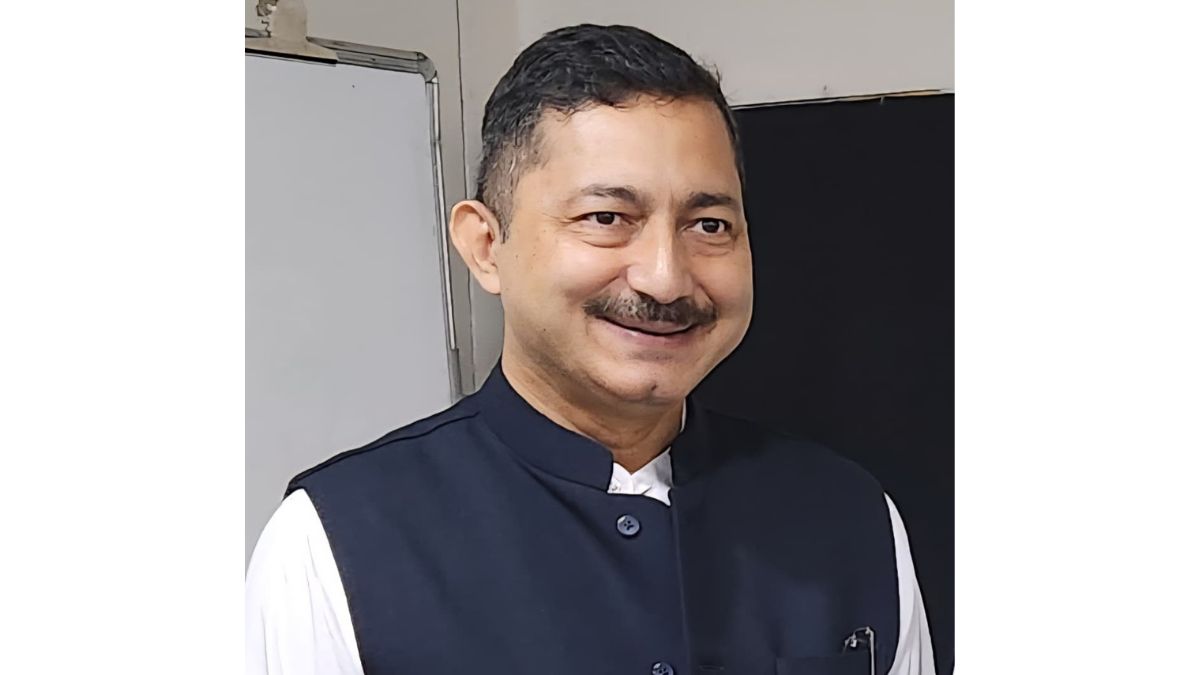
Pune, 18th August 2026: India’s rapidly expanding underwater and blue economy sectors could create several lakh employment opportunities for young professionals by 2030 and beyond, with emerging areas such as artificial intelligence, underwater data analytics, climate change, aquaculture, freshwater management, sediment management and marine infrastructure opening up new career pathways, said Dr. (Cdr.) Arnab Das, Founder of the Maritime Research Centre, Pune.
He was speaking at the Advancing Underwater Domain Awareness Framework for India’s Mahasagar Vision and its Realization, organized by Maritime Research Centre in association with the Indian Council of World Affairs at the Sumant Moolgaonkar Auditorium at MCCIA on Senapati Bapat Road.
Highlighting the need to prepare youngsters for these emerging opportunities, Dr. Das said India required a skilled workforce capable of combining domain knowledge with advanced technologies to solve real-world problems.
“How we can use AI to solve these real-world problems is what we need to look at. Domain knowledge is going to make it more real-world problem-solving rather than just administrative,” he said.
According to Dr. Das, several sectors offer significant opportunities for young professionals. Freshwater systems and management will require expertise to address water quality, urbanization, siltation and urban flooding. He pointed out that cities such as Pune spend nearly Rs.900 crore on managing urban floods, underlining the scale of the challenge and the need for specialized professionals.
The marine sector and aquaculture also offer considerable scope for the application of advanced science, technology and digital solutions to improve productivity, sustainability and resilience to climate change. Deep-sea mining is another emerging area where India needs to develop domestic expertise and reduce its dependence on external capabilities.
The expansion of inland water transport and connectivity is expected to create additional opportunities, with India developing nearly 20,000 km of waterways. Coastal management, sediment studies and anti-fouling technologies are other areas requiring specialized skills. Dr. Das noted that ineffective bio-fouling management could cost vessels as much as Rs.4.1 lakh per hour, highlighting the economic importance of the sector.
To bridge the skills gap, MRC has developed a new four-year undergraduate degree program featuring six specialized tracks including Blue Economy, Climate Change, Sediment Management, Fresh Water Management, Underwater Radiated Noise Management, and AI and Underwater Data Analytics. The program is approved by the Ratan Tata Maharashtra State Skills University.
The programs are designed to combine multidisciplinary domain knowledge with practical skills, mapping stakeholders, emerging job roles and industry requirements to help students become employment-ready.
MRC has also launched an intensive six-month program in AI and Underwater Data Analytics, offered in online, offline and hybrid modes through its Centre of Excellence in Koregaon Bhima, Pune.
Dr. Das said the initiative was aimed at enabling youngsters to enter emerging fields where traditional academic programs may not adequately expose students to practical applications and career possibilities.
As India strengthens its focus on maritime security, technology, startups and the blue economy under the Mahasagar Vision, the underwater domain is expected to emerge as a significant source of employment, innovation and economic growth, he said.