
NIBM Oxygen Park: Pune Citizens Come Together to Build a Community Forest
Reported by Shoaib Tadvi
NIBM, 28th May 2026: In a city increasingly dominated by concrete expansion and rapidly shrinking green cover, residents from Pune’s NIBM area are attempting something few urban communities have dared to imagine at this scale — creating a long-term urban forest through collective community action.
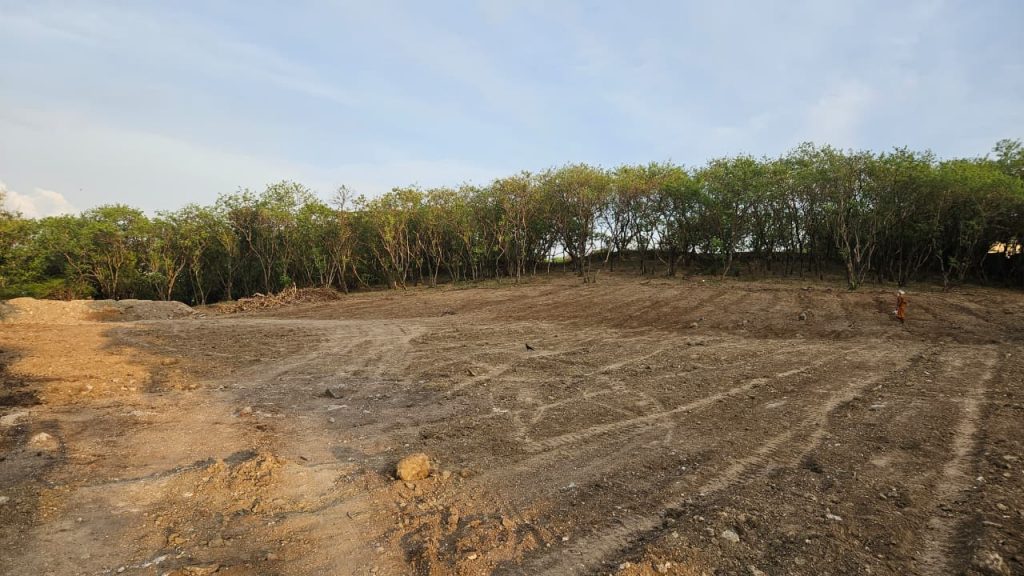
What began as a small discussion among a handful of residents has now evolved into the NIBM Oxygen Park, a large community-led environmental initiative aimed at transforming nearly one acre of land near NIBM Road into a dense native forest through scientifically planned plantation and long-term ecological care.
The initiative, being developed in partnership with the Forest Department, has rapidly grown into a structured volunteer movement involving hundreds of residents from Bramha Majestic and neighbouring societies across the NIBM region.
The movement recently gained public attention after coverage in Pune Pulse highlighted the community’s efforts to create a Miyawaki-inspired urban forest near Bramha Majestic.
At the centre of the initiative is Kiran Karnam, who is serving as the overall lead of the NIBM Forest Volunteer Group. Along with a growing network of volunteers and residents, Karnam has been coordinating the planning, departmental engagement, volunteer mobilisation, and overall execution roadmap of the project.
According to the project team, the forest aims to include approximately 5,000 to 6,000 native saplings specially selected for Pune’s soil conditions, biodiversity requirements, and climate resilience.
However, the organisers insist this is not just another plantation drive.
“This is not about planting trees for one day and forgetting them,” members of the volunteer group repeatedly explained during community meetings and planning sessions. “This is about creating a forest that survives for generations.”
That philosophy has shaped the entire structure of the initiative.
Unlike traditional plantation campaigns that mainly focus on one-day plantation events, the NIBM Oxygen Park initiative has been designed with long-term sustainability systems already built into its framework.
Detailed planning documents prepared by the volunteer teams outline plantation execution models, water sustainability systems, volunteer operations, monitoring structures, soil preparation methods, biodiversity tracking, survival audits, logistics systems, and multi-year maintenance cycles.
The project has been divided into six operational teams, each responsible for a different component of the initiative.
The communications and public outreach efforts are being led by Ruchira Karnam, who is coordinating awareness campaigns, volunteer engagement, media communication, and community inclusion across multiple housing societies in the NIBM area.
The management and operational coordination responsibilities are being handled by Jitendra Narsian and Zuber Shaikh, who are overseeing organisational systems, execution support, volunteer coordination, and on-ground management planning.
The digital systems and governance framework for the project are being supported by Christopher Valerian Gnanamalai, who is handling digital enablement, coordination dashboards, reporting structures, and volunteer tracking systems to help the initiative function efficiently across large volunteer groups.
One of the most critical aspects of the initiative — water sustainability planning — is being led by Tarang Joshi, whose team is focusing on irrigation systems, rainwater harvesting, recharge planning, and long-term water conservation models essential for the survival of the forest.
The volunteer mobilisation network also includes active contributors such as Shweta Solapurkar, who is involved in volunteer participation and community activities, and Vishwas Joshi from NRRF, who is supporting volunteer coordination and operational engagement.
According to the project blueprint, the proposed forest area has been divided into four ecological zones based on terrain conditions, biodiversity objectives, and moisture patterns.
The first proposed section, called the Dry Ridge Buffer, includes drought-resistant native species such as Neem, Salai, and Palas.
The second ecological zone, known as the Moisture and Water Edge, is designed around species including Arjun, Kadamb, and Ain, which thrive in moisture-supportive environments.
The third area, named the Biodiversity Core, focuses on enhancing ecological diversity using native species such as Jambhul, Umbar, and Karanj.
The fourth ecological section, called the Recharge Meadow, is expected to include traditional Indian native trees such as Vad, Pimpal, and Pangara, intended to improve groundwater recharge and ecological balance.
The project’s water sustainability planning is being described by volunteers as the backbone of the initiative.
The water management team has proposed systems including contour swales, recharge ponds, drip irrigation, rainwater harvesting, and Continuous Contour Trenches (CCTs).
According to the internal planning model prepared by the team, the proposed contour and trench systems could potentially store several lakh litres of rainwater during heavy rainfall events, helping maintain long-term moisture levels within the forest ecosystem.
The plantation and technical team has also prepared extensive execution guidelines for soil preparation, pit depth, spacing, mulching, fertilisation, watering schedules, species layering, and survival monitoring.
The initiative follows dense layered plantation principles inspired by Miyawaki-style afforestation systems, where shrubs, sub-trees, medium trees, and canopy trees are planted together at close density to recreate natural forest ecosystems.
The goal is to create a self-sustaining urban forest ecosystem capable of growing faster and supporting stronger biodiversity than conventional plantation methods.
Beyond the technical planning, however, what has drawn significant attention is the scale of citizen participation.
Residents from multiple societies across the NIBM belt have joined the initiative through volunteer groups, planning meetings, site inspections, and awareness campaigns.
Dedicated WhatsApp groups have already been formed to coordinate volunteers, share updates, and organise long-term maintenance planning.
One of the groups, “Oxygen Park NIBM,” serves as the central community coordination platform, while another dedicated volunteer maintenance group has been formed to support long-term forest care over the coming years.
The volunteer and operations structure itself has been designed in a highly systematic manner.
The operational framework includes volunteer registration, role allocation, training sessions, safety guidelines, reporting systems, attendance tracking, and periodic engagement cycles.
According to the volunteer engagement roadmap prepared by the team, regular communication and planning reviews will take place every 15 days to ensure accountability and continuity.
Volunteer teams have already been assigned specific responsibilities related to plantation support, watering, care and monitoring, material movement, logistics, communication, and site safety.
The monitoring and impact team has also created a structured data collection framework to track plant survival, growth rates, soil health, watering records, biodiversity activity, infrastructure status, and volunteer participation.
The group plans to use GPS mapping, geo-tagged photographs, mobile reporting forms, cloud storage, spreadsheets, dashboards, and periodic field reports to maintain transparency and improve coordination.
A formal 15-day reporting cycle has already been proposed to ensure consistent monitoring and quick response to emerging issues.
According to members of the initiative, the project is being developed under guidance and oversight linked to Forest Department systems and Urban Joint Forest Management principles.
The organisers repeatedly emphasised that the initiative is “non-political, non-commercial, and community-driven.”
For many volunteers, the forest represents something larger than environmental activism.
It represents community ownership.
It represents citizens reclaiming responsibility for urban ecology.
It represents an attempt to create cleaner air, cooler surroundings, groundwater recharge, biodiversity restoration, and stronger neighbourhood bonds in one of Pune’s rapidly urbanising regions.
The movement’s roadmap is already clearly defined — team formation, resource mobilisation, monsoon plantation, six-month survival focus, and eventually multi-year ecological care.
Joint site inspections with Forest Department officials have already been conducted. Formal applications have been submitted. Volunteer teams are active. Planning meetings are ongoing. Resource mobilisation efforts are underway.
The plantation phase is expected to begin during the upcoming monsoon season of 2026.
For many residents involved in the initiative, the forest is not simply about greenery.
It is about leaving behind something meaningful for future generations.
As one of the volunteer messages shared internally states:
“We are ordinary people doing something extraordinary — not because we had to, but because we chose to. This forest will outlive all of us.”