Palkhi in Pune: Here’s How Police Are Preparing to Manage Massive Devotee Rush
Reported by Mubarak Ansari
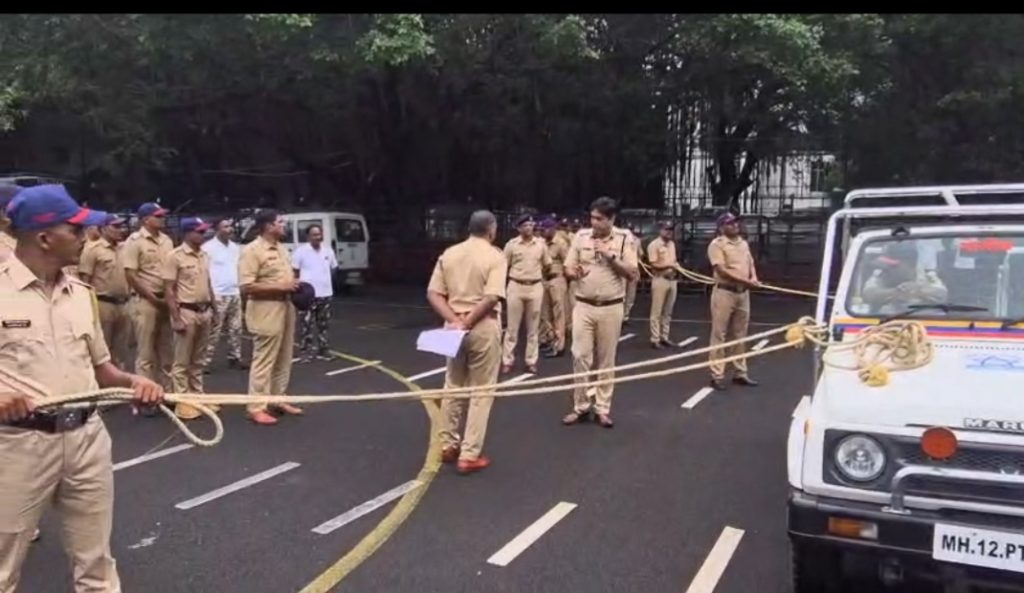
Pune, 3rd July 2026: With lakhs of devotees expected to participate in the upcoming Palkhi procession, the Pune Police conducted a special crowd management rehearsal at the Police Headquarters ground to strengthen security arrangements and emergency preparedness.
Around 300 police personnel took part in the mock drill, which was held in the presence of senior police officers. The exercise simulated the arrival of the Palkhi, darshan management, security cordons, crowd regulation, and emergency response to situations such as a stampede.
The Palkhis of Sant Dnyaneshwar Maharaj from Alandi and Sant Tukaram Maharaj from Dehu, will arrive in Pune on the afternoon of July 9.
According to police officials, the biggest challenge during the Palkhi procession is managing the massive rush of devotees during darshan, when large numbers of people attempt to move forward simultaneously, increasing the risk of overcrowding and stampede-like situations. Keeping this in mind, the police have introduced several changes to this year’s security arrangements.
During the rehearsal, personnel practiced rapid response protocols to deal with sudden surges in crowd density and potential emergencies. Dedicated teams were assigned specific responsibilities, with each unit rehearsing its role in controlling crowds, evacuating devotees safely, and restoring order within minutes if required.
A key change this year is the introduction of a single designated entry route for devotees seeking darshan of the Palkhi. In previous years, devotees often attempted to approach the procession from both sides, resulting in pushing, congestion, and disorder. To prevent such incidents, police personnel will maintain strict security on both sides of the procession, and entry will be permitted only through the designated route.
The drill also included the formation of a continuous security cordon around the Palkhi. Police personnel will remain deployed around the procession throughout its journey to ensure that no individual can suddenly approach the Palkhi, while also enabling devotees to have safe and orderly darshan.
Separate rehearsals were conducted for security arrangements at the Palkhi halt locations, management of pedestrian movement, VIP movement, and emergency response. Officers also assessed how quickly additional police forces could reach locations experiencing crowd pressure and how crowds could be diverted safely to prevent congestion.
Pune Police Commissioner Amitesh Kumar said the rehearsal was aimed at ensuring a safe, disciplined, and well-coordinated Palkhi procession.
“Our priority is to ensure that every devotee gets a safe and hassle-free darshan while maintaining the highest standards of security throughout the Palkhi procession. We have conducted detailed rehearsals to prepare our personnel for every possible situation, including sudden crowd surges and emergency scenarios. The designated entry system, security cordons, and rapid response teams have been planned to prevent overcrowding and ensure swift action whenever required,” Kumar said.
According to Pune Police, around 300 specially deployed personnel will be part of the Palkhi bandobast. Their primary responsibility will be to facilitate smooth darshan for devotees, ensure the security of the Palkhi, and respond immediately to any untoward incident, ensuring the procession remains safe and orderly throughout its route.
The Palkhi procession is one of Maharashtra’s most revered spiritual traditions, drawing lakhs of devotees, known as Warkaris, who undertake a centuries-old pilgrimage on foot to Pandharpur for Ashadhi Ekadashi. In Pune, the city plays a significant role as it hosts the Palkhis of Sant Dnyaneshwar Maharaj from Alandi and Sant Tukaram Maharaj from Dehu. Every year, the arrival of the Palkhis transforms Pune into a hub of devotion, with thousands of devotees participating in bhajans, kirtans, and the traditional dindi processions. The event is marked by elaborate civic and police arrangements to ensure the safe movement of pilgrims and maintain public order during one of the state’s largest religious gatherings.