PMPML Plans 2,000 More Buses as Study Flags Major Frequency Gaps Across Pune
Pune, 9th September 2026: Only 21% of the population in Pune and Pimpri-Chinchwad has access to buses operating at five-minute intervals, despite 94% of residents having access to a bus service within a five- to 10-minute walk from their homes, schools or workplaces, according to a new study. The share of the population benefiting from frequent bus services has declined sharply from 66% in 2019.
The ‘People Near Transit’ study, conducted by the Pune Mahanagar Parivahan Mahamandal Limited (PMPML) in collaboration with ITDP India, found that although the bus network has expanded into newly developed areas of the two cities, the fleet has not increased at the same pace.
This mismatch has resulted in reduced service frequency on several routes, leaving thousands of residents dependent on an inadequate public transport network.
16 Areas Face Shortage of Frequent Bus Services
The impact has been particularly severe in 16 areas across Pune and Pimpri-Chinchwad. Several of these locations have high population densities, with some recording up to 50,000 people per square kilometre, yet continue to lack adequate high-frequency bus services.
In Pune, the affected areas are Baner, Dhanori, Dhayari, Handewadi, Kondhwa, Kothrud, Ambegaon and Vadgaon Sheri.
In Pimpri-Chinchwad, Akurdi, Chikhali, MIDC, Rahatani, Sangvi, Talawade and Wakad have been identified as areas where large numbers of residents depend on public transport but do not receive sufficient frequent services.
The study also found that five-minute bus frequency is currently available to only 20% of employment centres, 30% of schools and 37% of notified slum areas.
Frequency Could Be Increased to 61%
The report suggests that PMPML could improve service frequency by restructuring routes where buses currently operate at intervals of 10 to 20 minutes.
If these routes are redesigned to provide buses every five minutes, the proportion of the population benefiting from frequent services could increase from 21% to 61%. Such changes could improve connectivity in 10 of the 16 worst-affected areas, according to the study.
ITDP India said ensuring frequent bus services across at least 60% of the city could be an important step towards achieving the ‘Developed Maharashtra 2047’ goal.
PMPML Plans 2,000 Additional Buses
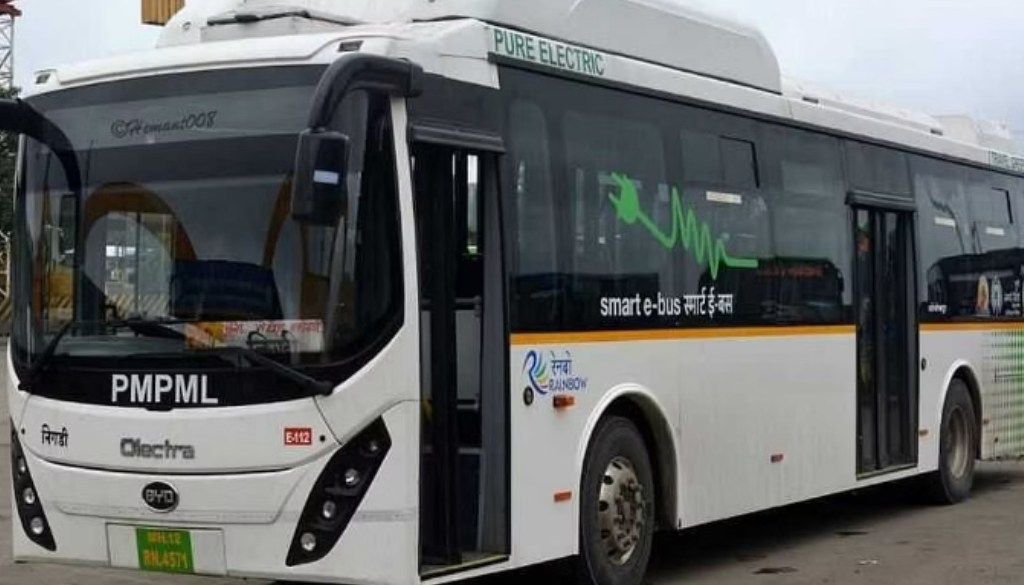
PMPML currently operates around 2,000 buses across more than 450 routes. The transport body has begun the tender process for 1,000 CNG buses, while another 1,000 electric buses are expected under the PM E-DRIVE scheme.
PMPML Chairman and Managing Director Mahesh Awhad said the study’s data would help strengthen the city’s public transport system and enable services to be planned according to passenger demand.
ITDP India Deputy Manager Aditya Rane said improving the frequency of existing routes could substantially increase the number of people benefiting from reliable public transport while addressing connectivity gaps in underserved areas.