Pune: Housing for 15,000 Chakan Workers Proposed; December Deadline Set for Drainage Encroachment Removal
Reported by Mubarak Ansari
Chakan/Pune, 21st October 2026: The government proposes to spend approximately ₹1,400 crore on infrastructure improvements in the Chakan Industrial Area, covering roads, stormwater drainage, water supply, electricity infrastructure and worker accommodation, according to the minutes of a meeting chaired by the Pune District Collector Jitendra Dudi on Wednesday.
The meeting outlined an integrated development plan for approximately 78 km of roads and proposals for housing around 15,000 industrial workers. Measures to address traffic congestion, roadside truck parking, monsoon flooding and inadequate public amenities were also discussed.
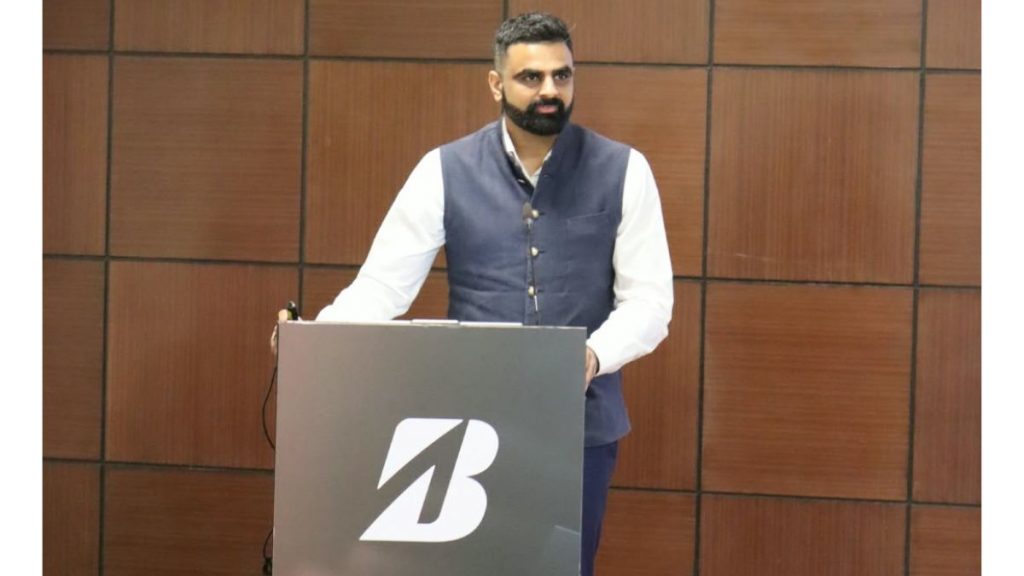
Held at 1.30 pm at Bridgestone India Pvt. Ltd.’s premises in Phase II of the Chakan MIDC area in Khed taluka, the meeting brought together representatives of industries, industrial associations and government agencies.
Officials from the Maharashtra Industrial Development Corporation (MIDC), Public Works Department (PWD), Pimpri-Chinchwad Municipal Corporation (PCMC), Maharashtra State Electricity Distribution Company Limited (MSEDCL), Maharashtra State Electricity Transmission Company Limited (MSETCL) and other departments participated.
The Collector outlined development initiatives proposed over the next one to two years and sought cooperation from industries in implementing infrastructure works and managing employee and freight movement.
78 km road development plan targets congestion and pedestrian safety
An integrated road development plan covering approximately 78 km in the Chakan area is being undertaken, according to the minutes. It includes road improvements, stormwater drainage, streetlights, designated parking spaces, utility corridors and associated infrastructure.
The meeting set a timeline of approximately 18 months for the integrated road works and related improvements.
Potholes, roadside encroachments, inadequate footpaths and the daily movement of an estimated four to five lakh people to and from the industrial area were identified as major factors contributing to congestion.
The Collector directed the agencies concerned to repair potholes, improve road shoulders, remove encroachments and construct footpaths, with priority given to pedestrian safety. Industries were asked to cooperate during execution.
Industry representatives also raised concerns about increasing road accidents. The Collector identified inadequate footpaths as a significant factor affecting pedestrian safety and stressed the need to improve road infrastructure.
December deadline for clearing drainage encroachments
Addressing monsoon waterlogging and flooding, the Collector directed authorities to survey the identified 78 km stretch and remove unauthorised encroachments obstructing natural streams, drains and watercourses.
The minutes record that encroachments and construction along natural flow paths have contributed to flooding in the industrial area. A deadline of December 2026 was set for removing encroachments.
Where government authorities have granted construction permissions, the agencies concerned were instructed to examine the cases and take appropriate action to restore natural drainage in accordance with approved plans and applicable law.
The Pune Metropolitan Region Development Authority (PMRDA), PCMC, Revenue Department, MIDC, gram panchayats and other authorities will be involved in the exercise.
Industries asked to regulate truck parking immediately
Industries were directed to instruct transport contractors, truck operators and employees to use designated MIDC parking areas or parking spaces within their respective industrial premises.
If MIDC parking facilities are full, vehicles should be accommodated within the industrial premises rather than parked on public roads.
The minutes record an estimate that effective implementation could reduce roadside parking by approximately 30%. Compliance with the parking directions is to begin immediately and continue on an ongoing basis.
Industries were also asked to examine staggered working hours to reduce peak-hour congestion. Shift-wise movement data and any proposed timing changes are to be shared with the authorities for coordinated traffic and public transport planning.
Employee travel data sought for 400–500 bus services
Industries have been given one week from the meeting to submit employee commuting information, including journey origins, entry locations, routes, travel timings, employee numbers and shift-wise movement.
The information will support planning for approximately 400–500 Pune Mahanagar Parivahan Mahamandal Limited (PMPML) bus services between residential locations and industrial destinations, depending on requirements.
The minutes refer to planning bus services, rather than a confirmed procurement or deployment of 400–500 additional buses.
The proposed Nashik Phata–Rajgurunagar elevated corridor was also discussed as a major project expected to ease congestion and improve regional connectivity and industrial traffic movement. The minutes indicate an expected one-to-two-year horizon, subject to the project schedule.
Accommodation proposed for 15,000 workers
A proposal to develop accommodation for approximately 15,000 industrial workers includes dormitories and one- and two-bedroom residential units.
The proposed development envisages schools, colleges, hospitals, playgrounds and other essential amenities. Industries were asked to assess employees’ willingness to live in the accommodation and communicate their requirements to the authorities.
According to the minutes, the initiative could potentially reduce daily commuting time by two to three hours for some employees, depending on their routes.
Planning and implementation are envisaged over the next one to two years, involving MIDC, planning and development authorities, industrial associations and individual companies.
Water allocation approved; power augmentation being pursued
The Collector informed industry representatives that the government had approved a water supply allocation of 35 million litres per day for the Chakan Industrial Area.
Maharashtra Jeevan Pradhikaran is to initiate the necessary scheme-related work within the next four to five months. The timeline concerns commencement of the work, not the start of water delivery.
To meet rising electricity demand, a plan to augment power infrastructure by approximately 100 MVA is being pursued. MSEDCL, MSETCL and other agencies were asked to strengthen the supply system in accordance with the approved implementation schedule.
Waste facility planned on approximately 36 acres
The meeting was informed that MIDC had made approximately 36 acres of land available to PMRDA for a solid waste management facility.
PMRDA is preparing the plan, which is expected to be finalised in the coming months, with implementation to follow.
Once the facility is ready, surrounding villages and municipal councils will be responsible for arranging transportation of collected waste to the site for scientific processing and proper disposal.
Industries were separately encouraged to provide public toilets, bus stops and drinking water facilities in and around their premises on a voluntary basis, wherever feasible.
Companies were also encouraged to develop and maintain adjoining road dividers with the approval of the road-owning authority. Advertising would remain subject to applicable permissions and regulations. Suitable signage was recommended to improve navigation and road safety.
AI-based traffic enforcement proposed
An artificial intelligence-based traffic monitoring and enforcement system has been proposed to identify violations using vehicle registration details and other legally permissible evidence.
The minutes specify that repeat offenders must be dealt with according to applicable law and that any action involving driving licences must follow the prescribed legal procedure.
Industry representatives also sought clarity on traffic management and streetlighting during road construction. The Collector informed the meeting that approximately 100 personnel had been made available to the Police Department for traffic management.
Police were directed to make arrangements to maintain traffic flow and minimise inconvenience during construction.
Suggestions from industries for additional or alternative roads are to be examined jointly with the appointed road consultant, taking into account the finalised road plan, feasibility and applicable requirements.
ESIC hospital delays raised; MIDC to coordinate follow-up
Industry representatives raised concerns over delays in completing the ESIC hospital.
The Collector informed them that a meeting had recently been held with the Chief Minister and the Additional Chief Secretary, and that the hospital was being treated as a priority. Efforts were being made to expedite completion in the coming months, although the minutes do not specify a firm completion date.
For the wider infrastructure programme, MIDC’s Chief Engineer and Regional Officer will serve as coordination points between industries and government departments.
Industry representatives were asked to brief their senior management, including chief executive officers, on the proposed initiatives and the cooperation required. Departments were directed to coordinate implementation, monitor progress and work towards the stipulated timelines.