Pune: Nine Years After PMC Merger, Undri Residents Still Depend on Water Tankers, Demand Action on Infrastructure
Reported by Shoaib Tadvi
Undri, 24th October 2026: Nine years after Undri was merged into the Pune Municipal Corporation (PMC), residents of the rapidly urbanising suburb continue to depend on private water tankers, struggle with inadequate road infrastructure and await the sanctioning of a Development Plan that would determine the area’s future civic amenities.
Residents of Undri, Mohammadwadi and surrounding localities have alleged that despite paying property taxes to the civic body, they continue to bear additional expenses for essential services such as drinking water and sewage management. They have warned of a possible rasta roko agitation at Kad Nagar and Undri Chowk if the authorities fail to address their demands.
The residents have also demanded a time-bound action plan for piped water supply, construction of an overhead water reservoir, road widening, improved policing and the regulation of private water tankers.
According to residents, the central issue is the delay in sanctioning Undri’s Development Plan, which would establish a framework for roads, water infrastructure and other public amenities. Although a draft plan covering nine merged villages was published on October 17, 2025, it remains unsanctioned by the Maharashtra government, they said.
Nine years after merger, water supply remains a concern
Undri was merged into PMC on October 4, 2017, along with several other fringe areas. However, residents of several housing societies, particularly those on the Undri hilltop, say they have yet to receive a piped water supply network or an overhead water reservoir.
As a result, housing societies continue to purchase water from private tanker operators to meet their daily requirements. Residents claim that the additional expenditure has placed a substantial financial burden on families already paying property tax and water-related charges to PMC.
“PMC has been very efficient at one thing in Undri: collecting money. Water, sewage, roads, policing and a plan for the future — on every one of these we have been told to wait. Nine years is not a delay any more. It is a decision to neglect us,” said Sunil Aiyer, member of the Mohammadwadi–Undri Residents Welfare Development Foundation (MURWDF), representing residents of Undri Hilltop and housing societies across the road in Prabhag 41.
Residents claim that property taxes increased substantially after the merger, with some estimating that their bills roughly tripled compared with the gram panchayat period. They have questioned why civic charges continue to be collected when several essential services remain unavailable.
According to figures cited by residents from an RTI response received in 2025, approximately ₹287.73 crore was collected in property tax from Undri and Mohammadwadi over a period of more than four years.
Draft Development Plan remains unsanctioned
The delay in finalising Undri’s Development Plan has become a major concern for residents seeking long-term infrastructure improvements.
The area’s administrative history dates back to 1997, when Survey Nos. 8 to 11 of Undri were included within PMC limits as part of the merger of 23 villages. A Maharashtra government notification dated November 17, 2001, subsequently excluded most of Undri, including its gaothan, from the municipal limits.
In October 2017, the state government reversed the decision and merged the remaining part of Undri into PMC. The civic body formally declared its intention to prepare a Development Plan on June 28, 2018.
However, the plan was not published within the prescribed period. Following delays attributed to the COVID-19 pandemic, administrative changes and missed deadlines, responsibility for preparing the draft was transferred to the state’s Town Planning Department.
The draft Development Plan for nine merged villages was eventually published on October 17, 2025, under Section 26(1) of the Maharashtra Regional and Town Planning (MRTP) Act, 1966. Undri falls under Planning Sector 4, covering sheets 13 and 14 of the plan.
The period for filing objections and suggestions closed in December 2025. However, one year after publication, the plan remains a draft, according to the residents’ representation.
Residents argue that the absence of a sanctioned plan has delayed decisions concerning road widening, water reservoirs and reservations for public amenities. They have demanded that the state government clarify the status of the objections, disclose the next steps in the approval process and establish a definite timeline for sanctioning the plan.
Residents cite court proceedings over water shortage
The water shortage in Undri and other rapidly growing suburbs has also been raised before the Bombay High Court.
In 2022, residents and citizen groups from Undri, Pisoli, Baner, Balewadi, Wagholi, Phursungi and other areas approached the court through Public Interest Litigation No. 126 of 2022, argued by advocate Satya Muley.
According to the residents’ account of the proceedings, the court directed PMC, the Pimpri-Chinchwad Municipal Corporation and the Pune Zilla Parishad to file affidavits regarding water supply by December 13, 2022. At a hearing on December 15, 2022, PMC did not appear, prompting the court to warn of possible punitive costs and provide a further deadline.
On April 10, 2023, the court directed the formation of a committee led by the Divisional Commissioner to review water-related complaints. The committee included municipal commissioners, water supply officials and the Member Secretary of the District Legal Services Authority. Meetings were intended to take place every two months, with action-taken reports submitted to the court.
Residents, however, claim that the meetings have not resulted in a piped water network for the Undri hilltop.
“The monthly meeting is a complete eyewash. Officials attend, note our complaints, promise tankers and leave. The court asked for a review mechanism, and that is exactly what we got: reviews. In four years, not one metre of pipeline on the Undri hilltop has come out of that petition,” said Sunil Koloti, member of MURWDF.
The residents are now seeking a time-bound direction from the Bombay High Court for laying the water network and constructing an overhead reservoir, along with accountability for officials who fail to meet the deadlines.
Water infrastructure promises yet to benefit hilltop societies
On April 23, 2026, PMC’s Additional Commissioner reportedly promised piped water supply to Undri, Mohammadwadi and NIBM Annexe by May 15.
On May 17, Chief Minister Devendra Fadnavis inaugurated water tanks near Dorabjee Mall in Mohammadwadi under PMC’s 24×7 water supply scheme. The project was presented as benefiting nearly three lakh residents across Mohammadwadi, NIBM and Undri. The Chief Minister also directed that the remaining pipeline and distribution work be completed within two months.
However, residents of Undri Hilltop claim that their societies were not covered by the available network and continue to depend on tankers. They have also raised concerns about water quality, citing an incident in July when a society in Mohammadwadi reportedly refused to allow muddy water supplied through the civic network into its storage tanks.
In June 2026, PMC introduced a new tanker-filling point in Undri. Residents argue that the arrangement does not address the underlying problem of the absence of a permanent distribution network.
“We are not asking for a favour. We are asking PMC to deliver the water we are already billed for. A tanker filling point is not a water supply. It is an admission that there isn’t one,” said Sunil Koloti.
Tanker dependence adds to residents’ financial burden
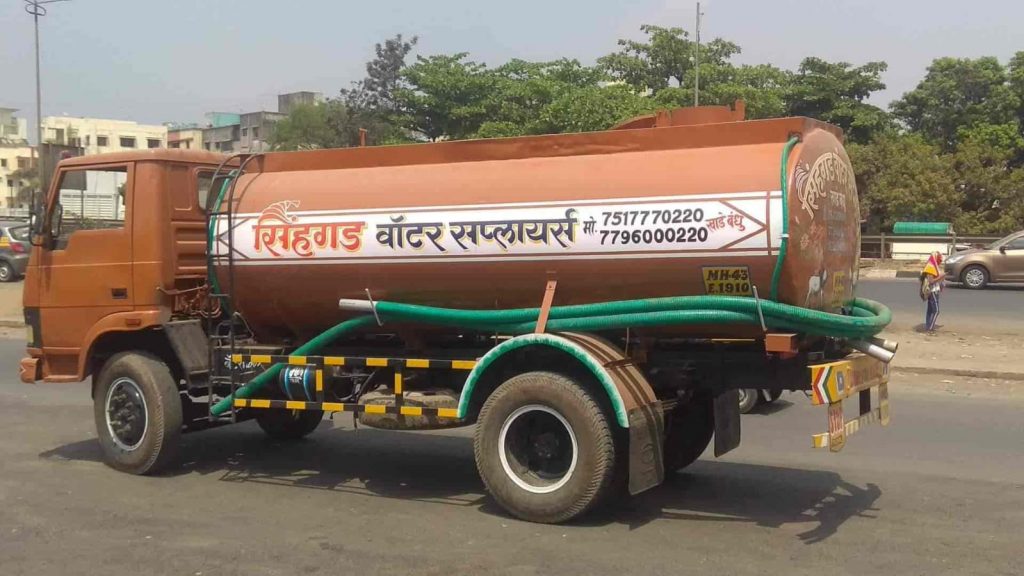
Residents claim that the cost of purchasing tanker water has become one of the largest recurring expenses for housing societies.
According to figures cited in the residents’ representation, a typical society with around 200 flats may spend approximately ₹60 lakh annually on tanker water. This works out to around ₹30,000 per flat each year, or ₹2,500 per month, in addition to property tax and other maintenance expenses.
The representation estimates that a society operating at this expenditure level for 14 years would have spent approximately ₹8.4 crore on tanker water, including around ₹5.4 crore after the 2017 merger.
Residents argue that such expenditure could otherwise have contributed towards permanent water infrastructure, including storage facilities and distribution networks.
They have demanded that PMC publish a funded implementation schedule for water supply to Undri Hilltop and consider waiving or refunding the water component of property tax until a regular supply becomes available.
Sewage disposal creates another recurring expense
The lack of a functional sewage network has added to the civic challenges, according to residents.
Several housing societies reportedly operate their own sewage treatment plants and hire private operators to remove treated or residual waste, depending on the facility’s requirements. Residents claim that some societies pay between ₹10,000 and ₹12,000 per removal trip, with collections taking place approximately every fortnight.
Based on the figures provided by residents, this can amount to an annual expense of approximately ₹2.6 lakh to ₹3.1 lakh for an individual society.
They have called on PMC to connect existing drainage infrastructure to a functioning trunk network and publish a timeline for completing the work. They have also sought financial relief for societies that continue to incur additional sewage disposal costs.
Road congestion, encroachments and policing concerns
Residents have raised concerns over narrow roads, unauthorised parking, encroachments and inadequate traffic management in Undri and surrounding localities.
On October 9, Pune Traffic Police reportedly made a 350-metre stretch between Holewasti and Aryan World School one-way, citing limited road width, unauthorised parking and opposing traffic movement.
Residents said the diversion has increased pressure on Kad Nagar, which already experiences congestion during peak hours. They have demanded road widening, particularly around Kad Nagar, Undri Chowk and the Holewasti link road.
On September 29, residents from Undri, Pisoli, Mohammadwadi, Yeolewadi and Kondhwa reportedly submitted a representation to Pune Police Commissioner Amitesh Kumar, raising concerns about accidents, speeding, missing signals, inadequate patrolling and roads dug up and left unrepaired.
They have also questioned the functioning of the licensing and enforcement systems, alleging that some shops encroach upon carriageways and that parking outside commercial establishments contributes to traffic congestion.
Residents have sought the establishment of a police chowky near Raheja Circle, a dedicated traffic post, CCTV cameras at residential locations and accident-prone spots, and regular night patrols.
They have further called for enforcement of applicable licensing conditions and closing hours for eateries and restaurants following complaints about late-night activity, noise and parking on residential roads.
Tanker safety concerns after fatal accidents
Residents have linked the area’s dependence on water tankers to serious road safety concerns.
On April 5, 2026, 19-year-old national footballer Aariz Shaikh was killed after a speeding water tanker reportedly hit his two-wheeler near Cloud Nine on the NIBM Annexe–Mohammadwadi road. Two days later, a 22-year-old engineer was killed in a separate tanker-related accident in Wanowrie, according to the residents’ account.
Following the accidents, Pune Police announced safety requirements for water tankers, including 360-degree cameras or attendants.
On April 15, tanker operators reportedly went on strike across Undri, Mohammadwadi and NIBM, disrupting water supplies to housing societies. The dispute was subsequently resolved following intervention by Mayor Manjusha Nagpure, with cameras and helpers among the conditions discussed for resuming operations.
Residents claim that tanker rates subsequently increased from approximately ₹600 to ₹800 per trip, with operators citing the additional costs of cameras and staff. They allege that many tankers continue to operate without the required safety arrangements despite the increased charges.
For a society purchasing 20 tankers a day, residents estimate that the additional ₹200 per tanker amounts to ₹4,000 daily, or approximately ₹14.6 lakh annually.
They have also cited a tanker-related incident on April 19 near Kad Nagar Chowk and another on October 5, when a tanker reportedly crushed a 27-year-old man’s foot near Bishop’s School in Kad Nagar.
“This is a complete failure of law and administration by Pune Traffic Police. A boy died, rules were announced, the tanker lobby held the city to ransom, and the settlement was a price hike. The societies pay the surcharge, the tankers skip the safety, and the police do not check,” said retired Army Colonel Pradeep Masand.
Residents have demanded regular inspections of tankers entering housing societies, strict enforcement of camera and attendant requirements, action against non-compliant operators and refunds of the additional safety surcharge where the promised measures are absent.
Residents question political and administrative accountability
Residents have also questioned the division of political representation affecting Undri.
According to their representation, the locality falls within PMC’s Prabhag 41 for municipal administration, while parliamentary and Assembly constituency boundaries place different parts of the area under constituencies associated with Pune, Baramati and Purandar.
They argue that the overlapping administrative and electoral arrangements have contributed to uncertainty over accountability, with residents struggling to identify which elected representatives should take responsibility for local infrastructure.
The residents have also criticised continued approvals for new construction despite what they describe as inadequate water supply, drainage and road capacity.
They have demanded a temporary moratorium on further construction approvals until essential infrastructure is established. The demand reflects their concern that rapid urbanisation is placing additional pressure on services that have not kept pace with population growth.
Residents compare Undri’s situation with action in Chakan
Residents have cited the government’s response to infrastructure complaints in the Chakan industrial belt as an example of the pace of action they expect in Undri.
In August 2026, industrial units in Chakan raised concerns about potholes and traffic congestion and reportedly threatened to relocate operations. Senior state leaders subsequently visited the area, and a high-level committee was formed to coordinate infrastructure work involving various government agencies.
Undri residents argue that similar coordination could be adopted to address water supply, roads, drainage, policing and licensing issues in their locality.
“Chakan’s industries threatened to leave, and the state arrived within a week. We cannot pick up our homes and move to another state. So we are asking: does Undri need to stop traffic before Mantralaya will stop ignoring it?” said Sunil Koloti.
Residents have warned that they may organise a rasta roko at Kad Nagar and Undri Chowk on a working day if the authorities fail to provide a concrete response to their demands.
Residents issue an eight-point charter of demands
The residents’ charter calls for the following measures:
1. Sanction the Development Plan: The Maharashtra government’s Urban Development Department should clarify the status of the October 2025 draft, disclose the progress of hearings on objections and establish a definite timeline for sanctioning the plan under the MRTP Act.
2. Set up a dedicated task force: Appoint a nodal officer to coordinate water supply, roads, drainage, policing and licensing, with monthly public reviews and regular site inspections.
3. Provide permanent water and sewage infrastructure: Publish a funded schedule for a piped water network and overhead reservoir for Undri Hilltop. Connect existing drainage lines to a functional sewage network and consider relief for residents paying additional costs for water and sewage disposal.
4. Disclose local tax collections and spending: Publish ward-wise property tax collection and capital expenditure figures for Prabhag 41 since 2017, and earmark a defined share of funds for local infrastructure.
5. Widen roads and improve traffic flow: Develop roads according to the widths proposed in the draft plan, prioritising Kad Nagar, Undri Chowk and the Holewasti link road.
6. Remove encroachments: Conduct joint PMC and traffic police drives against encroachments and unauthorised parking, followed by regular enforcement and public disclosure of permissions issued for roadside commercial activity.
7. Strengthen policing: Establish a police chowky near Raheja Circle, create a dedicated traffic post, install CCTV cameras at key locations and increase night patrols.
8. Regulate water tankers: Implement a formal tanker policy with licensed operators, transparent rates, regular safety inspections and action against violations. Residents have also demanded refunds of the additional ₹200 safety surcharge where tankers fail to provide the promised cameras or attendants.
Residents have further called for a review of construction approvals in areas lacking basic infrastructure and greater clarity regarding political accountability for Undri.
They maintain that if the authorities fail to act, they may pursue further legal remedies, including approaching the Bombay High Court for time-bound directions.
For residents of Undri, the demand is straightforward: permanent civic infrastructure, transparent use of public funds and accountability for delays. Nine years after the municipal merger, they say, paying city-level taxes should no longer mean relying on village-level services and privately purchased water.