Pune: Now Supreme Court Clears Deck for ACB Probe Against Ex PMC City Engineer Waghmare in Rs 2,000 Crore Disproportionate Assets Case
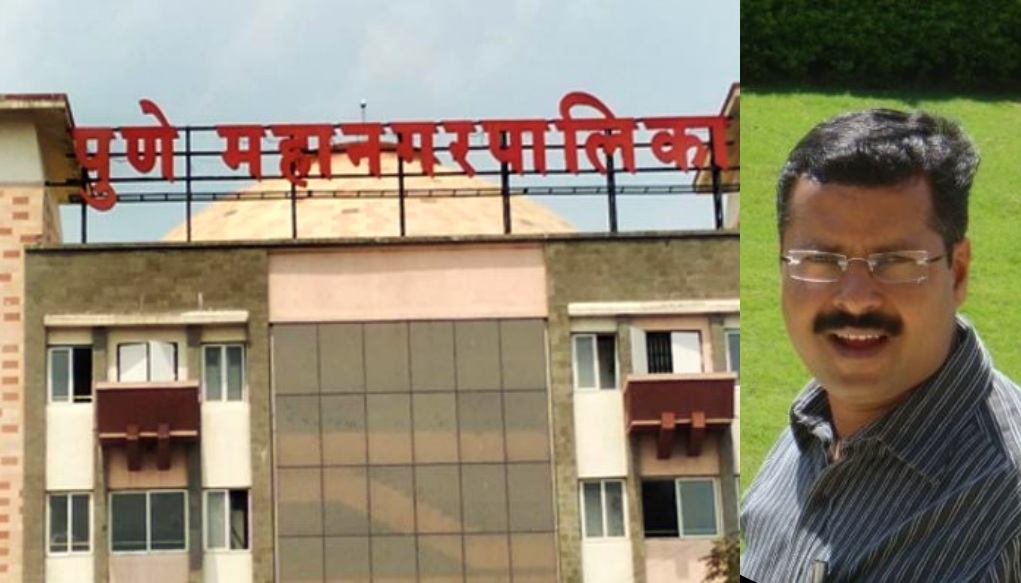
Reported by Mubarak Ansari
New Delhi/Pune, 21st April 2026: The Supreme Court of India has removed the final legal hurdle preventing an open investigation into one of Pune’s largest alleged municipal corruption scandals, paving the way for the Anti-Corruption Bureau (ACB) to probe former Pune Municipal Corporation (PMC) City Engineer Prashant Waghmare.
On April 16, 2026, a Supreme Court bench comprising Justice Sanjay Kumar and Justice K. Vinod Chandran dismissed a Special Leave Petition (SLP) filed by Waghmare. The bench stated it found “no good ground and reason to interfere” with a recent landmark judgment passed by the Bombay High Court, which had directed the ACB to take “swift and appropriate action” against the civic official.
The Supreme Court’s dismissal upholds the April 2, 2026, Bombay High Court ruling that severely castigated the PMC Municipal Commissioner for allegedly attempting to “obstruct and thwart” an impartial investigation into Waghmare’s wealth to protect him.
A Trail of Rs 2,000 Crore and Shell Companies
The legal battle stems from a 2016 complaint filed by Tanaji Balasaheb Gambhire against Waghmare, who has served as PMC City Engineer and Head of the Building Permission Department since August 2003.
Gambhire alleged that Waghmare amassed disproportionate assets worth approximately Rs 2,000 crore through illegal and corrupt means.
According to the complaint, Waghmare allegedly protected unauthorized constructions and manipulated Transfer of Development Rights (TDR) for the benefit of local builders. The ill-gotten wealth was purportedly routed through various construction firms and shell companies operated by his wife, mother, and brother.
When the ACB launched a discreet enquiry in 2018, Waghmare allegedly stonewalled the investigation. According to ACB records, he refused to provide details regarding his family’s assets, foreign trips, educational expenses, and corporate profit-and-loss accounts.
The Section 17(A) Loophole and the Commissioner’s Blockade
Faced with total non-cooperation, the ACB in January 2019 sought “previous approval” from the PMC Municipal Commissioner under Section 17(A) of the Prevention of Corruption (PC) Act to convert the discreet probe into a full-scale open enquiry.
However, in April 2019, the then-Municipal Commissioner rejected the ACB’s request. The Commissioner conducted his own internal hearings and concluded that Waghmare had acquired his wealth through legitimate ancestral properties and personal income, effectively forcing the ACB to close its confidential enquiry.
High Court Slams Municipal Commissioner
Gambhire subsequently approached the Bombay High Court, challenging the civic chief’s refusal. In a scathing 43-page judgment delivered earlier this month by Justices A.S. Gadkari and Ranjitsinha Raja Bhonsale, the High Court quashed the Municipal Commissioner’s 2019 orders, terming them “misplaced, misconceived and untenable.”
The High Court clarified a crucial point of law: Section 17(A) of the PC Act—which requires prior approval to investigate a public servant—is strictly designed to protect honest officials from harassment over decisions made in the bona fide discharge of their official duties. It does not provide an umbrella of protection for offences like amassing disproportionate assets, cheating, or misappropriation.
The Division Bench ruled that the Municipal Commissioner blatantly exceeded his jurisdiction by illegally usurping the role of an investigating officer. “The Competent Authority has no power to conduct a hearing, get into the merits of the matter, and undertake a mini-trial,” the High Court observed, adding that the Commissioner’s actions were “nothing but an attempt to block the enquiry” and shield the officer.
With the Supreme Court now officially dismissing Waghmare’s appeal (Diary No. 21787/2026), the High Court’s directive stands absolute. The ACB is now legally cleared to bypass the PMC’s prior approval and initiate a comprehensive, open criminal investigation into the Rs 2,000 crore disproportionate assets allegations.