Pune: Over 6,000 children benefit from PCMC’s overhaul of municipal Balwadis
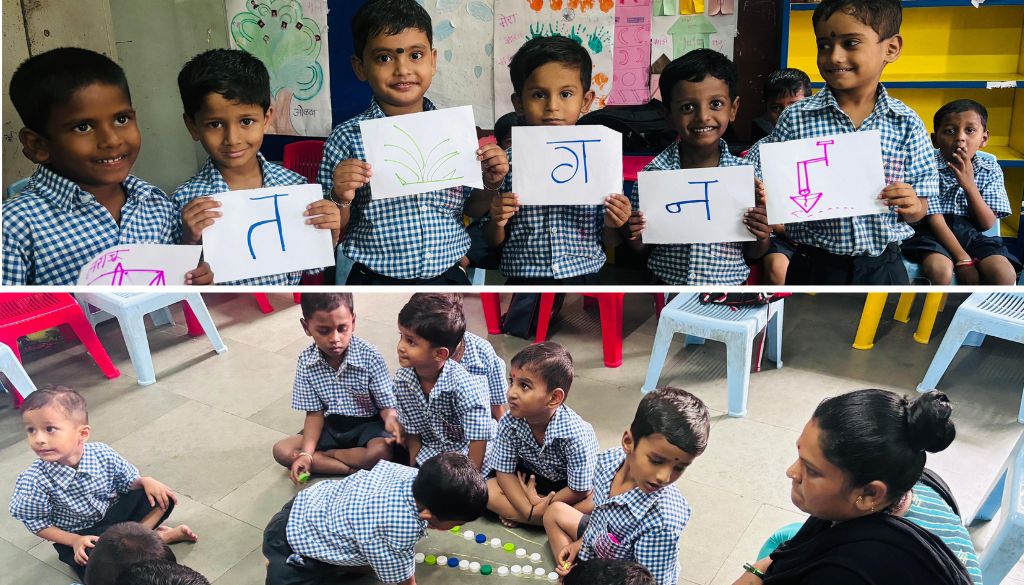
Pimpri, 25th July 2025: More than 6,000 young children in Pimpri Chinchwad are now receiving stronger, safer, and more engaging early education—thanks to a city-wide initiative by the Pimpri Chinchwad Municipal Corporation (PCMC) to transform all 211 of its Balwadis.
In just three years, the initiative has delivered measurable improvements in foundational learning, with assessments showing a 20–24% jump in skills such as early literacy, numeracy, and motor development. This transformation, driven by a focused Early Childhood Care and Education (ECCE) strategy, has turned previously basic classrooms into vibrant, child-centric spaces filled with play-based learning, storytelling, hands-on activities, and emotional support.
“Early childhood is the most critical stage of development, and our goal has been to give every child a strong and joyful start,” said PCMC Commissioner Shekhar Singh. “By investing in our Balwadis, training our teachers, involving parents, and adopting play-based learning, we are laying the foundation for a more inclusive and better-educated Pimpri Chinchwad.”
The programme began with a small working group of teachers, supervisors, and education professionals who redesigned the curriculum into activity-based modules. With regular monthly trainings, curated teaching materials, and strengthened teacher-student-parent relationships, the initiative scaled up rapidly. A cluster-based model with 16 master trainers and 9 supervisors now supports implementation across all Balwadis.
The change is not just visible on paper—it is being felt every day by teachers and parents alike.
“Every month, our Balwadi teachers hold parent meetings on topics related to early childhood,” said Sonali Anil Patole, a parent from Dapodi Girls Primary School No. 31. “These sessions help us support our children better. We feel our children are safe in the municipal school, and we as parents are involved in every step.”
Balwadi teachers too report a new clarity and purpose in their classrooms.
“Through the training, I now understand the objectives of the state’s early childhood curriculum,” said Ranjana Salvi, Master Trainer and teacher at Nagu Barne Boys Primary School, Thergaon. “This has helped me focus more on achieving learning outcomes while teaching each day.”
“With every cluster session, we’re seeing greater alignment in curriculum delivery and pedagogy,” added Yamuna Khandagale, Assistant Coordinator, Pre-Primary Department. “Teachers now plan their daily classes around each month’s theme and ensure quality education reaches every child.”
‘Adarsh Balwadi’ Initiative Set to Deepen Impact
Building on this momentum, PCMC’s Education Department is now moving forward with a plan to establish 40 Adarsh Balwadis—20 with CSR funding and 20 through municipal support—starting this academic year. These model Balwadis will receive enhanced educational materials and improved classroom environments to promote joyful and effective learning. Additionally, in order to encourage excellence, one outstanding teacher from each Balwadi will be recognised with an Adarsh Shikshak award, following classroom monitoring by supervisors and lead coordinators.
The department has also prepared a unique activity-based handbook aligned with the state ECCE framework. The handbook has been appreciated by the Maharashtra State Council of Educational Research and Training (MSCERT), validating PCMC’s approach to strengthening early childhood education.
Special Efforts to Include All Learners
In parallel, PCMC is taking steps to support children with disabilities across its schools, ensuring that inclusive, quality education reaches every child—regardless of their abilities. In collaboration with different organisations, the civic body aims to boost confidence among children with special needs and help them overcome challenges through targeted educational interventions.
“Parents have emerged as crucial partners in this process,” added Additional Commissioner Pradip Jambhale Patil. “When homes and classrooms work together, children flourish. Our model ensures that families are included every step of the way—be it through nutrition, school supplies via DBT, or everyday engagement in the child’s learning.”
“Strengthening early childhood education has been a top priority for our department,” said Kiran More, Assistant Commissioner and Head of the Education Department. “The transformation of our Balwadis is not just about infrastructure or curriculum—it’s about creating an environment where every child feels safe, curious, and ready to learn.”
Impact Snapshot:
211 municipal Balwadis transformed
Over 6,000 children reached
20–24% improvement in foundational skills
Play-based, skill-driven curriculum adopted
40 new ‘Adarsh Balwadis’ to be created
Parent partnerships and DBT support integrated
Activity-based handbook appreciated by MSCERT
Inclusive education efforts for children with disabilities underway