Pune: PCMC Proposes New Parking Policy; Rs 10/hour for Two-Wheelers, Rs 40 for Cars in High-Demand Areas
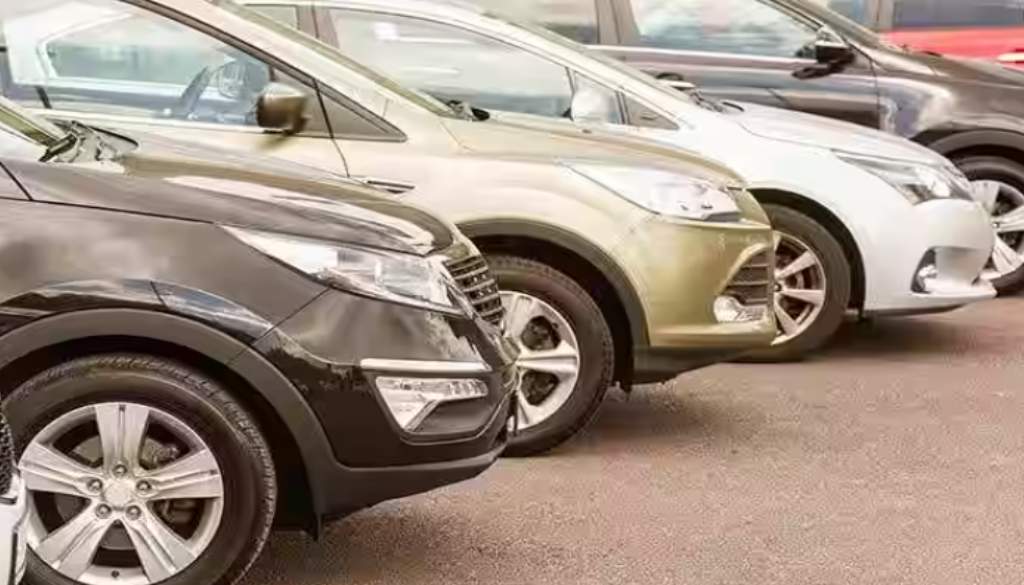
Pimpri Chinchwad, 12th August 2026: Pimpri Chinchwad Municipal Corporation (PCMC) has proposed a new citywide parking policy after withdrawing its earlier paid parking system implemented on select major roads. The new policy provides for both on-street and off-street parking, along with a telescopic fee structure, parking passes and separate charges for residential parking.
The proposal has been placed before the standing committee for approval.
The population and number of vehicles in Pimpri Chinchwad have been increasing steadily. The city currently has a population of around 30 lakh and more than 25 lakh registered vehicles. The growing number of vehicles has led to severe traffic congestion on major roads and in several parts of the city, which was earlier known for its relatively wide roads. Unauthorised parking and encroachments on footpaths have also increased.
The new parking policy has been prepared with the aim of creating a disciplined, safe and sustainable parking system, taking into account the growing population, increasing vehicle numbers and rising traffic pressure on major roads.
Under the proposed policy, on-street parking charges will vary according to demand. In high-demand areas, two-wheelers will be charged Rs 10 per hour, four-wheelers Rs 40, light commercial vehicles Rs 60, heavy vehicles and buses Rs 100, and three-wheelers Rs 20. In medium-demand areas, the rates will be Rs 5 per hour for two-wheelers, Rs 20 for four-wheelers, Rs 30 for light commercial vehicles, Rs 50 for heavy vehicles and buses, and Rs 10 for three-wheelers.
For off-street parking, the proposed hourly charges are Rs 5 for two-wheelers, Rs 10 for four-wheelers, Rs 15 for light commercial vehicles, Rs 20 for heavy vehicles and buses, and Rs 5 for three-wheelers.
The policy also introduces a telescopic fee structure under which parking charges will increase depending on how long a vehicle remains parked. The civic administration said the system is intended to discourage long-term parking on roads, ensure more efficient use of parking spaces, improve availability and encourage motorists to use off-street parking facilities.
For four-wheelers in high-demand on-street parking areas, the proposed charge will be Rs 40 for up to two hours, Rs 50 for up to four hours, Rs 60 for up to six hours, Rs 70 for up to eight hours and Rs 80 for up to 10 hours. Beyond 10 hours, an additional Rs 100 will be charged for every extra hour.
For two-wheelers, the proposed charges will be Rs 10 for up to two hours, Rs 15 for up to four hours, Rs 20 for up to six hours, Rs 25 for up to eight hours and Rs 30 for up to 10 hours. After 10 hours, an additional Rs 40 will be charged for every extra hour.
The policy also provides for daily and monthly off-street parking passes. A 12-hour daily pass will cost Rs 60 for a two-wheeler and Rs 120 for a four-wheeler. Monthly off-street parking passes will cost Rs 1,800 for two-wheelers and Rs 3,600 for four-wheelers.
For residents seeking on-street parking, a monthly residential permit has been proposed at Rs 1,800 for two-wheelers and Rs 7,200 for four-wheelers.
The civic administration said the policy is aimed at reducing congestion and bringing greater discipline to parking in the city. Trupti Sandbhor, additional municipal commissioner, said parking outside designated paid parking locations would be treated as illegal and action would be taken by the police.
Standing Committee chairman Abhishek Barne said the policy was intended not only to ease traffic congestion but also to provide safer roads for pedestrians and cyclists. “The objective is not limited to ensuring smooth traffic movement. Efforts will also be made to provide safer roads for pedestrians and cyclists,” he said.
Mayor Ravi Landge said effective implementation of the parking policy was necessary as the city’s population and vehicle numbers continue to grow. He said the policy would seek to provide convenient, safe and accessible parking facilities while reducing congestion, ensuring more efficient use of road space and supporting planned urban development.