Pune: PMC’s Anti-Encroachment Drives Fail to Clear Footpaths in Kondhwa, Undri and Mohammadwadi Areas
Reported by Shoaib Tadvi
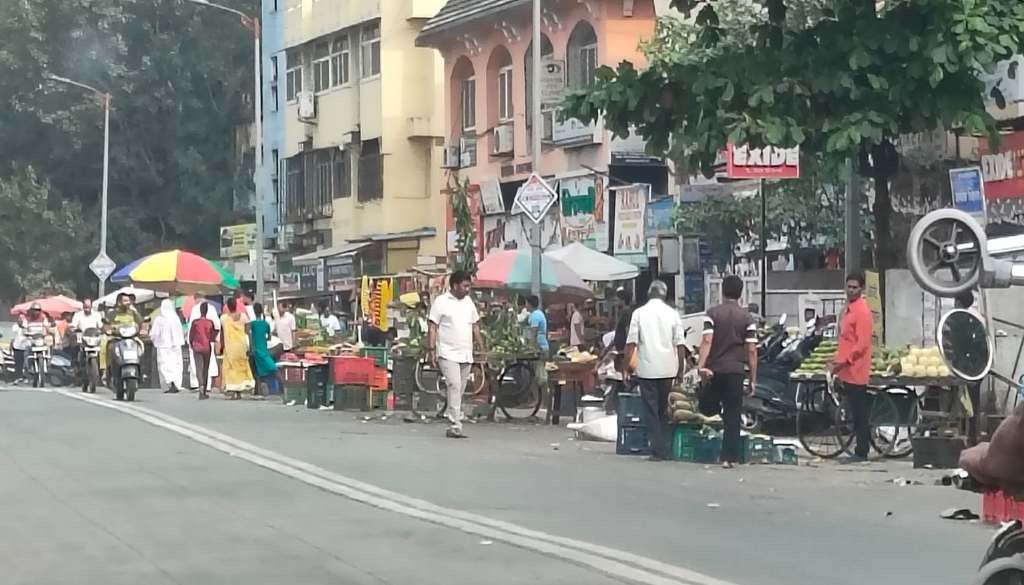
Kondhwa, 13th September 2025: Footpaths and road shoulders across South-East Pune—including Lulla Nagar to Kondhwa, Fatima Nagar to Salunkhe Vihar Road, NIBM Post Office Road, Kad Nagar–Machhi Market, Mohammadwadi Chowk, and Bishop’s School to Undri Chowk—are clogged with hawkers and food carts. Fruit and vegetable stalls, vada-pav and bhajji vendors, and pan-cigarette kiosks leave little space for pedestrians, forcing them onto busy roads and worsening traffic congestion and safety risks.
Residents say the problem has persisted for years. While the Pune Municipal Corporation (PMC) regularly sends anti-encroachment squads, vendors return within hours. “The carts disappear only when enforcement vehicles arrive, but they are back at the same spot within hours. It feels like a cycle that never ends,” said a Kondhwa resident.
PMC officials maintain they are acting against violations. Assistant Municipal Commissioner Amol Pawar of the Wanawadi–Ramtekdi Regional Office said, “In the case of Lulla Nagar to Kondhwa, we are taking strict action every day. Even before encroachment takes full shape, we intervene and act.”
Assistant Municipal Commissioner Laxman Balabhim Kadbane of the Kondhwa–Yewalewadi Regional Office admitted that certain stretches are harder to manage. “These areas have recently come under the municipal corporation, and some vendors have occupied these places for many years. They claim it is their space, which makes removal difficult,” Kadbane said.
Under the Street Vendors (Protection of Livelihood and Regulation of Street Vending) Act, 2014, hawkers are allowed only in designated vending zones approved by Town Vending Committees. Vendors occupying footpaths or blocking roads are illegal. The PMC has powers to issue notices, seize goods, and remove stalls, particularly when public safety is at stake.
However, residents and civic activists allege weak and selective enforcement. They claim officials sometimes alert vendors before drives, allowing them to pack up and return later. “On paper, PMC shows action, but on the ground nothing changes,” said a civic activist.
The affected stretches are among the busiest in South-East Pune. With footpaths blocked, pedestrians spill onto roads, leading to accidents and heavier traffic. While activists acknowledge the need to protect vendors’ livelihoods, they insist it cannot come at the cost of public safety.
Urban experts and residents have suggested several measures for a long-term solution:
Conduct a comprehensive hawker survey and activate Town Vending Committees.
Install railings or barriers along cleared footpaths to prevent re-encroachment.
Increase ward-level patrols instead of relying on occasional drives.
Ensure transparency by publicly sharing seizure records and enforcement actions.
Citizens argue the law already empowers PMC to act, but without consistent follow-up the problem will persist. For many, the issue is no longer just about footpaths but about faith in civic governance.
For now, residents’ demand is clear: stop token action and ensure permanent enforcement so public spaces remain safe and accessible.