Pune Protest for Tapovan: Citizens Rally Against Tree Cutting for 2027 Kumbh Mela Project
Reported by Shoaib Tadvi
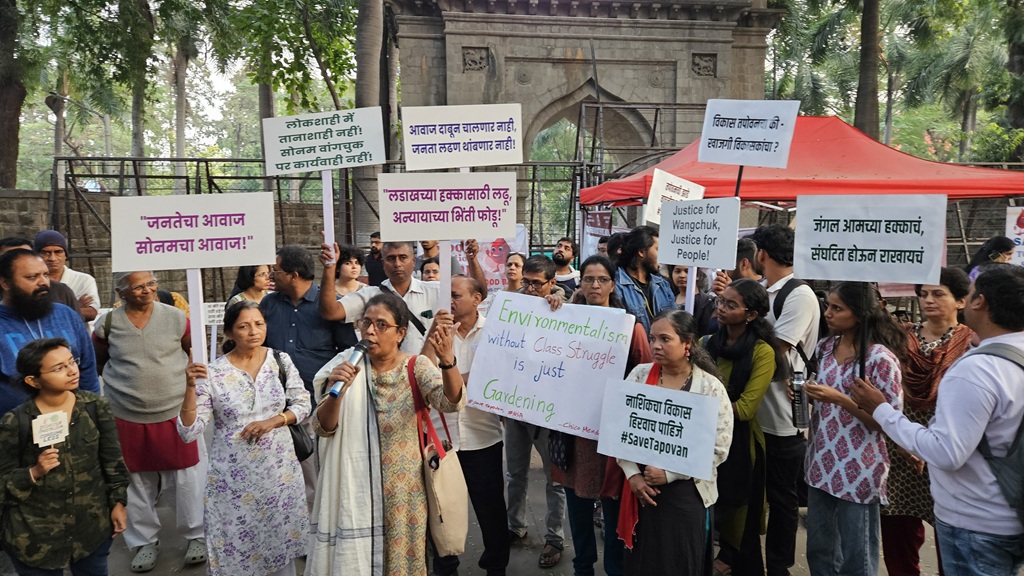
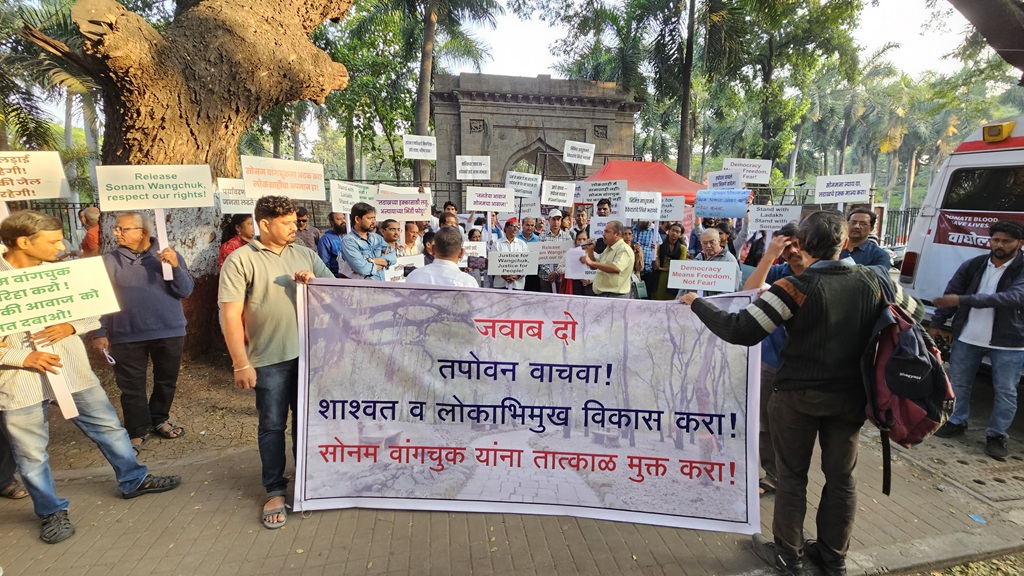
Shivajinagar, 7th December 2025: In a strong display of citizen-led environmental activism, hundreds of Pune residents assembled near the Balgandharva Bus Stop at the Sambhaji Garden footpath on Jangli Maharaj Road on Sunday evening, expressing solidarity with Nashik residents fighting to protect Tapovan — a historic forest threatened by proposed infrastructure for the 2027 Kumbh Mela. Nearly 1,800 mature trees are at risk due to development planned under a Public Private Partnership (PPP) model.
The two-hour demonstration, held from 4 pm to 6 pm, turned JM Road into a space for public discussion on ecological preservation and sustainable development. People from across age groups — schoolchildren, college students, young professionals, senior citizens, and activists — joined in the collective call to save one of Maharashtra’s oldest green zones.
“Tapovan is not just land; it is a legacy”
The protest focused on the threat to Tapovan’s centuries-old biodiversity. While authorities have suggested compensatory afforestation, environmentalists argue that newly planted saplings cannot replace a functioning old-growth ecosystem.
Environmental advocate Milind Chavan captured the sentiment of the crowd, saying,
“Kumbh Mela happens every few years, but Tapovan has stood for hundreds. From children to elders, we are united. Tapovan will not be destroyed. These trees will not be cut.”
His address drew loud support from the crowd, reflecting growing public frustration with development projects that overlook long-term ecological impact.
Young voices push for climate accountability
A significant presence of students emphasized the urgency of the climate crisis. One young participant said,
“There are nearly 1,800 trees in Tapovan. The Kumbh Mela lasts a few weeks, but destroying a forest affects generations. This is not about any region or religion — it is about our future.”
Their message highlighted the rising concerns over rising temperatures, shrinking green cover and loss of biodiversity.
Questions over PPP model and transparency
Speakers raised concerns that the PPP model risks commercialization of land traditionally held in the community’s trust. They argued that Tapovan plays a crucial role in stabilizing Nashik’s microclimate by reducing heat, preventing soil erosion, and supporting diverse flora and fauna.
Protesters demanded transparent environmental impact assessments and involvement of local communities in decision-making. Many urged authorities to identify alternative sites that do not endanger long-standing natural habitats.
Call for Sonam Wangchuk’s release
The protest also saw strong support for the release of climate activist Sonam Wangchuk, whose detention has sparked criticism across the country. Demonstrators carried placards reading “Release Sonam Wangchuk” and “Protect Environmental Voices.”
One student said,
“This protest represents what Wangchuk stands for — protecting nature and holding authorities accountable.”
Part of a growing movement
Similar demonstrations have been reported in Nashik, Mumbai, Nagpur, Aurangabad, and other cities, signaling a statewide pushback against deforestation linked to rapid urban expansion.
Environmental groups warn that Maharashtra is already grappling with rising temperatures and fluctuating rainfall patterns. Destroying large forested areas like Tapovan, they say, would worsen climate vulnerability.
“Not a political protest,” say participants
Residents stressed that their stand was not against the Kumbh Mela but against avoidable ecological harm.
“We respect the religious significance of Kumbh,” a senior citizen said. “But devotion cannot justify destruction. Development should preserve nature, not wipe it out.”
Next steps for the movement
Organizers — including Milind, Seema, and Avinash — urged citizens to stay engaged through awareness campaigns, petitions, and coordinated efforts across cities.
“We will continue to raise our voice,” said one of the coordinators. “Tapovan represents Maharashtra’s environmental heritage, and we must safeguard it.”
As the gathering concluded, protesters joined hands and pledged to continue their efforts until firm assurances are given. The peaceful demonstration reinforced a growing sense of responsibility among urban citizens toward protecting forests and ecological balance.
For Pune, the protest was more than solidarity — it marked a renewed resolve to defend natural heritage.
“Tapovan belongs to future generations,” a protester said. “We will not let it vanish.”