Pune Smart City Gym in Baner for Women Made Free After Social Media Campaign
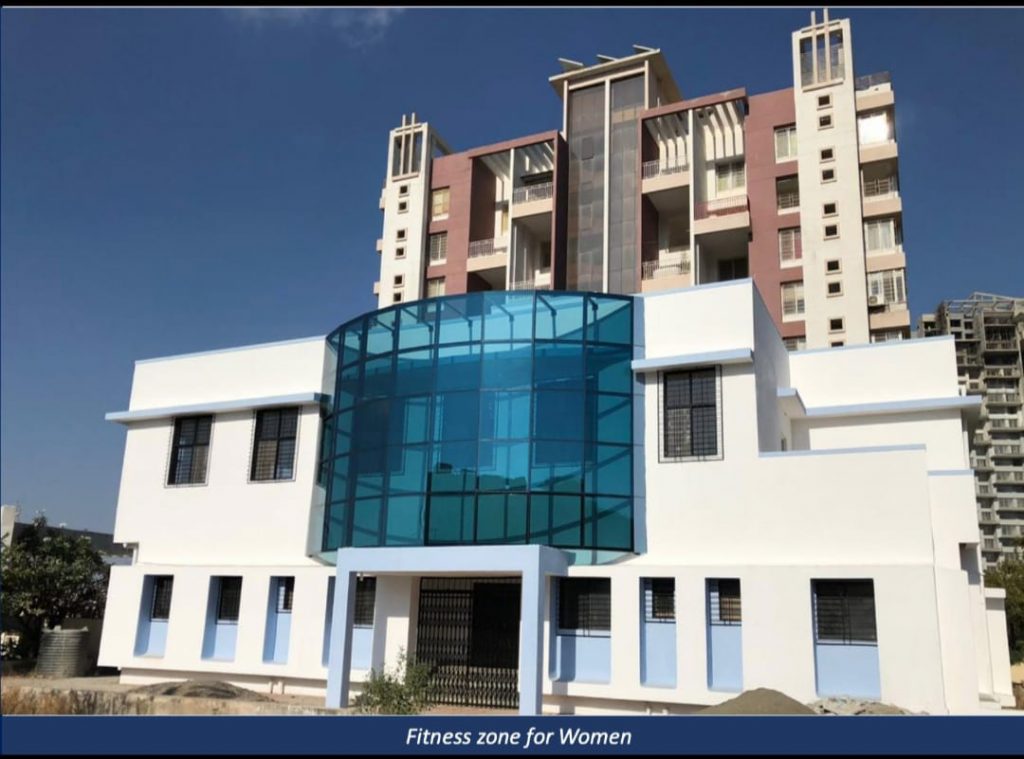
Baner, 4th August 2025: In a striking example of citizen-led accountability, a women-only gym near Pan Card Club built under the Pune Smart City project has been forced to reopen its doors for free public use following online outrage over its privatization.
The move comes after activist Ravi Kumar, founder of VIR Bike and a vocal Pune-based citizen, spotlighted how public infrastructure created through taxpayer funds was being commercialized without transparency.
The controversy centers on a women-exclusive gym facility constructed by the Pune Municipal Corporation (PMC) at a cost of Rs 56 lakhs under the Smart City Mission.
What began as a progressive initiative to support women’s health and fitness had, according to Kumar and others, quietly morphed into a profit-making venture operated by a private firm MultiFit— until citizen activism triggered a course correction.
From Public Asset to Private Hands
Pune recently claimed it had successfully completed its ₹3,333-crore Smart City project, becoming one of the first Indian cities to do so. However, residents like Kumar argue that the tangible benefits remain elusive, with daily life still plagued by poor roads, incomplete footpaths, traffic snarls, and dwindling green spaces.
While reviewing various Smart City outcomes, one facility stood out — the aforementioned gym, meant exclusively for women. Its existence wasn’t questioned, but the model of its operation was.
The gym was transferred to a private operator.
Membership fees were being charged to women, despite the facility being built using public funds.
There was no clarity on how the transition to private management occurred or on what terms.
Kumar’s viral social media post, which framed the issue as a “Raksha Bandhan gift to all women who couldn’t afford expensive gyms,” struck a chord. The campaign quickly gained traction, pressuring authorities and the operator to allow free access once again.
Symbolic Win, Deeper Questions
While the facility is now partially free to use for women, the incident raises larger concerns about governance, transparency, and equity in public infrastructure planning. The Smart City Mission was envisioned to improve urban life through inclusive, tech-enabled development. But if facilities like public gyms — meant to empower marginalized groups — are quietly commercialized, critics argue it betrays the scheme’s very intent.
“This gym should have been free from Day 1,” said Kumar. “If it took a social media storm to achieve that, imagine how many such misuses go unnoticed simply because no one’s watching.”
Demands for Accountability
The episode has sparked broader demands from civil society:
Public Audit: A comprehensive audit of all Pune Smart City projects under the ₹3,333 crore investment is being demanded.
PPP Transparency: Clear disclosures on all public-private partnerships, particularly those using taxpayer funds.
Citizen Oversight: Formal mechanisms for public monitoring and participation in Smart City implementations.
Clarification from PMC: A detailed explanation of who is benefiting from Smart City investments — the public or private players?
The Bigger Picture
With over ₹3,000 crore spent and PMC claiming completion of Smart City goals, cases like this gym expose the gaps between government reports and ground realities. The public reaction also demonstrates that citizens are no longer passive recipients — they are watching, questioning, and ready to act.
The reinstatement of free access may be a symbolic win, but for many, it also serves as a reminder that public infrastructure belongs to the people — not private contractors.
As Pune continues to market itself as a “smart city,” the fight to ensure that it is also an equitable and transparent one is far from over.