Pune’s Ganeshotsav Then and Now: What Has Changed Over the Decades?
Ashwini Hardikar (61)
Yoga Instructor & Co-Founder, The Yog Circle
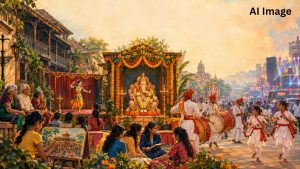
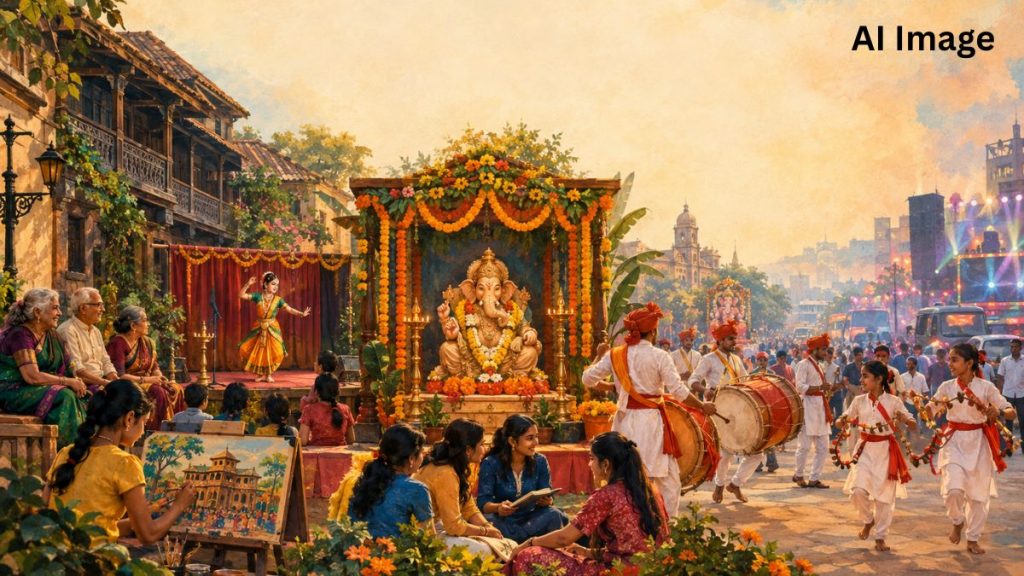
Back in the day, Ganpati celebrations in Pune used to be largely intimate and community-oriented, with families keeping modest household Ganpatis and only a small number of mandals bringing people together at the neighbourhood level.
Cultural programmes, mythological and historical dekhave were the highlights, while loudspeakers, elaborate lighting and amplified music were largely absent or limited to a few better-funded Ganpatis.
The immersion procession, too, was comparatively contained, featuring dhol-tasha and lezim. Despite going through the night, it would typically conclude by early morning, as there were far fewer Ganpatis participating. Over time, aggressive fund collection and the growing availability of money appear to have fuelled a shift towards elaborate lighting, increasingly loud music, commercialisation and, in some cases, alcohol consumption around mandals.
All of this has diluted the original sense of community, belonging, education and shared cultural purpose, replacing it with an emphasis on spectacle, pomp and noise.
Sandeep Nulkar (58)
Author, Language Industry Thought Leader & Founder, BITS Pvt. Ltd.
Growing up in Pune through the 1970s, 80s and 90s, I remember the Ganesh festival as being deeply rooted in community and culture. There was something in it for everyone. For us children, those ten days meant games, sports, singing, dancing and competitions organised by local mandals. Mandals also screened films, which was a genuinely magical experience back in the day.
What I don’t remember is DJs blasting music bearing no connection whatsoever to Ganpati, or entire neighbourhoods being forced to participate simply because they cannot escape.
Noise is not culture. Volume is not devotion. Somewhere along the way, parts of the festival seem to have morphed into a gigantic public street party. When celebration becomes a licence to inconvenience an entire city, something fundamental has gone wrong.
Equally difficult to ignore is the increasing politicisation of the festival. Political patronage and mobilisation around Ganesh Utsav are far more visible today. A festival that should belong to communities risks becoming a vehicle for political visibility, influence and competitive displays of clout. Culture should not become a contest over who can erect the biggest pandal, organise the largest procession or make the most noise.
The answer isn’t to make the Ganesh festival smaller. It is, in fact, to make it culturally bigger.
Use this extraordinary public platform to showcase Maharashtra, our classical and folk music, dhol-tasha, lezim, theatre, literature, painting, sculpture, traditional crafts and contemporary art. Put children and young people at its centre again. Give them stages to sing, dance, act, debate and perform. Organise competitions in art, science, literature and other skills. Give a child the thrill of performing before an audience or discovering a talent they didn’t know they had.
Ganesh Utsav has the potential to be one of Maharashtra’s greatest public showcases of community, creativity and culture. It is high time we reclaimed it from the competition for decibels, political visibility and spectacle.
Lekha Deshpande-Shirolkar (67)
Former Banker
As a lifelong Punekar, I cannot help but feel disheartened by how Ganeshotsav has gradually drifted away from its cultural depth, spiritual sanctity and sense of social responsibility, increasingly overwhelmed by blaring DJs, lasers, vulgarity and unruly celebrations. Lokmanya Tilak envisioned the public festival as a powerful instrument of social unity and national awakening, while the Ganeshotsav of our childhood enriched communities through thoughtfully crafted tableaux, social messaging, traditional music and vibrant, healthy cultural competition.
Today, the well-being of senior citizens, patients and the wider public is too often sacrificed to excessive noise, traffic disruptions and commercialisation, making it imperative that we reflect on what the festival ought to represent. It is therefore heartening that Vidyanand Bapat’s initiative this year has helped bring about meaningful improvements.
May Lord Ganesha bless us with the wisdom and collective resolve to restore the festival’s lost grandeur, replacing deafening DJs with the dignified rhythms of traditional instruments, lezim and dhol-tasha, and reviving its true spirit of devotion, culture and community.