Supriya Sule Urges Maharashtra Govt to Reconsider ‘Exorbitant’ Fee for NRI Students Seeking Engineering Admission
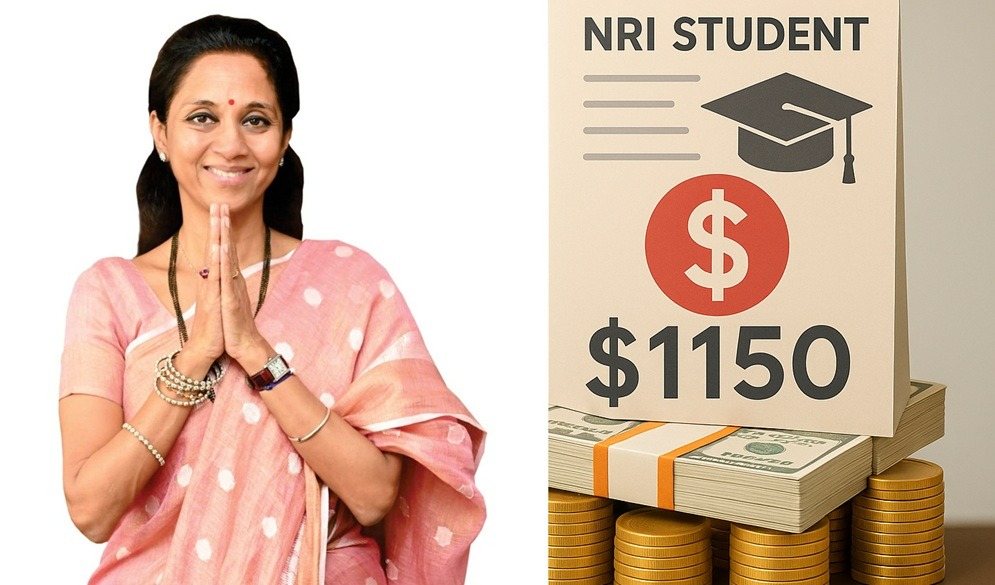
Pune, 18th July 2025: Baramati MP Supriya Sule has raised serious concerns over the Maharashtra government’s recent decision to impose a non-refundable fee of 1,150 US dollars (approximately ₹1 lakh) on Non-Resident Indian (NRI) students from Marathi families in Gulf countries seeking admission to engineering colleges in the state through the MH CET.
In a post on social media platform X (formerly Twitter), Sule pointed out that many students from non-resident Marathi families residing in the Gulf aspire to pursue technical education in Maharashtra and routinely appear for the MH CET after completing Class 12. While these students have already paid $50 (₹4,500) for the entrance application, they are now being asked to pay an additional non-refundable $1,150 to participate in the centralized admission process.
She further highlighted the disparity between the state and central admission processes, noting that the central system charges only $300 (₹28,000) as a non-refundable fee — less than one-third of what Maharashtra is demanding. Moreover, Karnataka charges ₹55,000 and offers a full refund, adding that this comparison underlines the financial burden Maharashtra’s fee structure imposes on NRI students and their families.
“These students want to study in Maharashtra, but this exorbitant non-refundable fee could force them to give up that dream,” Sule wrote. “With the admission deadlines for both central and state processes falling on July 29, students are compelled to choose one route, and this steep fee may discourage them from opting for Maharashtra.”
Sule appealed to the Maharashtra government to urgently reconsider and reduce the fee, making it more affordable and competitive in comparison to other states. “This is not just a financial issue; it’s about making education accessible for students who wish to stay connected to their roots in Maharashtra,” she added.
The demand has drawn attention from several parents’ groups and education activists who argue that such policies could alienate diaspora families eager to maintain ties with their home state through higher education.