Symbiosis College Hosts Two-Day International Conference on Language, Literature and Culture in Transition
Reported by Akita Chettri and Devapriya K J
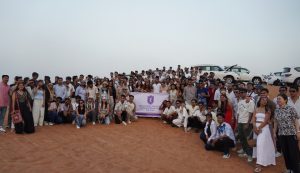
Pune, 15th January 2026: The Department of English, Symbiosis College of Arts and Commerce, Pune, successfully hosted two days of International Conference on ‘Language, Literature and Culture in Transition’ on 12 January 2026 and 13 January 2026 respectively. The event marked the Department’s second international conference and it was conducted in a hybrid mode, the conference brought together over 250 participants, including offline and online delegates, scholars, faculty members and students from diverse academic backgrounds.
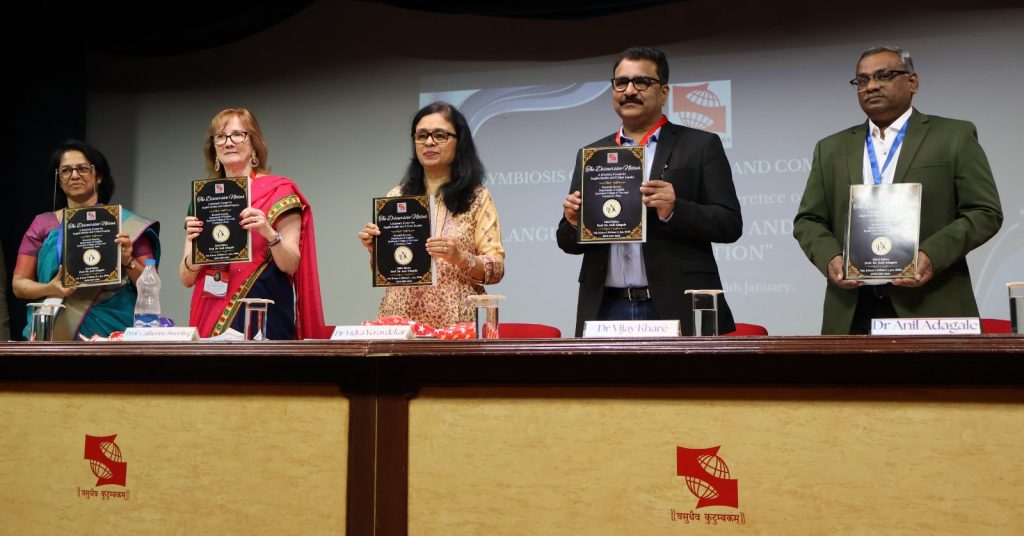
The first day of the International Conference was conducted in offline mode on 12 January 2026, with the inaugural session at Vishwabhawan Symbiosis marking the beginning. The ceremonial lighting of the lamp by distinguished dignitaries, formally set the tone for the day. In his welcome address, Prof. Dr Anil Adagale, Head of the Department of English, emphasised that “language, literature and culture function as critical lenses through which societies understand themselves and navigate change.” Reflecting on the success of the previous conference and the Department’s biannual peer-reviewed, ISSN-certified journal The Discursive Nexus, he encouraged participants to sustain a rigorous and collaborative research spirit. The Discursive Nexus, Volume II, published across three editions, features 111 articles contributed by conference delegates from Pune, as well as from Bengaluru, Rajkot, Nashik, Chennai, Nagpur, and several other regions.
As the Chief Guest and the Guest of Honour on the first day, Dr Vidya Yeravdekar and Dr Vijay Khare delivered a deeply reflective speech rooted in their lived experience. Their address reiterated Symbiosis’ foundational philosophy of Vasudhaiva Kutumbakam, invoking language as a bridge that connects culture with dignity and warmth, highlighting how migration, globalisation and shifting power structures shape the language and culture. Their address resonated strongly with the conference’s central theme of transition and intercultural exchange.
The keynote address by Prof. Catherine Sweeting offered a nuanced literary exploitation of transition through canonical texts such as Don Quixote, Northanger Abbey and Huckleberry Finn. She examined how characters shaped by past reading traditions negotiate present realities arguing that “what we read from the past continues to inform how we imagine the future.” Her lecture effectively connected literary history with contemporary questions of reader response and cultural continuity. Subsequent guest sessions featured insightful conversations along with parallel paper presentations covering a wide thematic range. Dr Kamalakar Bhat’s session on translation addresses the complexities of translating performative and oral traditions, questions the notion of “lost in translation” and suggests instead a mismatch between literary forms and lived cultural experiences. Dr Pramod K. Nayar’s address, while read in his absence, provided an in-depth examination of life-writing and vindication of personal narratives, offering a critical lens on how language constructs both victimhood and responsibility.
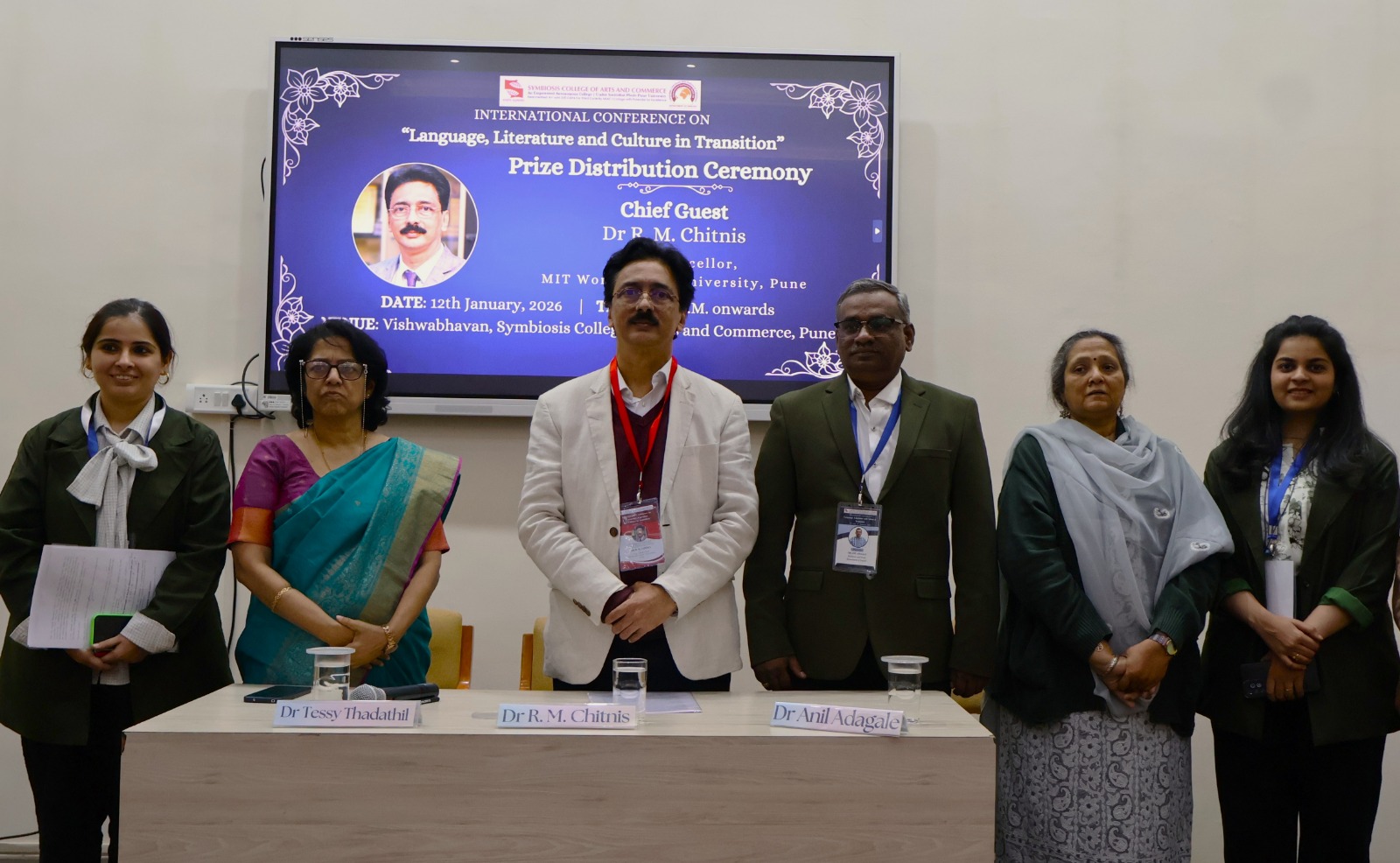
The eight chairpersons for the parallel sessions were: Dr Chetan Sonawane, Dr Ravindra Mhasade, Dr Anand Hipparkar, Dr Hanumant Lokhande, Dr Ajay Dhawale, Dr Tanweer Shaikh, Dr Padmini Mane and Dr Mrinalini Ghatage. The sessions showcased thorough student and faculty research on topics including dystopian literature, AI and digital humanities, translation studies, trauma narratives, eco-criticism, queer representation, mythology and postcolonial identity. Chairs consistently commended the interdisciplinary scope, theoretical engagement and contemporary relevance of the papers presented. The first day of conference concluded with the Prize Announcement Ceremony, graced by Chief Guest Dr R. M. Chitnis. Reflecting on National Youth Day, he encouraged students to engage critically with Indian intellectual traditions, noting that “wisdom lies not in rejecting complexity, but in learning to navigate thoughtfully.” Prof. Dr Hilda David and Prof. Dr R Raj Rao given a token of appreciation for their contribution in the prize winners award. The prizes were given for the best papers in the categories of UG and PG to Gauri Gogna, SCAC, Pune and Shruti Vijay Bhosale, Fergusson College, Pune. For Faculty and Research Scholar papers the awards were given to Gargee Tambe, Abeda Inamdar Senior College, Pune and Prof. Pradnya Adhav, Dhole Patil College of Engineering, Pune.
The International Conference continued online on its second day, 13 January 2026 and featured a full schedule of plenary lectures, parallel paper presentation sessions, and the Valedictory and Prize Distribution Ceremony. Sessions began with Dr. Vikas Kadam’s lecture on English as a lingua franca examined issues of access, power, and identity in global and Indian contexts. His session emphasized the need to move away from rigid notions of correctness and instead focus on intelligibility, communication, and inclusion.
The next session was delivered by Dr. Vasim Tamboli, he focused on multilingual education with a comparative analysis of India and Uzbekistan, where he currently resides. Dr. Tamboli’s session addressed misconceptions surrounding multilingualism and emphasised the importance of home languages, identity, and inclusive pedagogical practices.
Following this, the next session was chaired by Karl Alvestad he explored medievalism and cultural identity in the contemporary world. The session examined how medieval narratives are reinterpreted within globalised cultural frameworks, moving away from nation-centric readings towards subjective and popular cultural engagements. The next session that followed, chaired by Dr. Heike Spritz focused on plurilingualism and language as social practice.
The Closing Ceremony was held from 5.30 p.m. to 6.15 p.m. and was compered by Zoya Khan. Dr. Anil Adagale, Head of the Department of English, felicitated the Guest of Honour, Prof. Dr. R. Raj Rao, who delivered the Valedictory Address. In his address, he reflected on the place of English in India, arguing that English has functioned as a language of resistance, aspiration, and access rather than merely a colonial remnant. He noted that English today carries an Indian accent, idiom, and imagination, and must harmonise with India’s multilingual traditions.
The Prize Announcement Ceremony was led by the Chief Guest, Dr. Hilda David, who congratulated the Department of English and the organising team. The winners for the online sessions were announced as follows, the best papers in the categories of UG and PG to Shubhangi Mukherjee, Christ Deemed to be University, Bengaluru and Niharika Rajsaha, Christ Deemed to be University, Bengaluru and Tanvi Vyas, Saurashtra University, Rajkot. For Faculty and Research Scholar papers the awards were given to Dr Ketki Ramesh Shinde, Vishwakarma University, Pune and Sukanya Garg, SPPU, Pune. The second day of the International Conference on Language, Literature and Culture in Transition concluded on a note of academic fulfilment, expressing gratitude to Dr. Tessy Thadathil, Officiating Principal, Dr. Anil Adagale for his leadership, the faculty members of the English Department, session chairs, technical team, volunteers, and all participants.
Altogether, the conference provided a meaningful academic platform that promoted dialogue on how language, literature and culture continue to evolve in response to social, technological and historical transitions.