The Indian Media Barometer 2025 Report released in Pune
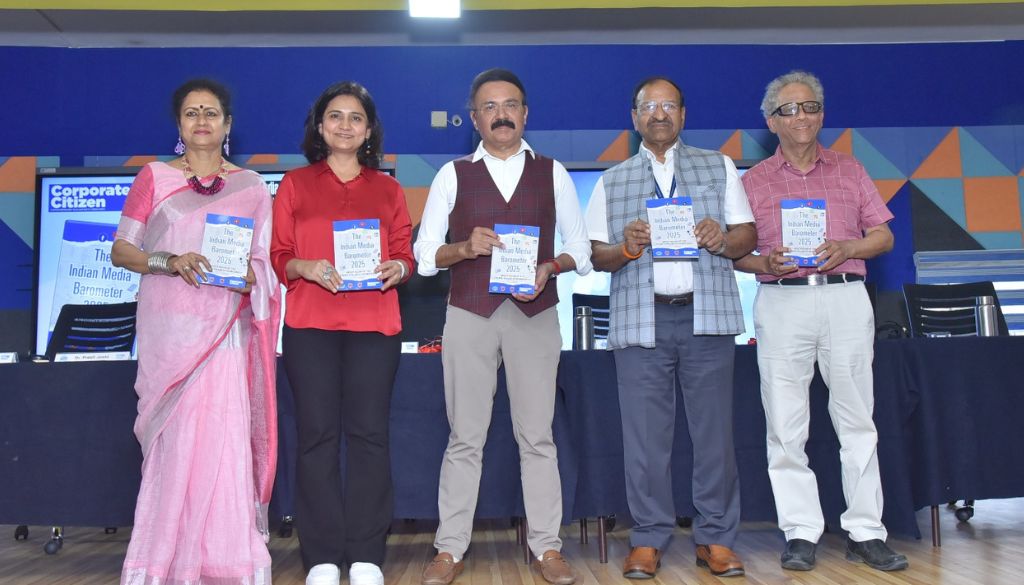
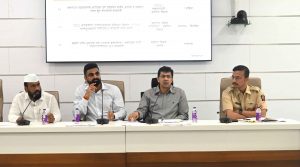
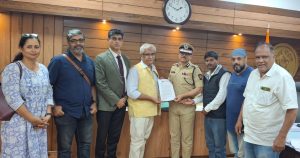
Pune, 8th December 2025: `The Indian Media Barometer 2025’ report, a first-of-its-kind health scan of the print, television and social media hosted by Sri Balaji University Pune (SBUP) which is the first ever educational institute in India to do so; was released recently and brought together senior journalists, social activists, armed forces veterans, academics and students for a sharp, data-driven look at the current state of Indian media.
Chief guest Mahesh Zagade, the Former Principal Secretary, Government of Maharashtra, described the report as a diagnostic check of Indian media’s health. Raising concerns over the erosion of journalism’s democratic role, he noted that the media, once a fearless watchdog, is increasingly behaving like a product. He warned that both mainstream and social media are drifting toward “manufactured content’’, posing a threat to public understanding and misguiding readers/viewers and thus crippling democracy. “There is an urgent need to reorient the media if it is to regain its role as the fourth pillar of democracy,’’ which he said has been presently gnawed by “termites’’ to the extent of almost not in existence at all.
Vinita Deshmukh, Editor, Corporate Citizen Magazine which co-hosted this event along with SBUP’s School of Liberal Arts stated that, “Journalism was pure public service in its purest form. However, over the one and a half decade, the landscape has changed dramatically. The primary stakeholder — the reader, has been gradually side-lined, while commercial interests have taken center stage. Meanwhile, digital and social media have democratized news dissemination, but also blurred the lines between information, opinion, and sensationalism.
Against this complex backdrop, Corporate Citizen — under the aegis of the Balaji School of Media, Communication & Journalism (BSMCJ) organised The Media
Barometer 2025 Conclave. This closed-door event brought together over twenty senior journalists, media educators, public relations professionals, and representatives from print, television, digital, and social media platforms.
Dr Preeti Joshi, Principal of SBUP’s School of Liberal Arts and School of Humanities and Social Sciences, highlighted the report’s value for academia and industry alike. “This report shows how today’s media is performing. It will not just inform us, it will help us introspect about where we are headed,” she said.
Veteran journalist and editor Anand Agashe presented the report and thanked SBUP for hosting the conclave. He spoke candidly about shrinking editorial space in today’s media landscape. “The space for journalism has shrunk. That is why we decided to have this anonymous rating of media. There are 57 parameters on which performance was recorded,” he said. He also added that, “ A thorough ‘health scan’ of the present-day media
by its internal and external stakeholders is necessary to understand where the shoe pinches. The Media Barometer conclave conducted at the Sri Balaji University, Pune (SBUP) in September/October 2025 is a step in that direction. It can be expanded, refined and customized to suit needs and constraints. Given the vastness of our country, similar exercises will have to be carried out in many parts of India to get a more holistic picture.
All such exercises will provide excellent inputs for media literacy of our citizens/citizen journalists. The hope for getting the media we deserve will fructify only if that happens.’’
SBUP Vice Chancellor, Dr G. K. Shirude, underscored the need to view news with both content and context. He noted that media often functions under pressure and emphasised SBUP’s commitment to encouraging innovative academic and industry initiatives. Shirude noted that, ‘’ This Media Barometer presents a measured appraisal of India’s media ecology, covering long-established print and broadcast media as well as the fast-evolving digital sphere. The study identifies institutional strengths, regulatory and ethical gaps, and the commercial and technological pressures that condition news production and distribution. For students, researchers and practitioners, its findings are practical and necessary: they clarify how narratives form, how trust is built and eroded, and what standards are required for professional practice.’’
Following the formal release of The Indian Media Barometer 2025 Report, a panel discussion on “Journalism in the age of Media Explosion” brought multiple perspectives to the fore. The panel featured Dr Sameeran Walvekar, veteran print and TV journalist, filmmaker and author; Siddharthya Roy, Investigative Journalist & Author; Radheshyam Jadhav, Senior Deputy Editor, The Hindu Group; and Triveni Goswami Mathur, media educator and researcher, anchored the insightful session, that brought to the fore the problems of a submissive media and the alternate solutions to it. The discussion also examined shrinking newsroom capacity, the surge of digital content and evolving audience expectations.