Why Sugarcane Farmers Are Blocking the Pune-Bengaluru Highway? Here’s What to Know
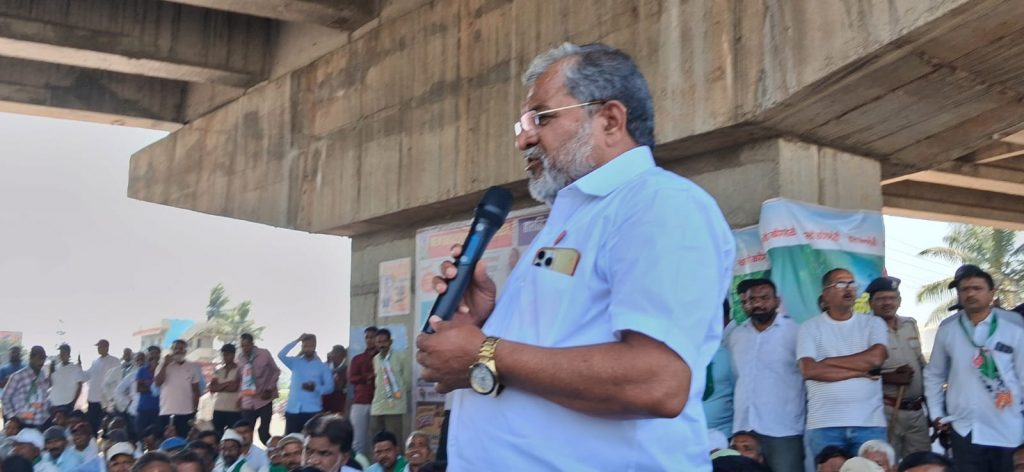
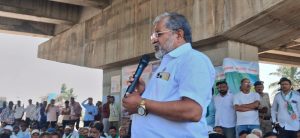
Kolhapur, 14th October 2026: Sugarcane farmers intensified their agitation along the Maharashtra-Karnataka border on Tuesday, blocking the Pune-Bengaluru National Highway at the Kognoli toll plaza and other key roads to demand higher prices for sugarcane, better returns from sugar and ethanol production, and financial assistance ahead of the upcoming crushing season.
The indefinite protest, led by former MP Raju Shetti of the Swabhimani Shetkari Sanghatana, began after talks with Union ministers in New Delhi failed to produce any concrete decision. Thousands of farmers gathered at the border, warning that the agitation would continue until the government addressed their demands.
The agitation centres on three major demands adopted at the 25th Sugarcane Conference organised by the Swabhimani Shetkari Sanghatana.
1. Minimum sugar selling price of Rs 50 per kg
Farmers want the Centre to raise the minimum selling price of sugar to Rs 50 per kg. They argue that sugar prices directly affect the revenue earned by sugar mills and their ability to pay farmers remunerative prices for sugarcane.
The minimum selling price is the floor price at which mills can sell sugar. Farmers believe that increasing it would improve mills’ financial position and help them pay better prices for their produce.
2. Higher price for ethanol made from C-heavy molasses
The farmers have demanded that the price of ethanol produced from C-heavy molasses be raised to Rs 70 per litre.
C-heavy molasses is a by-product of sugar production and is used to manufacture ethanol, which is blended with petrol. Farmers want better returns from this route of ethanol production, arguing that the pricing structure should support the sugar industry’s finances and, in turn, improve payments to cane growers.
3. Sugarcane price of Rs 5,000 per tonne, including Rs 500 subsidy
The farmers have demanded a price of Rs 5,000 per tonne for sugarcane, including a subsidy of Rs 500 per tonne from the government. They say the assistance is particularly important because the crushing season is beginning early, and growers want a remunerative price before mills start operations.
Why have the talks with the Centre failed?
A delegation of farmers’ representatives met Union Food and Consumer Affairs Minister Pralhad Joshi and Union Agriculture Minister Shivraj Singh Chouhan in New Delhi on Monday. The meeting lasted around three hours but ended without a concrete decision on the demands.
According to the farmers’ representatives, the Centre offered to form a committee within a week to examine the issues and take a decision. However, the assurance failed to satisfy the protesting organisations, which wanted specific commitments on prices and financial assistance.
Following the unsuccessful meeting, farmers’ organisations called for an intensified agitation across the state on Tuesday.
Why is the protest affecting highway traffic?
Farmers gathered in large numbers at the Kognoli toll plaza on the Maharashtra-Karnataka border, bringing traffic on the Pune-Bengaluru National Highway to a halt. Protests also spread to other locations, including Hattargi and Hirebagewadi toll plazas in Karnataka, as well as parts of Bagalkot, Vijayapura and Hubballi-Dharwad.
The highway blockade has disrupted a key inter-state transport route. Police have made alternative arrangements for vehicles entering Maharashtra from Karnataka through Belagavi.
What happens next?
Shetti has warned that sugar factories will not be allowed to begin operations before November 15 if the government fails to take a concrete decision. He has also threatened to block the transportation of sugar produced by the mills.
The farmers have announced an indefinite agitation, making the government’s response to their demands crucial ahead of the sugarcane crushing season. For now, they have rejected the assurance of a committee and are seeking firm decisions on sugar prices, ethanol rates and direct financial support for growers.