6,400+ Residents of Ward 9 Release ‘Citizens’ Manifesto’ Ahead of 2026 Pune Municipal Elections
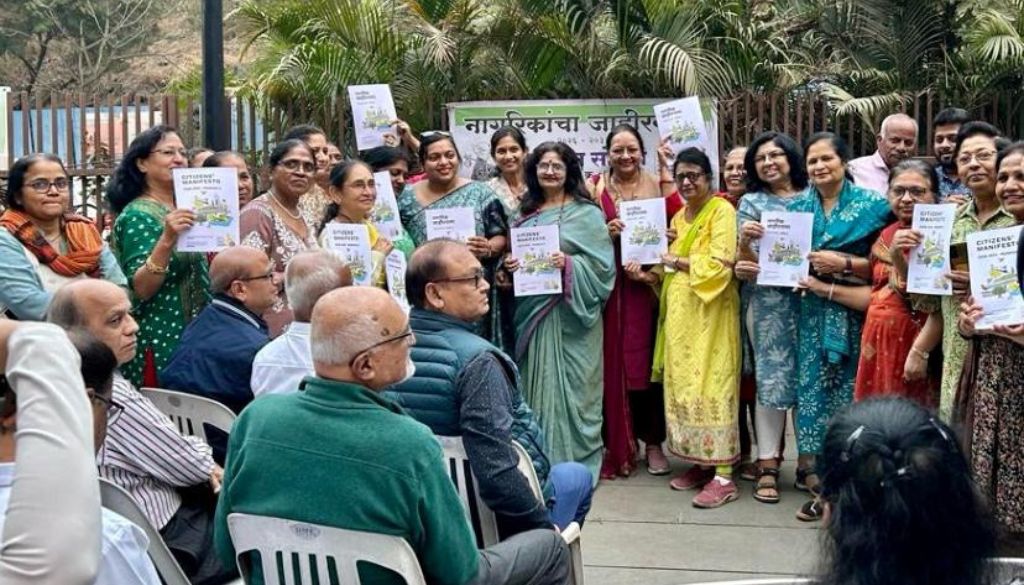
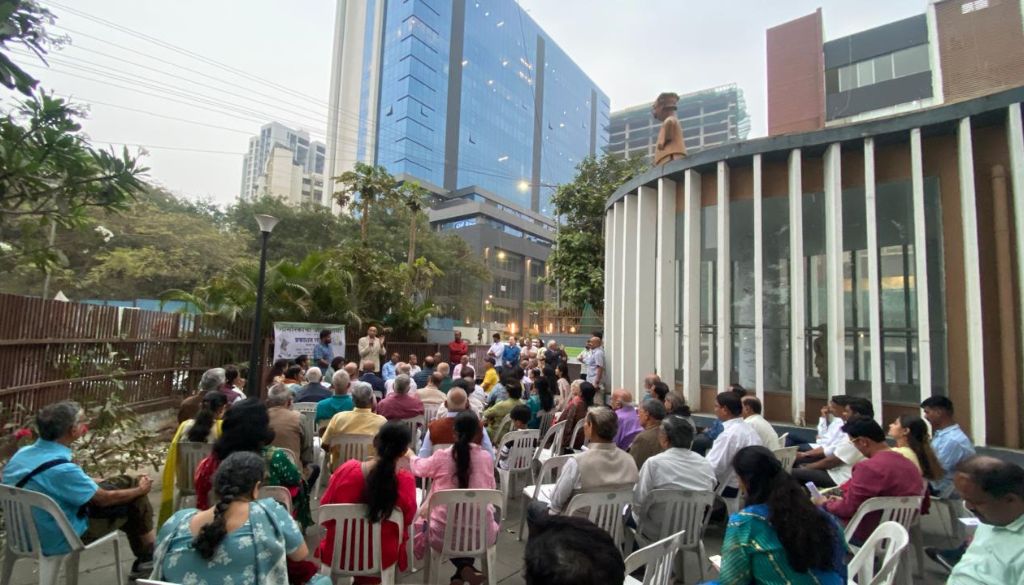
Baner, 5th January 2026: In a defining moment for local civic activism, the residents of Ward 9—encompassing the rapidly urbanizing belt of Baner, Balewadi, Pashan, Sus, Mahalunge, Sutarwadi, and Someshwarwadi—have declared that they will no longer be passive recipients of governance. Yesterday evening, against the backdrop of the Common Man Statue in Balewadi, a massive, citizen-led collective released the “Citizens’ Manifesto 2026-2031,” a comprehensive roadmap for the region’s future.
With the Pune Municipal Corporation (PMC) elections scheduled for January 15, 2026, the timing is critical. However, unlike traditional political rallies, this event featured no chief guest. In a powerful symbolic gesture, local women released the document themselves, underscoring the manifesto’s core message: this agenda belongs to the people.
A Mandate from the Ground Up
The manifesto is the culmination of an extensive campaign titled “My Vote Matters, and My Voice Too,” spearheaded by the Baner Balewadi Nagrik Manch (BBNM) and the Baner Balewadi Pashan Residents Association (BBPRA). Moving beyond the typical assumptions made by political parties, volunteers spent weeks conducting a granular civic audit. They engaged with housing societies, shop owners, senior citizens, and first-time voters through Google Forms, focus group discussions, and expert consultations.
The result is a staggering data set based on responses from over 6,400 residents.
“This number is not just a statistic,” the press note accompanying the release stated. “It reflects awareness, concern, and a strong desire to be heard. In a busy urban area often described as ‘too occupied to care,’ this participation sends a powerful message: citizens are paying attention.”
Demographically, the respondents represent the heart of Pune’s modern workforce and long-term settlers. Approximately 47.7% of responses came from Balewadi, followed by 34.2% from Baner and 8.5% from Pashan. notably, nearly 50% of those surveyed have lived in the area for over a decade, indicating a deep investment in the region’s long-term trajectory.
The ‘Pain Points’: Development Without Planning
The manifesto serves as a “mirror to governance,” revealing a disconnect between the area’s rapid real estate explosion and its crumbling infrastructure. The survey results offer a scathing indictment of current civic management, identifying three “Very High” priority issues that plague daily life: Traffic & Congestion, Road Conditions, and Pollution.
For the residents of Ward 9, “development” has become synonymous with chaos. The manifesto highlights that while the Unified Development Control and Promotion Regulations (UDCPR) have allowed for higher Floor Space Index (FSI)—leading to taller towers and higher density—there has been no matching upgrade in basic infrastructure.
“Every area has a limited carrying capacity,” the document argues. “The gap is now visible in traffic congestion, water shortages, flooding, and loss of green spaces.”
Among the most contentious findings is the “Governance Failure” identified by citizens. Residents expressed frustration over construction approvals being granted without checks on road or sewage capacity. They cited the “Kafkaesque” reality of newly built roads being repeatedly excavated by multiple departments, with no public disclosure of timelines or penalties for delays.
The Environmental Ultimatum: ‘Rights of the River’
Perhaps the most scientifically detailed section of the manifesto addresses the environmental degradation of the region. Prabhag 9 is ecologically sensitive, home to the Mula River, the Ramnadi, Pashan Lake, and significant hill tracts.
The manifesto declares a “man-made crisis” regarding the Mula River. It notes that natural drainage channels have been obstructed by debris dumping and unscientific development, leading to frequent flooding between Wakad and Sangvi.
Citizens have laid down a radical environmental agenda for future corporators:
Zero Tolerance for River Pollution: Immediate action against sewage discharge and strict implementation of Sewage Treatment Plants (STPs).
Rights of the River: A demand to formally recognize the river’s right to flow and sustain life, treating it as a living ecosystem rather than a resource to be exploited.
Hill Protection: A complete ban on hill cutting. The manifesto frames the hills of Baner-Pashan-Sus not as empty land for construction, but as “natural shields” against the Urban Heat Island effect, which is making neighborhoods significantly hotter.
“Protecting the hills is not about stopping development; it is about responsible planning,” the manifesto asserts. “Once destroyed, these natural systems cannot be restored in our lifetime.”
Water Security and the ‘Tanker Economy’
Despite being a premium residential corridor, the region suffers from acute water insecurity. The manifesto highlights that nearly one-fourth of the city’s water needs are met by groundwater, yet rapid concreting is destroying natural aquifers.
A non-negotiable demand in the 2026-2031 roadmap is “24×7 potable municipal water (tanker-free).” Residents are demanding that the elected corporator push for mandatory rainwater harvesting and the protection of natural springs to break the region’s expensive and unreliable dependency on private water tankers.
Mobility: The Metro and the Missing Links
While the Pune Metro is viewed as a future advantage, residents argue its success hinges on “last-mile connectivity.” The manifesto calls for a paradigm shift toward “Pedestrian-First Infrastructure.”
“Metro development must go hand-in-hand with walkable streets,” the document states. Demands include reliable feeder buses, shared e-rickshaws, and dedicated cycle tracks to ensure every station is accessible within 10–15 minutes.
Furthermore, the citizens have provided a specific “punch list” of unfinished road projects that are causing bottlenecks. They are demanding the immediate completion of:
• The Sutarwadi Main Road.
• The Baner-Pashan Link Road.
• The Wakad-Balewadi Bridge connectivity.
• The road from Sai Chowk to Yashoda Chowk.
The residents also called for the removal of “hanging overhead cables” and a permanent solution to the traffic chaos at Radha Chowk and near Ram Indu Park.
Governance: A Call for Character
Moving beyond physical infrastructure, the manifesto places a heavy emphasis on the character and behavior of their elected representatives. In a section titled “Expected Qualities in Elected Representatives,” the survey reveals that citizens value “Sensitivity towards environment and inclusivity” (56.5%) and “Accessibility to citizens” (53.5%) highly.
However, the highest demand, at 66.5%, is for a “Long-term vision.”
Residents are tired of piecemeal fixes. They are demanding transparency in budgets, carrying capacity studies before project approvals, and the courage to resist pressure from builder lobbies. The manifesto explicitly asks for an end to the “PMC staff–contractor nexus” that hampers the quality of public works.
Specific Local Demands
The document is meticulous in its localization, listing specific action points for the diverse neighborhoods within the Prabhag:
• For Sus and Mahalunge: Urgent attention to basic amenities and resolution of the Town Planning (TP) Scheme issues.
• For Pashan: A separate police chowki and the conservation of biodiversity at Pashan Lake.
• For Baner: Relocation of the waste sorting shed behind Baner Smashan Bhoomi and subsidies for the PMC Ladies Gym.
• For Balewadi: Completion of the garden at Survey No. 35 and expediting power substation work to ensure reliable electricity.
Conclusion: A Roadmap for 2031
As Pune prepares for the January 15 polls, the “Citizens’ Manifesto” stands as a formidable document. It is not merely a list of complaints but a professional, data-driven vision statement for a “liveable, inclusive, green, and well-governed urban region.”
By releasing this manifesto, the residents of Baner, Balewadi, Pashan, and surrounding areas have inverted the traditional power dynamic. They are not waiting for politicians to promise a vision; they have defined the vision themselves. The message to the political class is unequivocal: The vote is not a blank check. It is a contract, and this manifesto is the terms of agreement.
As the press note concludes, “Democracy does not begin and end on polling day. It lives in conversations, participation, and collective responsibility.” For Ward 9, the conversation has just begun, and it is louder than ever.