India’s Youngest Quantum Innovator: 16-Year-Old Tanishk Jaggi Links Physics to Biology in Groundbreaking Research
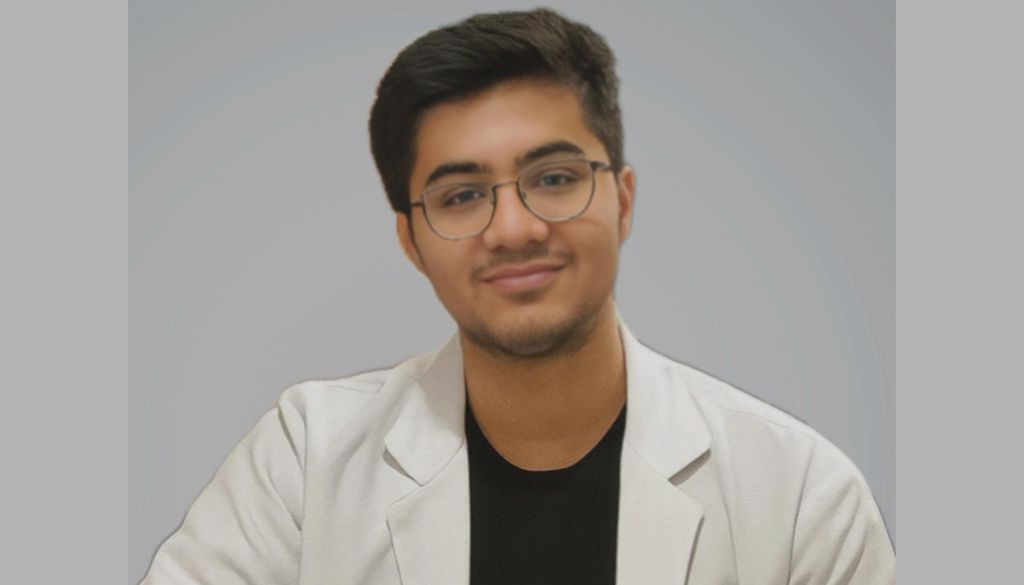
Pune / Ahilyanagar, 1st August 2025: At just 16 years and 9 months old, Tanishk Jaggi has achieved what many seasoned researchers spend decades striving for — publishing a groundbreaking scientific theory that bridges two of the most complex domains in science: quantum mechanics and biology.
His research, titled “Quantum Biophysics and Neural Networks: A Novel Framework to Explain Protein Folding”, proposes the first globally recognized model that successfully establishes a direct connection between quantum mechanics and biological processes, specifically protein folding. What makes the breakthrough even more remarkable is that it was independently validated by Ph.D. researchers at IBM, whose replication of Tanishk’s model confirmed its scientific robustness (source: arXiv:2507.08955).
The research has now been formally published by CERN (European Organization for Nuclear Research) in its official Zenodo journal, making Tanishk one of the youngest researchers in the world to be recognized in this elite scientific circle. The full paper is available online under DOI: https://doi.org/10.5281/zenodo.16179797.
“For over a hundred years, quantum mechanics has explained how our universe works at the smallest scales — yet we’ve struggled to link those strange, probabilistic rules to how biology works at the human level,” Tanishk told this correspondent. “I wanted to address that gap, and the key turned out to be neural networks.”
Tanishk’s model uses quantum mechanical principles fused with machine learning architectures to simulate how proteins — the fundamental building blocks of life — fold with atomic precision. Improper protein folding has been linked to diseases like Alzheimer’s and Parkinson’s. If Tanishk’s approach is developed further, it could eventually enable quantum-assisted drug design and more accurate disease modeling.
“It’s not just about solving equations anymore,” he added. “It’s about interpreting reality through the lens of both physics and computation. That’s where the future of science is heading.”
Born and raised in Ahilyanagar, Maharashtra, Tanishk has worked mostly from home, relying on open-source computing tools, digital libraries, and late-night coding marathons to build his simulation models. He began exploring quantum computing during the COVID-19 lockdowns and soon turned his attention toward questions that puzzled even the likes of Einstein and Heisenberg.
His work is already drawing attention from academia and scientific think tanks globally. Experts say the model opens doors for interdisciplinary breakthroughs in quantum biology, biophysics, and computational neuroscience.
“It’s rare to see such conceptual clarity and computational maturity in someone so young,” said a senior physicist affiliated with a government research institute, who reviewed Tanishk’s work.
Tanishk now plans to pursue deeper inquiries into quantum cognition — the study of how quantum phenomena might influence brain function and consciousness. He’s also working on a book to simplify the science behind his research for younger students.
“Age shouldn’t be a barrier to scientific thinking,” Tanishk says. “What matters is asking the right questions — and being stubborn enough to keep searching until you find your own answers.”
His journey is a shining example of youth-led innovation and marks a proud moment for Indian science on the global stage.