The Unspoken Revolution in Knee Care: Dr. Sana Sayyad Champions Preservation Before Replacement
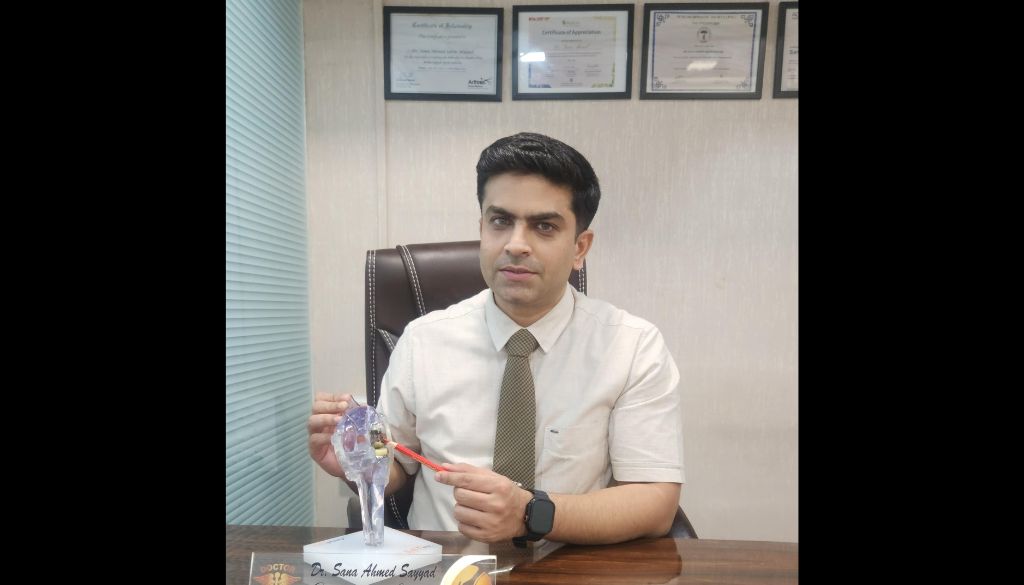
Pune, 4th August 2025: For many Pune residents in their 30s to 50s, nagging knee pain can quietly undermine daily routines. While total knee replacement remains a valuable solution for advanced arthritis, an increasing number of orthopaedic experts—led locally by Dr. Sana Ahmed S. Sayyad—are advocating knee preservation techniques. These procedures repair and reinforce the body’s own structures, enabling patients to keep their natural joints and stay active for years longer.
Early Intervention Over Replacement
Knee preservation emphasizes treating damage early, before severe wear and tear necessitates a full joint replacement. By repairing torn ligaments, restoring cushioning tissue, or realigning the leg’s load-bearing axis, surgeons can relieve pain and halt arthritis progression. Preserving one’s own bone and cartilage often results in smoother movement, fewer long-term restrictions, and a quicker return to everyday activities—whether it’s climbing stairs without discomfort or enjoying evening walks.
Dr. Sana Sayyad, an orthopaedic surgeon specializing in knee and shoulder care, has performed over 5,000 surgeries and completed advanced fellowships in South Korea and Singapore. He emphasizes that timely treatment can spare many patients from more invasive solutions down the road. “Once a knee becomes bone-on-bone, replacement is often the only option left,” he explains. “By intervening early—repairing tears, restoring cartilage or realigning the joint—we can preserve natural movement and delay, if not avoid, an artificial implant altogether.”
Dr. Sayyad regularly speaks at community health forums to raise awareness that knee pain in mid-life is not inevitable. He encourages anyone experiencing persistent discomfort—whether a catch when bending or stiffness after a busy day—to seek an evaluation before symptoms worsen.
Advances in Technology
Orthopaedic technology continues to refine knee preservation strategies, and Dr. Sayyad’s team remains at the forefront, incorporating:
• Computer-assisted planning: Detailed digital models help surgeons map the exact cuts or repairs needed, increasing precision.
• Expert guidance: Bone realignment or cartilage restoration, reducing human error and protecting healthy tissue.
• Biologic therapies: Growth factors and patient-derived cells stimulate natural healing, boosting the body’s own repair capacity.
Together, these advances allow more targeted treatments with smaller incisions, less post-operative discomfort, and a smoother rehabilitation process. Patients frequently report a more “natural” feel in the knee, with fewer limitations on activities ranging from gardening to dancing at family celebrations.
Some Simple Surgeries with Big Benefits
• Realigning the Leg Bone: By making a tiny cut in the shin bone and shifting it slightly, Dr. Sayyad takes pressure off the damaged part of your knee. Think of it as evening out the load to slow down wear and tear.
• Cartilage Repair: In one method, small holes are made beneath the worn area so your body can grow fresh repair tissue. In more advanced cases, your own cartilage cells are grown in a lab and patched into the damaged spot—like planting new grass in a bald lawn.
• Saving the Meniscus: When that shock-absorbing pad gets torn, stitches or small anchors can mend it. If it’s too far gone, a donor cushion can be implanted to restore protection.
• Stabilizing Ligaments: A loose or torn ligament can let the knee wobble, speeding up damage. Rebuilding these “ropes” inside your knee helps keep everything tight and working smoothly.
These methods are combined as needed to craft a personalized treatment plan that addresses each patient’s unique anatomy and lifestyle goals.
Advantages for Active Adults
Knee preservation is more than a trend—it’s a shift toward smarter, less invasive care.
• Natural Range of Motion: Retained bone and cartilage preserve the joint’s original flexibility, making daily tasks like climbing stairs or playing with children more comfortable.
• Faster Recovery: Smaller incisions and targeted repairs mean less discomfort, shorter hospital stays, and a quicker return to work or leisure.
• Lower Complication Rates: Preserving natural tissue reduces infection risk and avoids potential implant-related issues down the line.
With expert guidance and biological treatments continually improving, the future looks bright for those who want to maintain their natural joints. If you’re between 30 and 50, enjoying sports or a busy lifestyle, and MRI scans show early wear or a tear, preservation could be right for you. The goal is to fix the problem before it spreads, so you avoid a more invasive operation later..
(Dr Sana Ahmed S Sayyad is Consultant Orthopaedic Surgeon
Shoulder & Knee Specialist (Indian Board Certified) MBBS, D’ORTHO, DNB, FICT (Complex trauma), FPAS, FIJR (Robotics), FIASM (Sports Med), FASS (Advanced Shoulder, South Korea)