From Mahar Watan Land to Botanical Garden to Billion-Rupee Scandal: The Untold Story of Mundhwa Land Sale in Pune

Reported by Mubarak Ansari
Pune, 8th November 2025: The controversy surrounding the 40-acre Mahar Watan land in Pune’s Mundhwa has deepened, revealing a tangled web of political, legal, and administrative lapses. What began as a dispute over land ownership has now escalated into a full-blown investigation involving senior state officials, the Deputy Chief Minister’s family, and allegations of stamp duty evasion running into crores.
Land Under Government Lease, Not for Sale
Senior officials from the Pune district administration have confirmed that the Mundhwa plot — originally Mahar Watan land — is still owned by the Government of Maharashtra and remains under a valid lease to the Botanical Survey of India (BSI) until March 2038. “The ownership rests with the state government. The watandars’ names were mistakenly carried under the ‘others’ column in the land record, which should have been corrected long ago,” said a senior district officer.
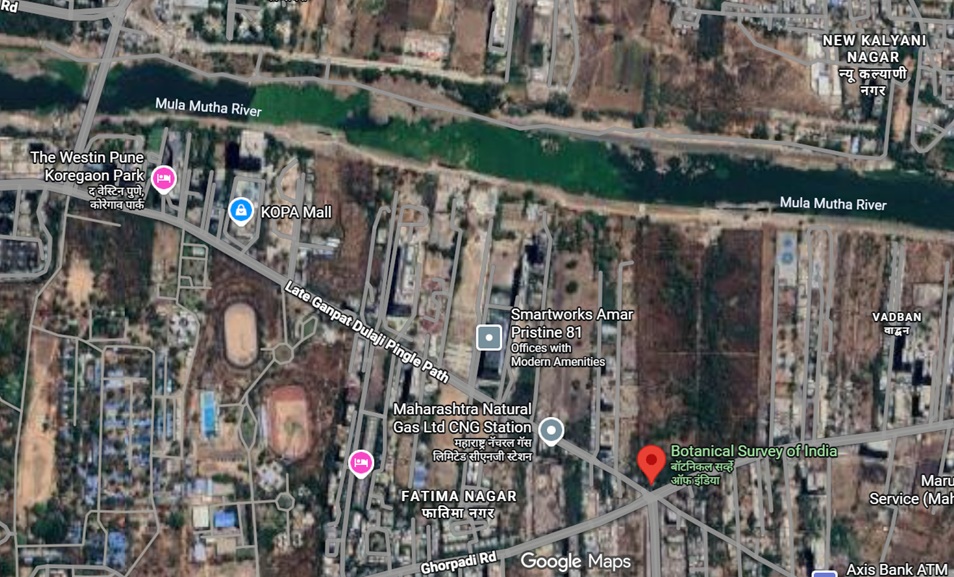
District Collector Jitendra Dudi clarified that BSI continues to use the land for its intended purpose. “The Botanical Survey of India holds a valid lease agreement till 2038. We are reviewing similar leases of former Mahar Watan lands to verify their present legal status,” Dudi said.
Officials noted that the land was taken over by the then Bombay State government in 1955, four years before the Bombay Inferior Village Watans Abolition Act, 1958 came into force. This means the land was already under government possession before hereditary watans were legally abolished on February 1, 1959.
How the Land Changed Hands: A Timeline
- 1955: The state takes possession of the Mahar Watan land in Mundhwa.
- 1959: A formal kabuliyat (lease agreement) is signed with the BSI.
- 1973–1988: Lease renewed for 15 years.
- 1991–92: Watandar families object; government reaffirms state ownership.
- 1999: Lease retrospectively extended till March 2038.
- 2006: A power of attorney to Sheetal Tejwani of Paramount Infrastructures, executed by 272 watandars enables attempts to reclaim or sell land.
- 2018: Old 7/12 extract closed; new survey number (1178) issued.
- May 2025: Despite closure, a sale deed is registered using the defunct record — now declared “illegal.”
A retired revenue official said the case exposes systemic weaknesses in land record management. “Though the government owns it, outdated 7/12 records give space for manipulation. Unless records are fully digitized and corrected, such misuse will persist,” the official said.
Alleged Irregular Sale to Parth Pawar’s Firm
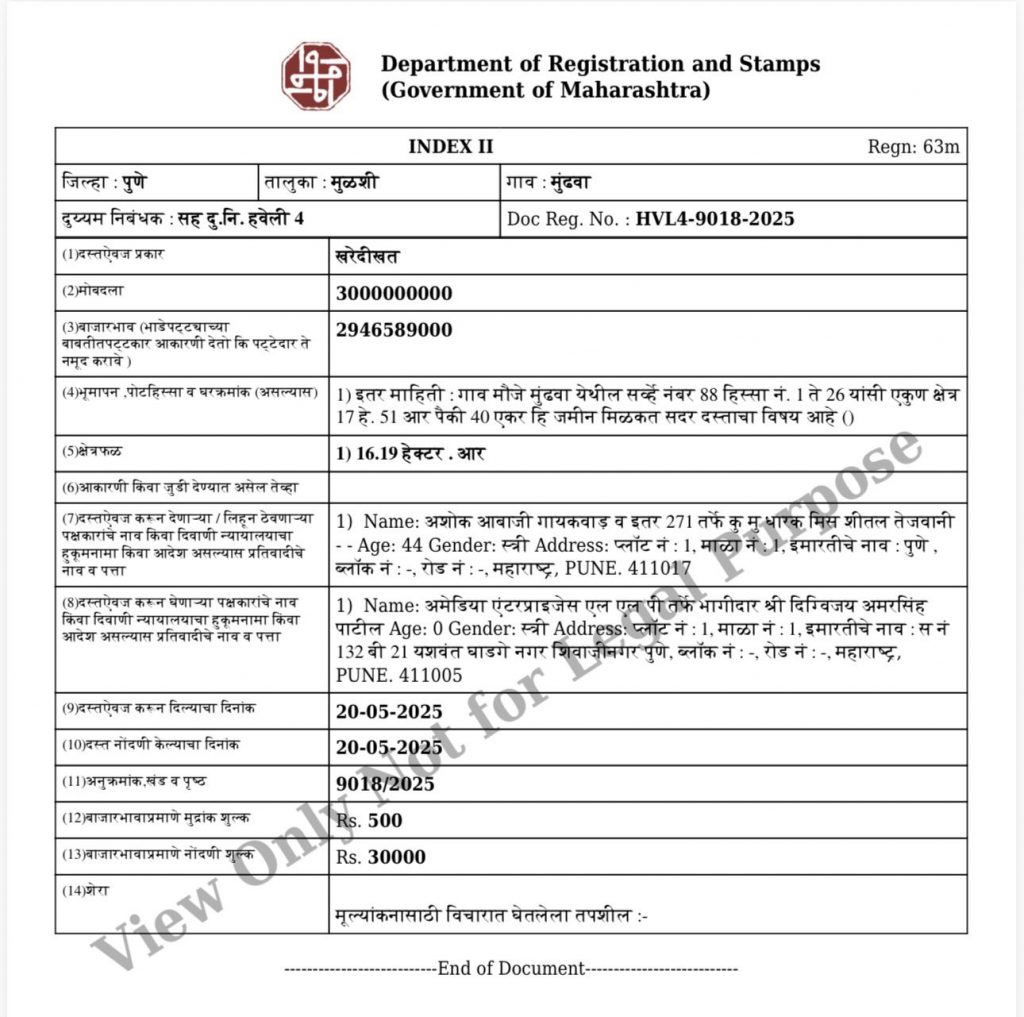
The current storm centers on the land’s alleged sale to Amadea Enterprises LLP, where Parth Ajit Pawar, son of Deputy CM Ajit Pawar, holds a 99% stake, and Digvijay Amarsinh Patil is a 1% partner. The 40-acre plot, located at Tadigutta Chowk near Koregaon Park’s North Main Road, was reportedly sold for ₹300 crore, though its market value exceeds ₹1,800 crore by paying stamp duty of Rs 500 only.
Opposition leaders allege that the firm received a ₹21 crore stamp duty exemption by falsely declaring the land’s use for an IT park — a claim backed by a Letter of Intent from the Directorate of Industries. The exemption, granted even before project approval, has raised questions of favoritism.
Chief Minister Devendra Fadnavis has ordered a comprehensive probe led by Additional Chief Secretary (Revenue) Vikas Kharge. “Preliminary findings show serious irregularities. The inquiry will examine valuation, stamp duty, and the legality of the transaction,” Fadnavis said.
FIR Registered, Officers Suspended
The case took a criminal turn when the Registration and Stamp Duty Department filed an FIR at Bavdhan Police Station against Digvijay Amarsinh Patil (Parth Pawar’s partner) and Sheetal Tejwani, who allegedly executed the deal using the power of attorney from watandar families.
The FIR, lodged by Sub-District Registrar Santosh Hingane, accuses them of irregularities in the transfer of government-owned land. The government has since suspended Joint Sub-Registrar Ravindra Taru and initiated a departmental inquiry against him. Pune City Tehsildar Suryakant Yewle has also been booked for allegedly facilitating the registration.
Joint IGR Rajendra Muthe confirmed that the company used fabricated 7/12 extracts, wrongly mentioned the land’s taluka as Mulshi, and even listed Patil’s gender as female in the registry document. He said, “A duty of ₹5.38 crore should have been collected, but the officer failed to do so. Since the land is Mahar Watan property, collector’s approval was mandatory before any sale — which was never obtained.”
Political Fallout and Accusations of Shielding
The FIR does not name Parth Pawar, prompting sharp criticism from opposition parties. Shiv Sena (UBT) MLC Ambadas Danve alleged that the transaction “is one of the most blatant examples of land manipulation in recent times.” He claimed the property worth ₹1,800 crore was “gifted for ₹300 crore” to the Deputy CM’s son’s company.
Ajit Pawar defended his son, saying, “The FIR includes only those who signed the documents. Revenue Minister Chandrashekhar Bawankule has confirmed this.”
However, Digvijay Patil’s inclusion — despite holding only 1% stake — and his family’s close ties to the Pawars have fueled further speculation. Patil, 25, is the nephew of MP Sunetra Pawar, and his late father Amarsinh Patil was her brother.
The Bigger Picture: Mahar Watan Land Laws and Lapses
Mahar Watan lands were granted to members of the Mahar community in pre-independence times for hereditary village services. Post-abolition, these lands were classified as Occupant Class II, meaning they could not be sold, leased, or mortgaged without the collector’s prior approval. Any unauthorized sale is legally void and subject to government resumption.
In this case, the land — leased to BSI for a proposed botanical garden meant to host over 400 plant species — was allegedly sold through manipulation of outdated records and misuse of authority.
What Lies Ahead
The inquiry, led by ACS (Revenue) Vikas Kharge, will examine the chain of approvals, power of attorney documents, and stamp duty exemptions.