Pune: Sanitation Workers’ Son Elected PMC Corporator: Amar Awale’s Rise Redefines Pune Civic Politics
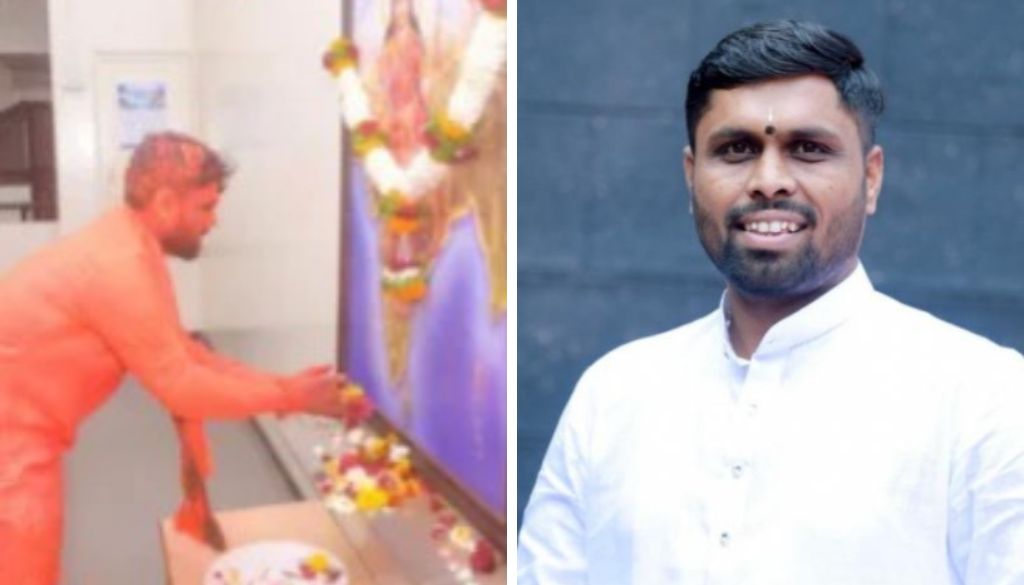
Pune, 19th January 2026: The Pune Municipal Corporation elections have produced several notable results, but the victory of Amar Awale from Ward No. 27 (Navi Peth–Parvati) has drawn particular attention for its strong social resonance. Elected for the first time on a Bharatiya Janata Party (BJP) ticket, Awale’s journey from a modest background to the civic council is being seen as a rare and symbolic moment in Pune’s municipal politics.
Awale is the son of sanitation workers from the Pune Municipal Corporation. His father is employed as a daily-wage labourer in the PMC drainage department, while his mother is engaged in sanitation work. Growing up near Ambil Odha Kothi, Awale spent his early childhood in the Ambil Odha slum area before his family later shifted to a PMC residential quarter in Sane Guruji Vasahat. His election has sparked discussions across political and social circles on social mobility and representation within urban local governance.
A long-time grassroots worker of the BJP, Awale has been closely associated with Pune BJP city president Dhiraj Ghate. Ghate’s active backing of Awale’s candidature during the polls had invited criticism from certain quarters within and outside the party. BJP leaders, however, defended the decision, stating that the party intended to promote committed ground-level workers rather than depend solely on established political names.
The electoral outcome vindicated that approach. Awale registered a decisive victory, emerging as one of the notable first-time corporators in the PMC elections. Party leaders and local observers attributed his success to sustained grassroots engagement, particularly among working-class residents in the ward, which helped him build trust and consolidate voter support.
His win also reflects a broader pattern seen in the PMC polls, where several candidates from modest socio-economic backgrounds and first-generation political families managed to secure electoral mandates. At the same time, the elections yielded mixed outcomes in family-centric political contests, while opposition parties, such as the Congress, retained influence in select pockets despite the BJP’s overall strong performance.
Beyond the numbers and party tallies, Awale’s victory is being viewed as a symbolic milestone in Pune’s civic politics, reinforcing the idea that sustained grassroots work and local connect can still open pathways to leadership within municipal governance.