An Evening Where Words Sang and Music Spoke: Swarakshar in Pune
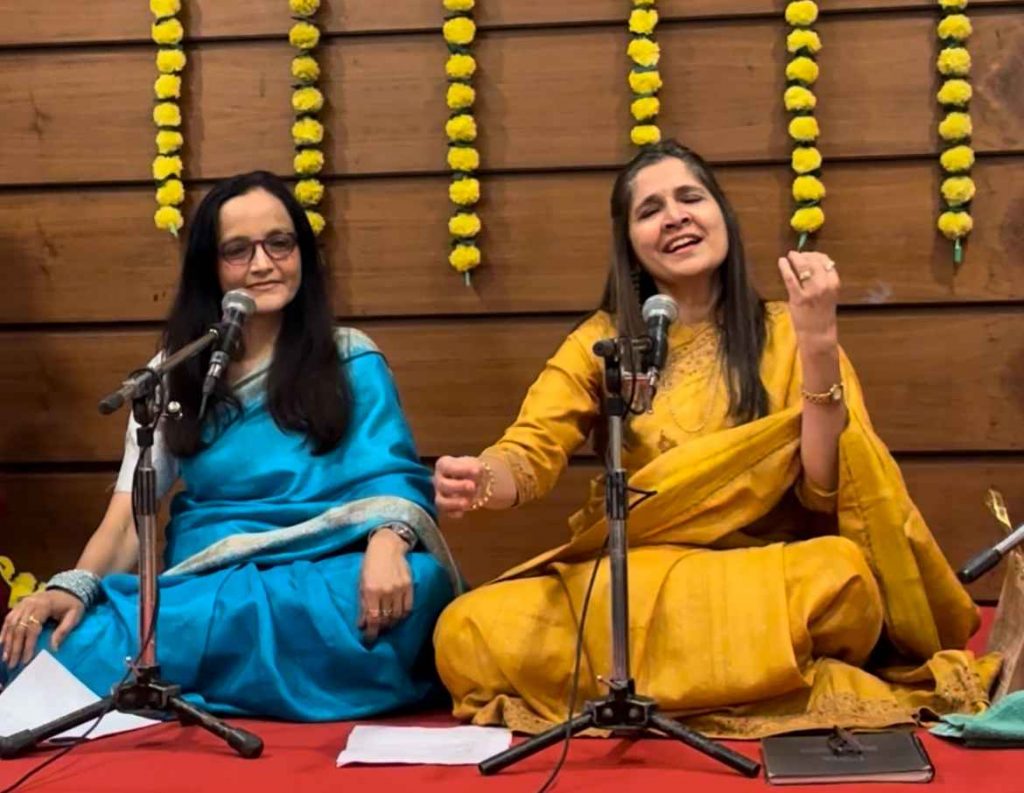
Pune, 27th January 2026: Indian classical music and poetry, bound by rhythm, emotion, and storytelling, came together in a rare and evocative confluence at Swarakshar, held on 24th January at PYC Gymkhana, Pune. The two-hour evening unfolded as an immersive artistic journey where sound and verse constantly conversed.
Conceptualised by city-based poetry enthusiast Bhanu Vora, and curated by Indian classical vocalist Urvashi Shah and poet-writer and poetry curator Garima Mishra, Swarakshar was structured into four thematic segments—Bhakti, Prem, Virah, and Samarpan. Each segment was carefully designed so that Mishra’s poetry and Shah’s musical renderings mirrored, extended, and echoed one another, creating a seamless emotional flow rather than isolated performances.
“What began as a quiet, undefined dream found direction through collaboration—when Urvashi’s music met Garima’s words, conversations turned into connections, and those connections into Swarakshar,” stated Vora.
The event opened with the Bhakti segment, where devotion formed the emotional core. Mishra’s poems drew from the lives and inner worlds of Meerabai, Radha, and Lord Krishna, reflecting longing, surrender, and divine love. These verses found a natural musical counterpart in Shah’s renditions of bandishes such as “Laagi Lagan” in Raag Hansdhwani and “Hat Jao More Shyam” in Raag Nand, where classical melody carried forward the same devotional intensity evoked by the poems.
The mood gently shifted to Prem, exploring love in its tender, everyday forms. Mishra presented poems that viewed the moon as a symbol of love, along with verses that celebrated finding beauty in life’s smallest moments. Shah responded musically with the bandish “Ae Ri Sakhi”, followed by the ghazal “Tumhare Shehar Ka Mausam”, allowing romance to unfold through both imagery and melody.
The Virah segment introduced emotional tension and distance. Shah’s soulful renditions of “Yaad Piya Ki Aaye” and “Ye Na Thi Hamari Kismat” set the tone of longing and separation. Complementing this, Mishra recited poems rooted in contemporary relationships—“Kuch Toh Baat Karte Hain” and “Tanha-Tanha”—which reflected on emotional gaps, unspoken words, and the silences that slowly create distance between people.
The evening culminated in Samarpan, a theme centred on surrender and inner return. Mishra’s poems “Khoonti” and “Sohni” explored different forms of surrender—returning to one’s roots and seeking a higher self beyond the material world. Shah brought the programme to a joyous close with energetic and devotional renditions of “Chhaap Tilak” and bhajans “Achyutam Keshavam, and Shri Krishna Govind Hare”, transforming the auditorium into a shared celebration as the audience joined in singing and clapping along.
For Mishra, Swarakshar was the realisation of a long-cherished dream shaped through her poetry platform KavitaKAFE, which has consistently encouraged Hindi reading and writing while experimenting with interdisciplinary collaborations. That vision found a resonant partner in Shah, a Gwalior Gharana exponent and disciple of Dr. Veena Sahastrabuddhe (1999–2016), whose performances have taken her across India and abroad.
Reflecting on the collaboration, Shah shared that the project began as an abstract idea, gaining clarity only after engaging deeply with Mishra’s poetry. The rhythm, imagery, and emotional depth of the poems helped her imagine musical responses that felt instinctive rather than imposed. Mishra, in turn, highlighted the importance of creative alignment and openness, noting that the focus remained on strengthening the concept rather than individual prominence.
Swarakshar left the audience with lingering notes and verses—an experience that demonstrated how poetry and classical music, when placed in dialogue, can create something quietly powerful and deeply memorable.