Pune’s metro network set to expand to 200km as city grows rapidly: CM Devendra Fadnavis
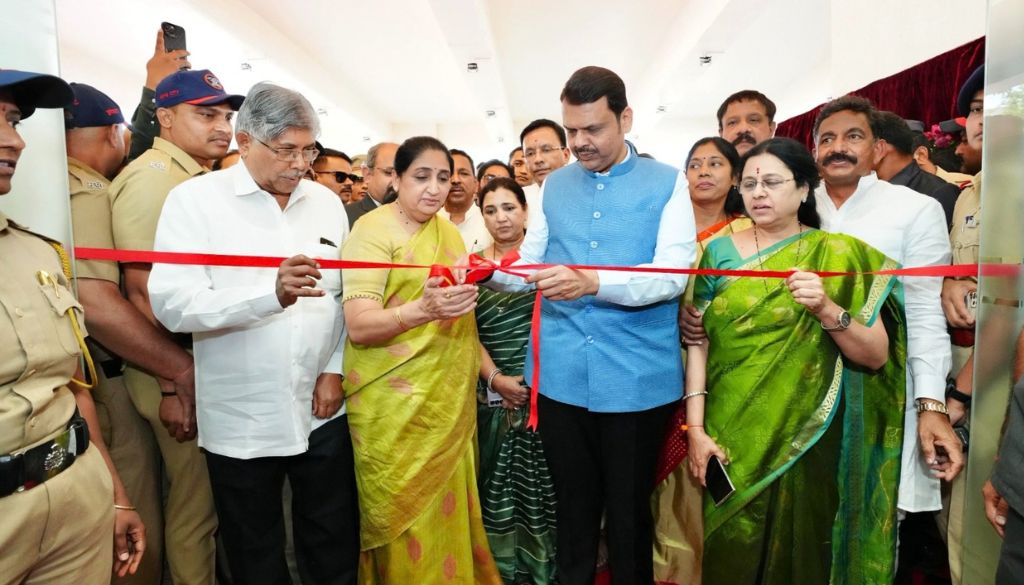
Pune, 15th March 2026: Chief Minister Devendra Fadnavis on Sunday said that Pune city, Pimpri Chinchwad and Pune Metropolitan region will soon be covered with nearly 200 km of Metro network and this will address the traffic congestion issue of the city.
Fadnavis was speaking at the inauguration of ‘Metro Bhavan, the administrative headquarters of the Pune Metro project.
At present, about 33 km of metro network is operational in Pune. Work on a 23-km metro corridor being implemented under a public-private partnership (PPP) model with the Tata Group is in its final stage. Of this, a 12-km stretch is expected to open in May, while the remaining 11-km section is likely to start operations in July.
With these additions, Pune’s operational metro network will expand to around 56 km. Apart from this, construction of another 55 km of metro lines is underway, while an additional 80 km expansion has been proposed, taking the planned network in the Pune region to nearly 200 km, he said.
Fadnavis said that the project has significantly strengthened the city’s public transport system, with residents responding positively to the service. Currently, around 2.5 lakh commuters use the metro daily, which proves that the citizens of Pune have accepted the Metro service and they have started using regularly.
Fadnavis directed officials of Maha Metro and the urban development department to immediately prepare a detailed plan for the entire metro network, keeping in mind the rapid urbanisation of the city. He also assured that the state government would provide the necessary funds for the expansion.
Among those present at the event were deputy chief minister and Pune guardian minister Sunetra Ajit Pawar, higher and technical education minister Chandrakant Patil, minister of state for urban development Madhuri Misal, Pune mayor Manjusha Nagpure, MP Medha Kulkarni, MLAs Yogesh Tilekar, Bhimrao Tapkir, Sunil Kamble, Hemant Rasane and Bapu Pathare, along with senior officials including urban development principal secretary Aseem Gupta, divisional commissioner Chandrakant Pulkundwar and Maha Metro managing director Shravan Hardikar.
Fadnavis said that although the project faced some initial delays, it gathered pace later and was completed rapidly. “Today, Pune Metro is counted among the fastest implemented metro projects in the country,” he said, highlighting the modern design of stations, multimodal connectivity, passenger amenities and advanced technological systems.
Considering Pune’s rapid urban growth, Fadnavis instructed Maha Metro to prepare detailed project reports (DPRs) for all proposed corridors simultaneously. He also asked officials to take into account future growth centres, the proposed new airport, industrial areas and expanding suburbs while planning the metro network.
Metro Bhavan equipped with modern facilities
Deputy chief minister Sunetra Ajit Pawar said the newly inaugurated Metro Bhavan is not just an administrative headquarters but a symbol of Pune’s modern development. She described the building as an example of advanced engineering and planned infrastructure that will strengthen the city’s administrative framework.
She also recalled the contribution of late deputy chief minister Ajit Pawar in pushing forward the Pune Metro project. The building has been developed along the banks of the Mula-Mutha River with an environmentally compatible design. Pawar said that with Pune and Pimpri Chinchwad emerging as major growth centres of the state, rising population had increased pressure on transport infrastructure. To address this, the government has undertaken projects such as ring roads, wider roads, service roads, tunnels, bridges and metro corridors.
Key features of Metro Bhavan
The Metro Bhavan complex has a built-up area of about 8,150 sq metres. It includes a grand reception area with art installations showcasing Pune’s cultural heritage, an experience centre displaying models of the metro network, and a 312-seat auditorium.
The building also houses a backup operations control centre along with signalling and telecommunication systems. Its glass façade allows natural lighting, making the structure energy efficient and environmentally friendly.