Dubai Under Fire — A Strategic Opportunity for Mumbai to Emerge as the Financial Hub of the Middle East, East Africa and ASEAN
By PrasadRaje Bhopale
CEO – Swan Research & Social Study Foundation
Mumbai, 17th March 2026: For two decades, Dubai has functioned as the financial crossroads of the Middle East, East Africa, and South Asia. Global institutions chose the emirate for a commodity more precious than tax breaks: perceived stability. That perception is currently facing a terminal fracture.
As of March 2026, the Middle East is no longer just a theater of military friction; it is the front line of economic warfare. With Iran explicitly targeting the “economic arteries” of its adversaries, the once-impenetrable safety of the Dubai International Financial Centre (DIFC) is being recalculated in real-time by the world’s largest pools of capital.
The Anatomy of a Crisis: When Hubs Become Targets
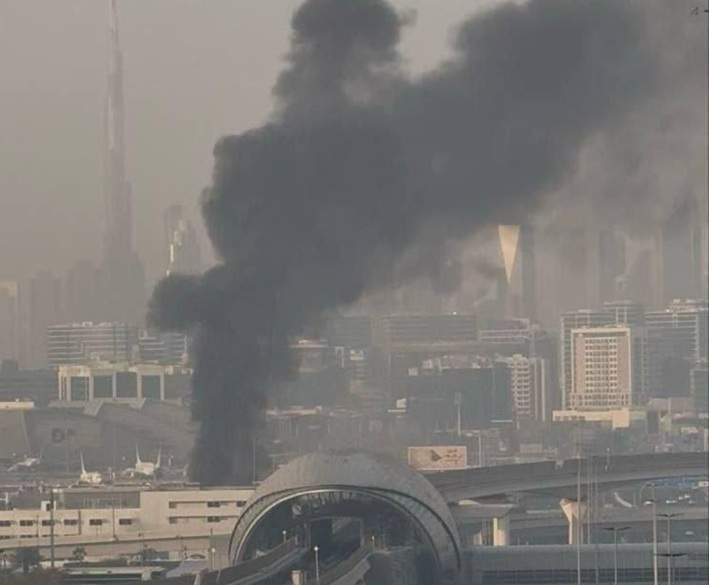
The scale of the escalation is unprecedented. Defense data indicates that in the early stages of this conflict, over 250 ballistic missiles, roughly 1,500 drones, and over a dozen cruise missiles were launched towards Dubai. While the UAE’s multi-layered defense systems intercepted the majority, the psychological damage was done. A drone strike near Dubai International Airport—one of the world’s busiest hubs—has shattered the illusion of “geographic immunity.”
The stakes are enormous because of what is physically housed in Dubai. By early 2025, the DIFC ecosystem had matured into a global titan, including:
- Nearly 290 international banks (including Citigroup, HSBC, and Standard Chartered)
- More than 500 wealth management firms
- Roughly 102 hedge funds
- Over 1,000 family investment offices
When Citigroup and other majors activate contingency protocols and relocate staff to remote environments, it is the first signal of a deeper strategic reassessment. Capital is cowardly; it flees at the first sign of prolonged kinetic risk.
The Hormuz Factor and the Yuan Pivot
Beyond the missiles, a subtler economic strategy is reshaping the energy chessboard. Shipping data suggests Iranian authorities are allowing smoother passage through the Strait of Hormuz for vessels settling transactions in Chinese Yuan, while Western-linked shipments face increasing delays and “inspections.”
This dynamic is forcing a global realignment:
- Energy Diversification: Countries fearing Gulf disruptions are forced to buy Russian crude, which remains insulated from the Hormuz chokepoint.
- Petro-Yuan Rise: With Iran attacking ships trading in Dollar, it is likely to strengthen Petro-Yuan threatening US Dollar’s hegemony in the energy trade thereby further pushing US in economic chaos.
- Inflationary Shocks: This pressure on supply chains is reigniting global inflation, directly impacting India’s fiscal deficit and the Indian Rupee, which has faced volatility as investors seek traditional “safe havens.”
The Market Signal: The Sensex as a Geopolitical Oracle
The benchmark BSE Sensex began declining sharply around February 10, 2026, nearly 18 days before the conflict formally escalated. This was not a coincidence. Institutional intelligence networks—sovereign wealth funds and hedge funds—were already moving money out of risk-sensitive emerging markets.
For India, this “early warning” reveals a vulnerability. As long as transactions for South Asia are routed through Dubai or Singapore, India remains susceptible to external financial shocks. However, every disruption creates a vacuum.
The 360-Degree Roadmap: India’s Path to Global Hub Status
To transform Mumbai from a domestic capital into the Financial Gateway of the Eastern World, India must move beyond intent and into execution:
- The Mumbai-GIFT Corridor: India must integrate Mumbai’s massive domestic liquidity with GIFT City’s offshore agility. GIFT City must be positioned as the primary “Relocation Zone” for the 1,000+ family offices currently looking for an exit from the Gulf.
- Judicial Reform: The DIFC’s greatest draw was its use of English Common Law. For India to compete, the International Financial Services Centres Authority (IFSCA) must guarantee arbitration speeds that bypass the standard Indian court backlog.
- Currency Internationalization: To counter the “Yuan Pivot” in the Gulf, India must accelerate Rupee-settled trade. Becoming the financial hub for East Africa and Southeast Asia requires the Rupee to be a liquid, reliable medium of exchange.
Conclusion: A Moment of Financial Realignment
As of March 2026, India stands as the world’s 4th largest economy, having officially surpassed Japan. While the fall of the Sensex in February was a warning, it also marked the beginning of a potential long-term shift.
If New Delhi moves with speed and regulatory clarity, the missiles falling over the Gulf could mark the end of one financial era and the rise of another—where Mumbai finally claims its seat as the anchor of the Eastern financial world.