Mankurad: Goa’s Golden Secret
By Samiccha Malik
Goa, 13th May 2026: Every mango lover in India knows the Alphonso. It’s celebrated, exported, and marketed aggressively. But travel to Goa in April and strike up a conversation with any local at a fruit stall and you’ll quickly learn that for people who actually live here, there is only one true king. Its name is Mankurad. And once you taste it, you’ll understand why Goans barely glance at the Alphonso.
A Name Born From an Insult
The Mankurad’s story starts with a colonial dismissal.
When the Portuguese ruled Goa, they encountered this mango and were unimpressed by its looks. The skin was pale and understated nothing dramatic. So they named it Malcorado, from Mal (bad) and Cor (colour). “Poorly coloured.” A slight dressed up as a name.
Over centuries of Konkani tongues softening its edges, Malcorado quietly became Mankurad. The insult faded. The fruit had the last laugh in August 2023, the Government of India awarded it a Geographical Indication (GI) tag, officially making it Goa’s own. Only mangoes grown in Goa and select neighbouring regions can legally carry that name.
Don’t Judge It By the Skin
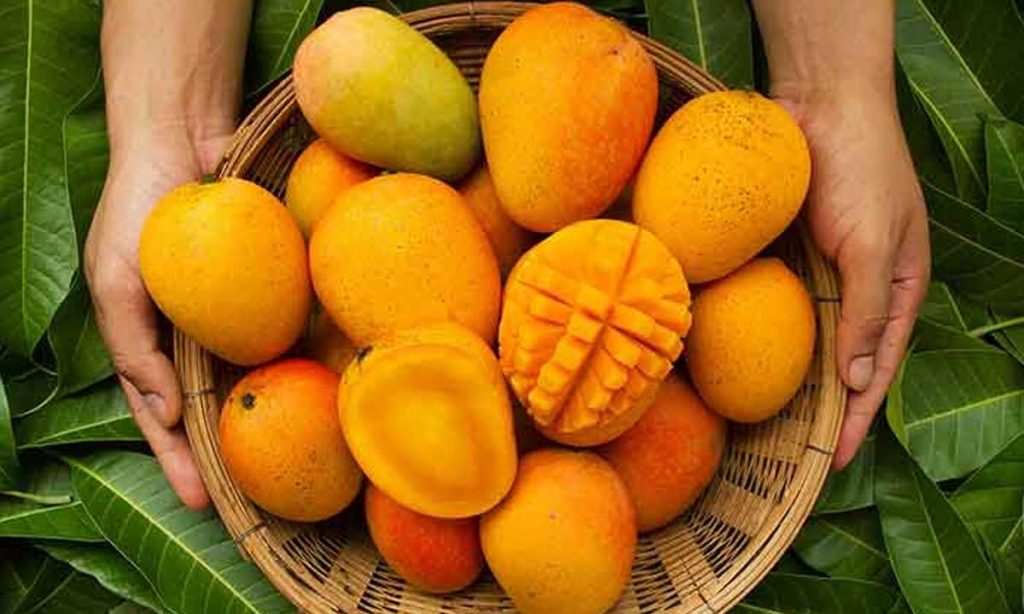
A Mankurad won’t win a beauty contest. It’s modest in size around 200 to 250 grams with a uniform pale yellow skin, sometimes with a faint orange blush on the shoulders. Nothing flashy.
But the seed inside is remarkably small and flat, which means the fruit is almost entirely pulp. Dense, golden, completely fibre-free pulp. Bring the cut end of the stalk close to your nose and breathe in Goan elders say a single ripe Mankurad stored in the kitchen could fill an entire house with its perfume. That aroma alone announces what the skin refused to.
The Taste That Ruins Other Mangoes
This is where words start to feel inadequate.
The Mankurad doesn’t taste like just a mango. It tastes like honey, caramel, cinnamon, and a hint of allspice all layered together, none overpowering the other. The flesh is smooth and custard-like, dissolving on the tongue with a warmth that lingers. There is no fibre, no stringiness just a complex, deeply satisfying sweetness tempered with a gentle tartness.
Compare it side by side with a Ratnagiri Alphonso and the difference is immediate. The Alphonso is good but next to a Mankurad, it starts to feel thin.
A Season That Feels Like a Festival
Mankurad season runs from roughly March through April, and in Goa, it is genuinely an event. The first fruits to hit the market can command prices of ₹2,000 or more per dozen.That’s not just commerce there’s ceremony to it. Families wait for it, children climb trees for it, and the smell of mangoes ripening on the branch drifts through neighbourhoods like an announcement that summer has properly arrived.
Because it doesn’t travel well and has a shorter shelf life than export-ready varieties, the Mankurad has largely stayed local. You have to come to Goa for it, or know someone who’ll carry a box carefully on a flight. It hasn’t been engineered for mass markets or long truck journeys. It was grown for pleasure, not logistics and that’s a big part of its charm.
More Than a Fruit
In Goa, a Mankurad tree in your yard is a matter of pride. The fruit shows up in pickles, milkshakes, and jams. It gets eaten greedily over the kitchen sink with juice running to the elbows honestly the only dignified way. It travels in the luggage of Goans visiting relatives, wrapped carefully in newspaper like something precious, because it is.
The Portuguese dismissed it as poorly coloured and moved on. Generations of Goans smiled, picked it up anyway, and had the most extraordinary mango of their lives.