Inside NDA Khadakwasla’s Green Mission: How 23,000 Saplings Are Shaping a Living Legacy in Pune
Reported by Mubarak Ansari
Pune, 22nd May 2026: On the sprawling grounds of the National Defence Academy (NDA) in Khadakwasla, where future military leaders are trained in discipline, strategy, and service to the nation, a quieter transformation has begun taking root — one that speaks the language of ecology, resilience, and coexistence with nature.
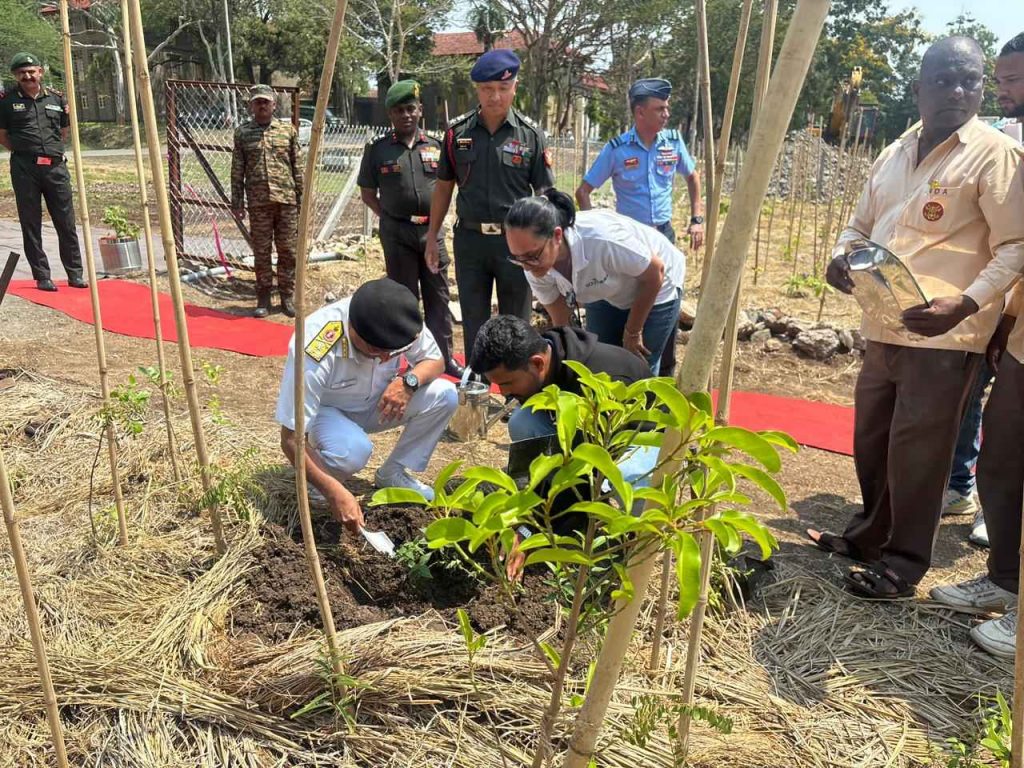
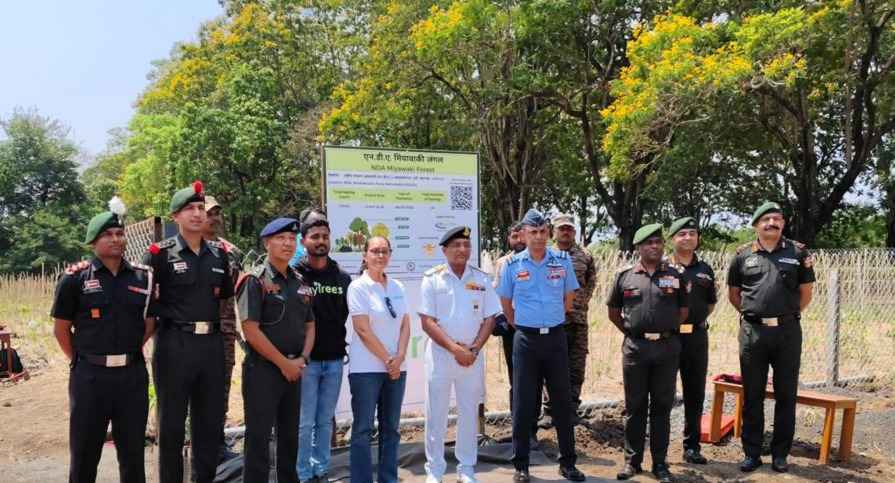
In collaboration with Bengaluru-based SayTrees Environmental Trust, the NDA has launched an ambitious urban forest initiative that has already seen the plantation of 23,000 native saplings using the Miyawaki method, a globally recognised technique for creating dense, fast-growing forests in urban spaces.
The initiative, undertaken around Earth Day with support from ITC Sustainability, is more than a plantation drive. It is being envisioned as a long-term ecological restoration project that could transform parts of the iconic defence campus into thriving biodiversity zones over the coming years.
For SayTrees founders Kapil Sharma and Deokant Payasi, the collaboration carries both symbolic and environmental significance.
“The NDA collaboration came from a belief that our armed forces campuses are among the finest custodians of land in the country,” said Kapil Sharma during an interaction. “What better place to grow a Miyawaki forest than where India’s future leaders are being shaped? The Earth Day event with ITC Sustainability was a beautiful coming together of that vision.”
A Forest Designed to Heal the Land
Unlike traditional plantation drives that often focus on numbers, the Miyawaki technique emphasises ecological restoration through dense planting of native species that naturally belong to the local soil and climate.
According to SayTrees, the 23,000 saplings planted at NDA Khadakwasla are expected to grow into a layered forest ecosystem within three to five years.
“What you’ll see at NDA Khadakwasla will not just be trees, but a real forest,” said Deokant Payasi. “Birds, butterflies, and insects will gradually return. The forest will begin sustaining itself because the species selected belong to this geography.”
Environmental experts have increasingly highlighted the role of urban forests in combating rising temperatures, improving air quality, supporting groundwater recharge, and enhancing biodiversity in rapidly urbanising cities like Pune.
For Khadakwasla and surrounding areas, the project is expected to create cooler microclimates, reduce dust pollution, and strengthen ecological balance within the campus landscape.
“It’s green that gives back to the land, to the city, and to every cadet who walks beneath those trees for decades to come,” Payasi added.
Working Within One of India’s Most Prestigious Defence Institutions
Executing a large-scale ecological project inside one of India’s premier defence establishments came with unique challenges. SayTrees officials said the project demanded extensive planning, coordination, and sensitivity to institutional protocols.
“Working within a defence institution is as much about relationship and trust as it is about trees,” Sharma said. “The NDA has its own rhythm and systems, and rightly so.”
From ecological surveys and site access to transporting thousands of saplings and preparing the land scientifically for Miyawaki layering, every stage required close coordination with NDA leadership and field teams.
The organisation also had to identify native species best suited for the soil conditions and long-term ecological sustainability of the area.
“But what made it work was the spirit on both sides,” Sharma said. “When an institution like NDA embraces environmental stewardship with the same seriousness it brings to everything else, challenges become stepping stones.”
Beyond Plantation: Building a Living Ecosystem
For SayTrees, the project’s success will not be measured only by the number of saplings planted, but by how the ecosystem evolves over time.
The organisation plans to monitor biodiversity growth, groundwater recharge, and ecological recovery in the coming years using technology-enabled tracking systems.
“A plantation is where the journey begins, not where it ends,” said Payasi. “We want to return and document the birds that come back, the butterflies that settle there, and the ecological changes happening quietly beneath the surface.”
The organisation also sees potential for future water body restoration projects within the NDA campus to complement the urban forest initiative.
According to SayTrees, technology-driven dashboards are being used to create measurable and verifiable environmental impact data, including survival rates of trees, water retention capacity, and biodiversity indicators.
However, beyond scientific metrics, the founders believe the deeper impact lies in shaping environmental consciousness among cadets who may one day serve across different regions of the country.
“Perhaps the most exciting part is that every cadet walking through that forest carries with them an instinct toward environmental responsibility,” Payasi said. “That may ultimately become the deepest form of sustainability.”
A Replicable Model for India’s Institutions
The NDA project could also serve as a blueprint for educational and defence institutions across India seeking to develop urban forests and climate resilience initiatives.
According to SayTrees, institutional campuses collectively hold enormous untapped ecological potential.
“The honest answer is that this model is far more replicable than most people think,” Sharma said. “You don’t need a perfect site or massive funding to begin. You need land, intent, and the right partnership.”
He said the NDA initiative demonstrated how leadership commitment can accelerate environmental action by bringing together institutions, CSR partners, technical experts, and community stakeholders.
SayTrees currently operates across 18 states and two Union Territories. Founded in 2007, the organisation has planted over 10 million trees, created more than 200 urban forests using the Miyawaki method, restored over 54 lakes and wetlands, and partnered with more than 20,000 farmers on sustainable livelihood and climate resilience projects.
The organisation’s work has also been recognised in Prime Minister Narendra Modi’s “Mann Ki Baat”.
As Pune continues to grapple with rapid urbanisation, shrinking green spaces, and climate pressures, the emerging forest inside NDA Khadakwasla stands as a reminder that environmental restoration and institutional leadership can grow together — one native sapling at a time.