What to Eat & Avoid During Extreme Heat
By Anne Thomas
Pune, 22nd May 2026: High temperatures in Summer can lead to excessive sweating, dehydration, fatigue, heat exhaustion, and even heatstroke if proper care is not taken. Under such conditions, maintaining a proper diet becomes extremely important. The food we consume plays a major role in regulating body temperature, maintaining hydration, and sustaining energy levels. Therefore, understanding what to eat and what to leave is essential for staying healthy and active throughout the summer season.
One of the most important aspects of nutrition during hot weather is hydration. During summer, the body loses a significant amount of water and essential minerals through sweat, making it necessary to replenish fluids regularly. Water is undoubtedly the best and most essential drink during this season, and one should consume adequate amounts throughout the day.
Frankly, I myself struggle with maintaining adequate water intake and mostly tend to drink water only when I feel thirsty. However, hydration should not depend solely on thirst, especially during extreme heat. One simple way to encourage regular hydration is to make water more interesting. Apart from plain water, mint or other infused waters provide a refreshing lingering taste that naturally encourages one to drink more frequently.
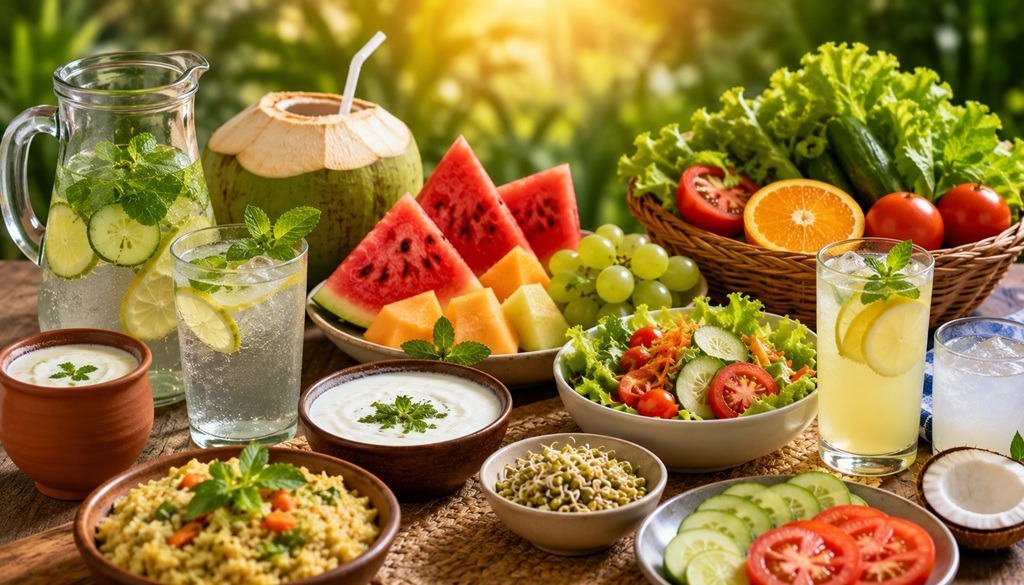
In addition, natural cooling beverages such as coconut water, lemon water, buttermilk, smoothies, and fresh fruit juices are highly beneficial. These drinks not only hydrate the body but also help restore electrolytes lost through sweating. Coconut water, in particular, is considered an excellent natural electrolyte drink as it contains potassium, magnesium, and other essential minerals.
Fresh fruits with high water content are among the best foods to consume during extreme heat. Watermelon, muskmelon, cucumber, oranges, strawberries, and grapes help keep the body hydrated while also providing vitamins, antioxidants, and natural sugars for energy.
Watermelon is especially popular during summer due to its high water content and cooling properties. Cucumbers and tomatoes, commonly used in salads, are also refreshing and easy to digest. Such foods help reduce body heat and prevent dehydration.
Light and easily digestible meals are preferable during hot weather. Heavy meals tend to increase metabolic heat production, making the body feel warmer and sluggish. Therefore, meals during summer should include fresh vegetables, salads, curd, yogurt and lightly cooked foods. Curd and yogurt are especially beneficial because they contain probiotics that support digestion and help cool the body internally. Traditional Indian foods such as buttermilk, curd rice, khichdi, and fresh vegetable salads are excellent options during summer. Green leafy vegetables should also be included as they provide essential vitamins and minerals necessary for maintaining energy and immunity.
Protein intake remains important even during summer, but the source and quantity should be chosen wisely. Light protein options such as eggs, fish, sprouts, paneer, lentils, and grilled chicken are preferable over oily or heavily spiced meat preparations. Excessively spicy and oily foods should be avoided as they increase body heat and may lead to acidity, bloating, and digestive discomfort.
Another important dietary consideration during extreme heat is meal timing. Instead of eating very heavy meals, it is better to consume smaller and more frequent meals throughout the day. This helps digestion and prevents the body from feeling sluggish. Eating fresh food is equally important because, during summer, food and fruits tend to spoil faster, increasing the risk of stomach infections and food poisoning.
Fried and oily foods are among the primary items to avoid during hot weather. Such foods are difficult to digest and generate additional heat within the body. Fast food, deep-fried snacks, and excessively processed foods are anyway a big ‘No’, but during summer they can especially leave one feeling heavy, lethargic, and dehydrated.
Although these drinks are a big ‘No’, people still tend to consume them more during summer. Sugary beverages and carbonated soft drinks may give temporary relief or satisfaction, but they often contain excessive sugar and artificial additives that can actually increase dehydration instead of reducing it. Similarly, energy drinks, excess caffeine, and alcohol contribute to fluid loss and affect the body’s ability to regulate temperature properly during extreme heat.
Another common mistake people make during summer, and something that happens with me too, is skipping meals because of a reduced appetite. Increased intake of fluids and fruits reduces hunger and we try to convince ourselves that eating fruits is enough. However, fruits alone cannot replace a proper meal. Skipping meals regularly can lead to weakness, low blood sugar levels, dizziness, and reduced productivity.
Instead of avoiding meals completely, it is better to opt for lighter, nutritious foods that are easy to digest while still providing adequate nourishment.
Children, the elderly, athletes, and people who spend long hours outdoors are more vulnerable to dehydration and heat-related illnesses. They should ensure regular fluid intake and avoid prolonged exposure to direct sunlight, especially during afternoon hours. Very often, people ignore hydration because they continue to feel energetic and convince themselves that nothing can happen to them. However, dehydration does not always show immediate warning signs. Even strong and physically fit individuals can suddenly collapse due to severe dehydration if fluids and electrolytes are neglected for a prolonged period.
In addition to food choices, certain lifestyle habits also contribute significantly in maintaining health during summer. Wearing light and breathable clothing, avoiding direct sun exposure during peak afternoon hours, and ensuring adequate sleep support the body’s ability to cope with high temperatures. Physical activity should preferably be scheduled during cooler parts of the day, such as early morning or late evening, to reduce stress on the body.
In conclusion, diet and hydration play a crucial role in protecting the body during Summer. Consuming water-rich fruits, fresh vegetables, light meals, and natural cooling beverages helps maintain hydration, energy, and overall health. At the same time, avoiding fried foods, excessive sugar, alcohol, and heavy meals reduces the burden on the body and prevents dehydration and fatigue. Extreme heat may be unavoidable during summer, but with proper dietary habits and lifestyle choices, one can remain healthy, active, and energetic throughout the season.
(Anne Thomas is a fitness expert and wellness entrepreneur with over 22 years of experience in the health and fitness industry. A former teacher, she transitioned into fitness after overcoming her own back and neck health issues, turning personal healing into a lifelong passion for helping others lead healthier lives. Over the years, she has earned certifications in Personal Training, Senior Adult Fitness, Exercise Therapy, Physiotherapy and Zumba through reputed international platforms including ISSA, ACE and Zumba.com. Anne is known for her practical and holistic approach to fitness, focusing on sustainable health, strength and overall wellbeing.)