The Warli Art Boom — And Why the Warli Tribe Still Remains Invisible
By Sneha Deb
Pune, 25th May 2026: Walk into a luxury café in Mumbai or Pune and the walls will probably tell a familiar story.
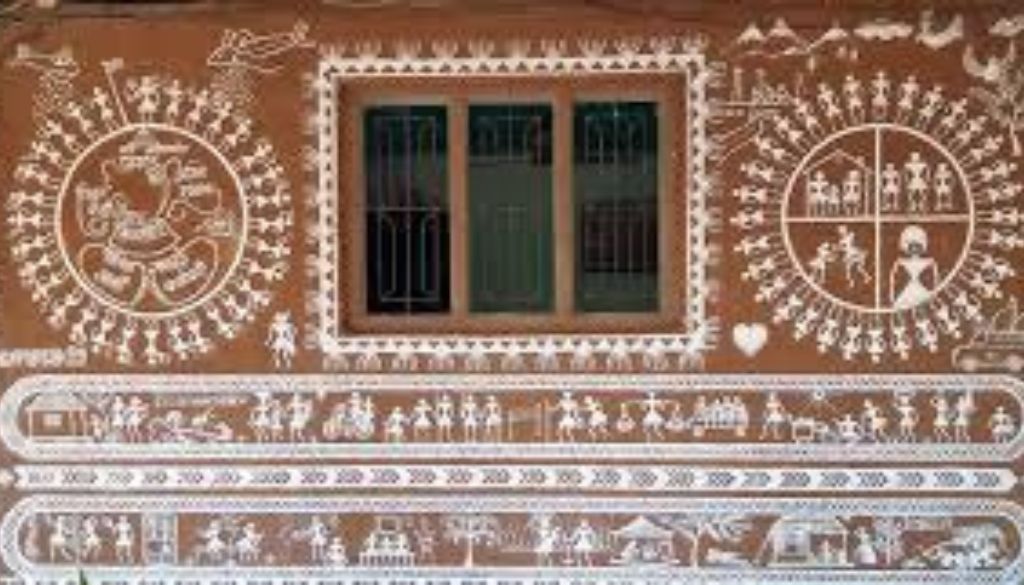
White stick-like human figures dance in circles across earthy brown backdrops. Farmers sow seeds. Women carry pots. Musicians celebrate under trees. The patterns feel rustic, ancient, rooted. The aesthetic is instantly recognisable — minimalist enough for urban interiors, “ethnic” enough for modern branding.
Warli art has quietly become one of India’s most commercially successful indigenous art forms.
It appears on restaurant walls, designer sarees, boutique hotel décor, notebooks, handbags, home furnishings and even corporate advertisements. Across India’s booming lifestyle economy, Warli motifs have become visual shorthand for authenticity, sustainability and cultural sophistication.
But far away from the design stores and curated galleries, the Warli community itself continues to struggle with poverty, weak legal protection and cultural erasure.
The art became famous. The artists largely did not.
A Sacred Tradition Born in the Forests of Maharashtra
The Warli tribe primarily inhabits the Palghar region of Maharashtra, stretching through forested and hilly terrain north of Mumbai along the Western Ghats. Considered among India’s oldest indigenous communities, the Warlis have preserved their traditions for centuries through oral culture, ritual practices and wall paintings.
Traditionally, Warli painting was never intended to be commercial art.
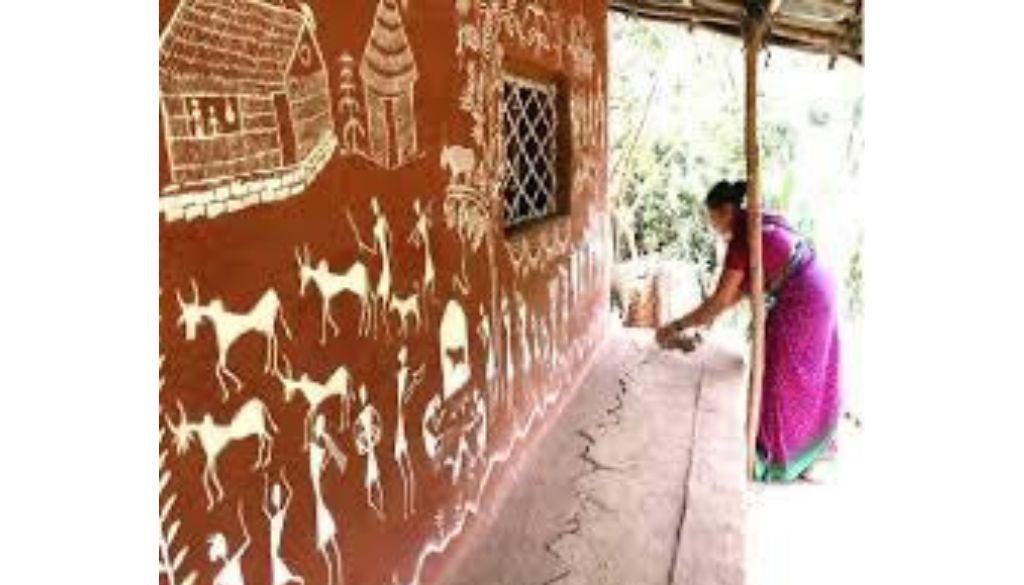
It was deeply intertwined with community life, spirituality and ritual. Women painted the walls of mud homes during weddings, harvest festivals and religious ceremonies using rice paste on earthen surfaces.
The paintings invoked fertility, prosperity, nature and ancestral beliefs.
The geometric forms carried meaning. Circles represented the sun and moon. Triangles symbolised mountains and trees. Human figures arranged in spirals and circles reflected harmony between people and nature.
These paintings were not decorative products created for sale. They were cultural expressions embedded within everyday life.
For generations, the art existed entirely within village spaces — until the outside world discovered it.
When Warli Art Entered the Mainstream
The turning point came during the 1970s when sociologist Bhaskar Kulkarni, associated with Maharashtra’s Tribal Research Institute, encountered Warli paintings during field visits in the region.
Among the artists he encouraged was Jivya Soma Mashe, who would eventually transform the trajectory of Warli art forever.
Mashe began transferring the paintings from mud walls onto paper and canvas, making them portable and accessible to urban audiences, galleries and collectors. His work gained national and international recognition, eventually earning him the Padma Shri.
Warli art entered museums, exhibitions and the commercial marketplace.
What followed was a cultural explosion.
Today, Warli-inspired imagery is used extensively across India’s fashion, hospitality, advertising and home décor industries. The visual language of the tribe has become a profitable design industry in itself.
Yet the economic benefits have remained deeply unequal.
The Business of Indigenous Aesthetics
While brands sell “tribal-inspired” products at premium prices, many traditional Warli artists continue to earn only modest amounts for painstaking handmade work.
Artisans in villages often sell paintings for a few hundred or a few thousand rupees, even as similar motifs are reproduced commercially on mass-manufactured products across India and abroad.
The problem lies partly in India’s weak protection mechanisms for traditional cultural expressions.
Although Warli art received a Geographical Indication (GI) tag in 2011, enforcement remains limited. Companies frequently bypass restrictions simply by describing products as “Warli-inspired,” allowing them to commercially exploit the style without compensating artists or seeking community consent.
For many tribal artists, legal systems surrounding copyright and intellectual property remain inaccessible, poorly understood and financially out of reach.
As a result, corporations, designers and manufacturers continue to profit from indigenous visual traditions while the originating communities remain economically marginalised.
More Than Economic Exploitation
The issue extends beyond money.
Many within the Warli community and among cultural researchers argue that sacred and ritualistic imagery has increasingly been stripped of meaning and reduced to aesthetic décor.
Symbols once associated with fertility rituals, harvest ceremonies and spiritual beliefs are now printed on coffee mugs, packaging material and restaurant menus with little understanding of their cultural significance.
In the process, the community’s voice is often absent from conversations about how its traditions are represented, modified or commercialised.
What was once a living cultural language risks becoming merely a marketable visual trend.
Can the Community Reclaim Ownership?
Activists, researchers and artists believe stronger intervention is necessary if indigenous communities are to benefit fairly from their cultural heritage.
Suggestions include stricter enforcement of GI protections, legal support systems for tribal artists, direct artist-brand collaborations and mandatory royalty frameworks for commercial use of indigenous art styles.
Many also argue that consumers themselves play a role.
Buying directly from tribal artists, ensuring proper attribution and supporting ethical collaborations could help redirect at least some economic value back to the communities that created these traditions.
Because behind every elegant Warli mural displayed in an urban café lies a much older story — one of forests, rituals, memory and survival.
And unless that story includes the people who created it, the success of Warli art may ultimately become another example of India celebrating indigenous culture while overlooking indigenous communities themselves.