Beyond the Orange Groves : Nagpur’s Most Stunning Escapes
By Samiccha Malik
Nagpur, 4th July 2026: At the very centre of India – geographically, officially, and in many ways culturally sits Nagpur. The Zero Mile Stone, erected by the British to mark the precise geographical midpoint of the subcontinent, stands here as a quiet reminder that this city is not at the edge of anything. It is at the heart of everything. Known across the country as the Orange City for the Nagpur orange a variety so prized it has earned a GI tag and a devoted following , Nagpur is also Maharashtra’s winter capital, a city of sacred monuments, vast lakes, ancient temples, and some of the finest wildlife reserves in peninsular India. It is a city that holds together Maratha history, Buddhist heritage, Gond tribal roots, and the forests of Vidarbha in a combination found nowhere else in the state.
Here are ten places in and around this remarkable district that are absolutely worth your time.
1. Deekshabhoomi
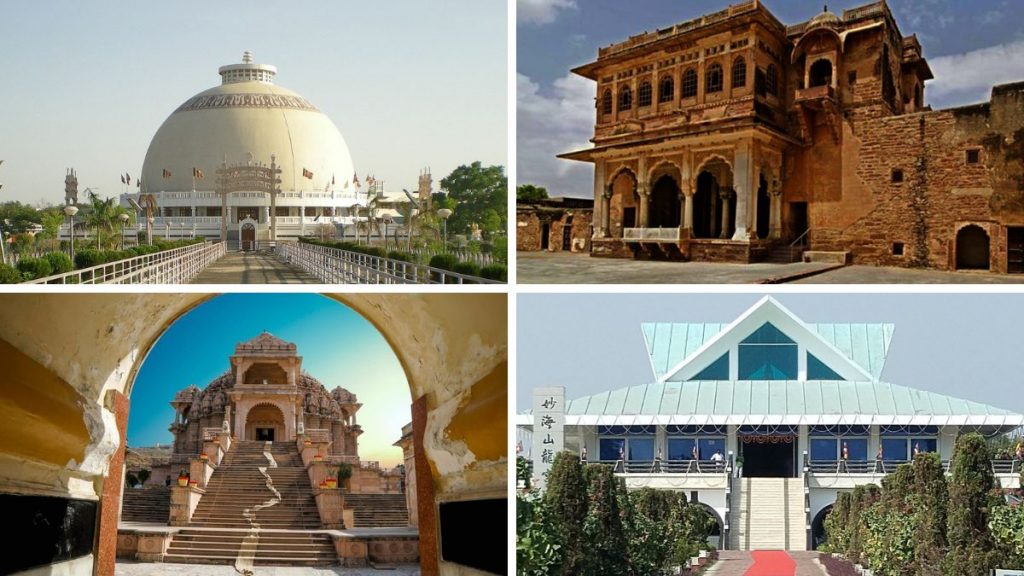
There are places in India that carry the weight of transformative moments in history, and Deekshabhoomi is one of them. On 14 October 1956, Dr. B.R. Ambedkar – the architect of the Indian Constitution, champion of Dalit rights, and one of the most significant figures in modern Indian history converted to Buddhism at this ground in Nagpur, along with nearly half a million of his followers in what became the largest mass religious conversion in recorded history. The monument built at this site today is extraordinary the Dhamma Chakra Stupa, a large hollow stupa whose interior can accommodate thousands of people, built in white stone and designed with a serene, contemplative beauty that matches the significance of what happened here. Deekshabhoomi is a pilgrimage site for Buddhists and Ambedkarites from across the world, and visiting it is a deeply moving encounter with one of the defining chapters of independent India.
2. Pench National Park
On the southern boundary of Nagpur district, straddling the border between Maharashtra and Madhya Pradesh, the Pench National Park is one of the finest tiger reserves in India and the forest that is believed to have inspired Rudyard Kipling’s The Jungle Book. The landscape here is classic central Indian jungle – teak forest, open meadows, rivers winding through rocky terrain, and a biodiversity that is genuinely extraordinary. Tigers are sighted with reasonable regularity, and the park also supports leopards, wild dogs, sloth bears, gaur, and hundreds of bird species. The Pench River winds through the reserve creating watering holes that attract wildlife in spectacular concentrations during the dry season. A jeep safari through Pench at dawn, with mist over the forest and the forest coming alive around you, is one of the finest wildlife experiences Maharashtra has to offer.
3. Ramtek Fort & Temple
About 45 kilometres northeast of Nagpur, on a hill rising above the surrounding plains, Ramtek is one of those places where history, mythology, and natural beauty converge in a single location. The hilltop is believed to be the place where Lord Rama rested during his exile giving the town its name, meaning the hill of Rama and the complex of temples here, built in the classic Maratha style in orange and white stone, is one of the finest temple clusters in Vidarbha. The fort walls surrounding the temples add a layer of historical texture. Ramtek is also connected to the great Sanskrit poet Kalidasa, who is believed to have written his celebrated work Meghaduta here a poem about a cloud messenger crossing the subcontinent making the hilltop one of the oldest literary landmarks in Maharashtra.
4. Ambazari Lake & Garden
Within Nagpur city itself, Ambazari Lake is the largest natural lake in the district and one of the most beloved public spaces in the city. The garden surrounding the lake is beautifully maintained, with wide lawns, flower beds, and walking paths that make it ideal for an unhurried morning or evening. The lake itself is wide and calm, with the green hills of Seminary Hill visible in the background a surprisingly scenic setting for a city lake. Boating facilities are available on the water, and the surrounding garden is home to a children’s park and an amphitheatre that hosts cultural events through the cooler months. Ambazari is where Nagpur breathes easily a green, open lung in the middle of a busy city.
5. Gorewada International Zoological Park
On the outskirts of Nagpur city, the Gorewada International Zoological Park is one of the largest and most ambitiously designed wildlife parks in India spread across nearly 1,900 acres of natural forest that was previously a reserved forest area. Unlike conventional zoos, Gorewada is designed around natural habitats large enclosures within actual forest where animals move through terrain that approximates their wild environment. The safari experience here takes visitors through forested zones where tigers, leopards, sloth bears, and other animals are encountered in conditions closer to a wild safari than a zoo visit. The park is still expanding with new zones and a proposed biodiversity centre, making it one of the most exciting wildlife destinations currently developing in Maharashtra.
6. Sitabuldi Fort
Rising from the very centre of Nagpur city on twin hills that overlook the urban spread in every direction, Sitabuldi Fort is one of the most historically significant landmarks in the district. Built originally during the reign of the Bhonsle rulers of Nagpur and later a key site during the Anglo-Maratha Wars, the fort was the scene of a decisive battle in 1817 when British forces defeated the Nagpur Bhonsle army and effectively ended Maratha sovereignty in this part of the subcontinent. The fort is currently under the control of the Indian Army and opens to the public only on specific occasions but its twin peaks rising above the city are visible from much of Nagpur, and the annual Heritage Week opening draws large numbers of visitors eager to see the cannons, the magazines, and the sweeping views from the ramparts.
7. Futala Lake
If Ambazari is Nagpur’s daytime lake, Futala is its evening one. This large urban lake in the western part of the city transforms after dark into one of the most visually striking public spaces in Nagpur – a musical fountain at the centre of the lake illuminates the water with colour and light, the surrounding promenade fills with families and couples, and the food stalls along the lakefront serve everything from orange-flavoured treats to hot street food. The evening atmosphere at Futala is genuinely festive and warmly local – less a tourist attraction than a place where Nagpur simply comes to enjoy itself. The lake is also surrounded by a garden and a children’s play area, making it a complete family destination.
8. Dragon Palace Temple
Among Nagpur’s more unexpected landmarks is the Dragon Palace Temple a Buddhist temple built by the Japanese community and unlike anything else in Maharashtra. The temple complex is an immaculately maintained space of Japanese Buddhist architecture – ornate, serene, and visually distinctive in its use of colour, sculpture, and garden design. The main hall houses a large golden Buddha statue, and the surrounding gardens are peaceful and beautifully tended. The temple draws both Buddhist devotees and curious visitors, and its atmosphere ; calm, international, and architecturally fascinating offers a completely different dimension to Nagpur’s religious and cultural landscape.
9. Khekranala Lake & Dam
About 60 kilometres from Nagpur city, the Khekranala Lake and Dam is one of the most rewarding natural escapes in the district – a wide reservoir surrounded by forested hills that supports excellent birdwatching, gentle trekking, and boating on the calm waters. The Maharashtra Tourism Development Corporation maintains a guest house here, making it one of the few destinations in Nagpur district where an overnight stay in a genuinely natural setting is easily arranged. The surrounding forest comes alive with birds in the early morning, and the lake reflects the hills around it on still days in a way that is quietly spectacular. Khekranala is the kind of place that locals know and treasure and visitors consistently discover with genuine delight.
10. The Nagpur Orange Experience
No visit to Nagpur is complete without fully engaging with the thing that has made it famous across the subcontinent its oranges. The Nagpur orange, with its distinctive thin skin, deep colour, and intensely sweet flavour, is grown in orchards across the district and reaches its peak between November and January. During this season, the orchards outside the city are a fragrant, vivid spectacle rows of trees heavy with bright orange fruit against the red Vidarbha soil. Visiting an orchard, eating an orange picked directly from the tree, and carrying home a box of freshly harvested fruit is an experience that no photograph or description quite captures. The orange markets of Nagpur city particularly the Civil Lines area and the main wholesale market are equally worth exploring, with the sheer scale of the orange trade giving you a sense of just how deeply this fruit is woven into the identity of the city and the district.
Best Time to Visit
November to February is Nagpur’s golden season – cool weather, clear skies, and the orange harvest in full swing. This is also the best time for wildlife safaris at Pench, when the dry season concentrates animals around water sources and sightings are more frequent. The monsoon from June to September brings the forest to life and is a beautiful time to visit Ramtek and the lakes. Summers from March to May are hot on the Vidarbha plateau and best avoided for outdoor exploration, though wildlife safaris can still be productive in the early dry season months of March and April when vegetation thins.
Getting There
Nagpur is one of the best-connected cities in central India. Dr. Babasaheb Ambedkar International Airport handles flights from Mumbai, Delhi, Hyderabad, Bengaluru, and other major cities. Nagpur Junction Railway Station is a major hub on the central and south-central railway lines with connections across the country. The city sits at the crossroads of two national highways and is easily accessible by road from all directions.
Nagpur sits at the centre of India’s map and at the centre of something harder to define a meeting point of forests and cities, of ancient faith and modern transformation, of Maratha legacy and the promise of a more equal future that Dr. Ambedkar dreamed of under these same skies. It is a city that rewards curiosity generously, and a district that has far more to offer than its famous oranges though those, too, are very much worth the journey.