Parvati, Hadapsar, Mundhwa Among Pune’s Slowest Traffic Zones: New Report
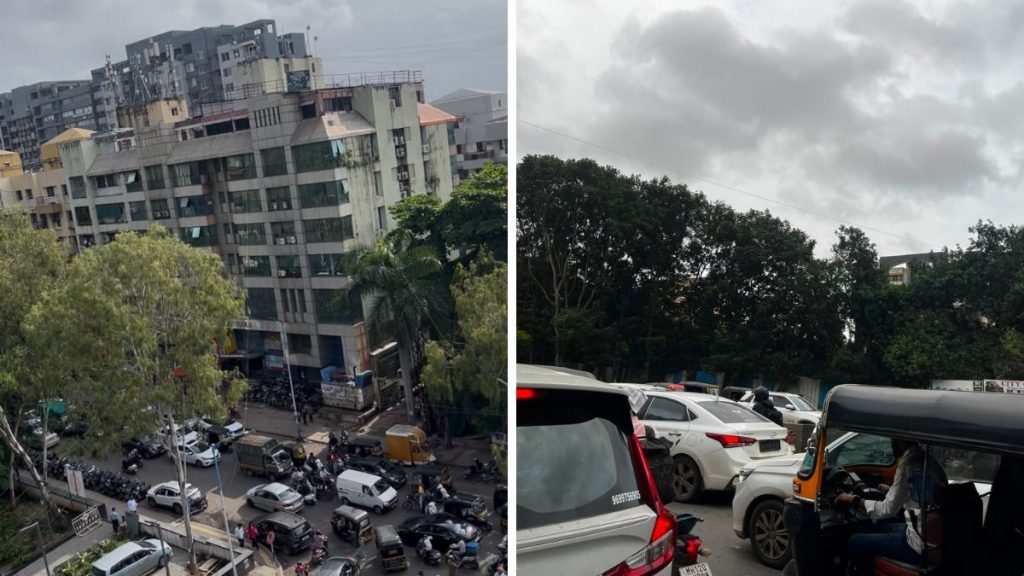
Pune, 6th August 2026: Pune recorded 684 traffic alerts and 461 cumulative hours of disruption across its road network in the 24-hour dataset attributed to Wednesday, August 5, according to a daily traffic briefing prepared by Trafficure.
The city’s average traffic speed stood at 24.5 kmph, marginally below the usual Wednesday average of 24.8 kmph. The report identified 410 problem roads, compared with the Wednesday baseline of 498.
Despite the slightly lower average speed, overall disruption indicators showed an improvement. The number of alerts was 11% below the baseline of 769, while cumulative disruption hours declined by 26% from the usual 623 hours. The average duration of an alert also fell from 46 minutes to 40 minutes.
Congestion accounted for the overwhelming majority of incidents, with 562 alerts. The system also recorded 39 crash alerts, 20 each for construction activity and objects on roads, 17 for flooding, and 13 each for lane closures and sudden traffic surges.
Traffic disruption peaked between 6 p.m. and 7 p.m., when 80 alerts were recorded. The following hour registered another 72 alerts, making the evening rush period the most challenging time for commuters. Morning traffic also intensified between 9 a.m. and 11 a.m., with 61 and 62 alerts recorded during the two hourly periods.
The Masoba Gate Chowk–Simla Office corridor was the most disrupted road, remaining under alerts for a cumulative nine hours.
The longest single alert was reported on the Kaleborate Nagar Road–Fursungi Gaon Road Junction corridor. It lasted approximately six hours and 15 minutes, from 11.30 a.m. to 5.44 p.m.
The same corridor recorded the sharpest decline from its usual traffic performance. Its evening peak-hour speed fell to just 2.9 kmph, compared with the typical 12.6 kmph—a deterioration of 77%. Its average speed for the entire day was 19.3 kmph, against the usual 25.2 kmph.
Other badly affected routes included the Someshwar Auto Service Centre–Lonikand and Ayyappa Mandir–Hadapsar Gadital corridors, both of which recorded a 52% deterioration during the assessed period.
Traffic on the Viman Nagar Phoenix Mall Junction–Wadgaonsheri route was 48% worse than usual, while the reverse direction from Wadgaonsheri to the Phoenix Mall junction showed a 46% deterioration.
The Parvati PS–N.C. Phadke Chowk corridor emerged as the city’s slowest road, with an average speed of only 7.8 kmph. Its speed fell to as low as 2 kmph between 6 p.m. and 7 p.m.
Division-wise data showed that Shivajinagar registered the highest average delay at 8.9%, with an average speed of 22.9 kmph. The division recorded 35 alerts accounting for 25.8 cumulative disruption hours.
Mundhwa ranked second with an average delay of 6.2%, recording 85 alerts and 56.1 disruption hours. Chandan Nagar followed with a delay rate of 6%.
Although Yerawada’s average delay was lower at 4.2%, it recorded the highest number of alerts among all divisions—105 alerts accounting for 71.2 disruption hours.
The findings indicate that Pune’s overall alert count and disruption duration were lower than their usual Wednesday levels, but several corridors continued to experience severe and prolonged congestion, particularly during the evening rush hour.
Trafficure publicly describes its platform as using Google Maps data to generate traffic alerts, comparisons and 24-hour road-level speed profiles. Its Pune route-analysis tool says its route-level speed data is provided in partnership with Pune City Traffic Police.