“AI Cameras to Transform Pune Traffic Enforcement”, Additional Commissioner of Police Manoj Patil
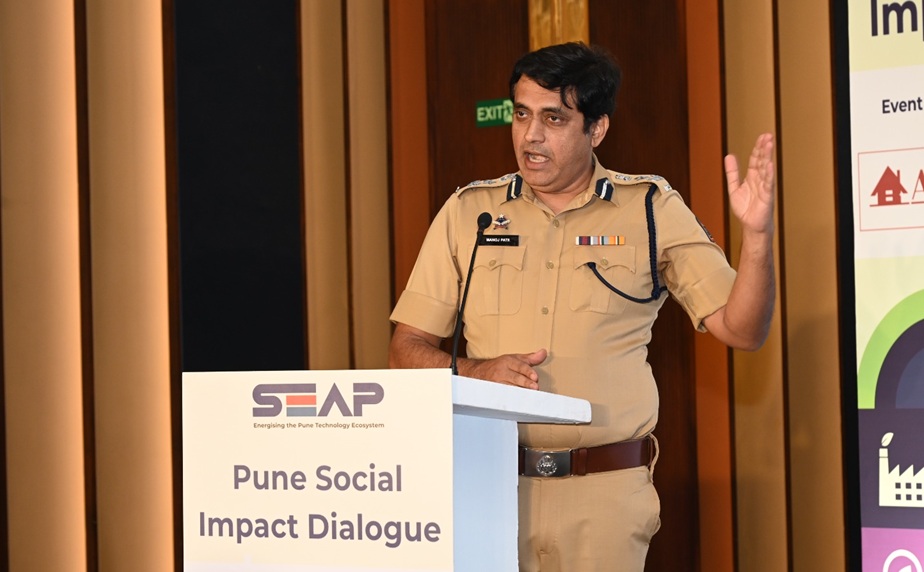
Pune, 19th April 2026 : Additional Commissioner of Police, Manoj Patil announced that AI-based cameras under the Intelligent Traffic Management System (ITMS) will soon play a central role in managing Pune’s traffic, with automatic challans issued for violations across nearly 500 locations in the city. He said this technology will ensure stricter enforcement, as “certainty of punishment” will discourage people from breaking rules, with up to 99% of challans expected to be generated by the system. He was speaking at the Pune Social Impact Dialogue organised by the Software Exporters Association of Pune (SEAP).
The SEAP Pune Social Impact Dialogue 2026, brought together corporate leaders, ESG practitioners, and changemakers on a common platform aimed at strengthening collaboration across the Environmental, Social, and Governance (ESG) landscape. The initiative focused on enabling meaningful connections between purpose-driven organisations and decision-makers, reinforcing the importance of strategic partnerships in driving sustainable and inclusive growth within the region.
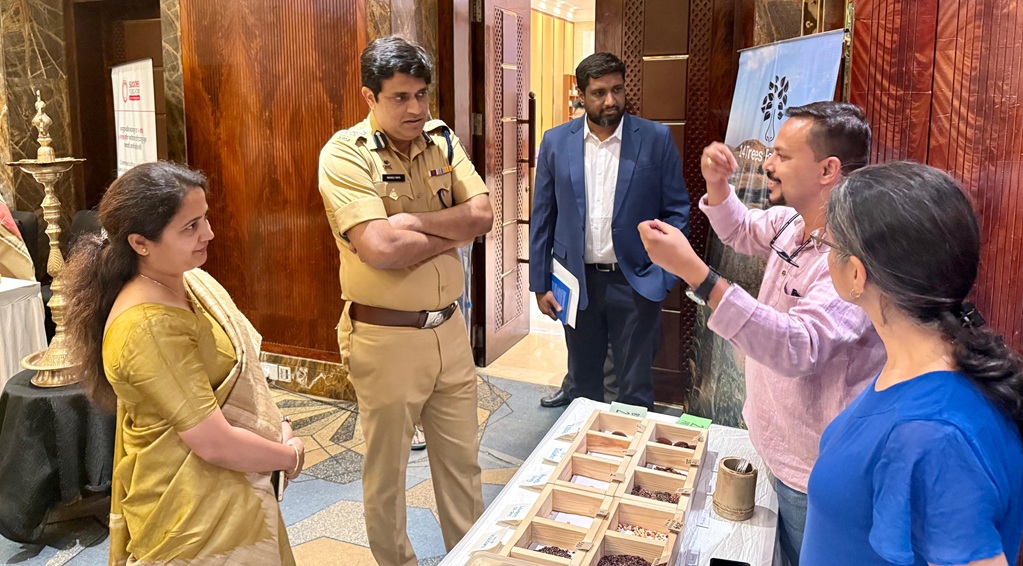
The event was attended by distinguished guests including Kiran D.M. – Global Sustainability Impact Coach and CEO of Seva Bridge Foundation; Dr. Sudhir Mehta – Founder and Chairman of Pinnacle Industries and EKA Mobility; Satya Natarajan – CEO of Climate Troopers Foundation; Prof. Rajiv Yeravdekar, Provost of the Faculty of Medical and Health Sciences at Symbiosis International University; Shivraj Sable – SEAP President, Shivesh Vishwanath- Vice President, Balchandra Namjoshi – Executive Committee member of SEAP, Avanti Kadam- SEAP ESG Pillar Leader. NGOs such as Swadesh Foundation, 14 Tree Foundation, Harshadeep Foundation, Tarachand Hospital, Eco Circular, Animal Angel, Eco Exit, Life Lab and Swaroop Vardhini also participated.
Patil further explained that Pune’s worsening traffic situation is the result of rapid and unplanned growth, outdated planning, and excessive reliance on private vehicles. He pointed out that earlier infrastructure projects, such as flyovers, were often designed using limited or outdated data. In one example, a bridge planned for 19,000 vehicles is now expected to handle nearly 90,000 vehicles, leading to congestion instead of relief. To address this, authorities are now shifting towards data-driven and evidence-based planning, using real-time inputs from platforms like Google and TomTom.
Highlighting the scale of the issue, he noted that Pune has 78 lakh vehicles but only 7% road area, resulting in severe pressure on road capacity. To tackle this, the administration is implementing both short-term and long-term measures, including improving road hierarchy, focusing on 32 key roads that handle 80% of traffic movement, reducing signals, removing encroachments, and increasing average vehicle speeds. He emphasized that even small interventions like fixing potholes, better road markings, and converting roads to one-way can significantly ease congestion.
At the same time, Patil stressed that public behaviour is a major factor, stating that nearly 99% of traffic jams are caused by violations. Along with AI cameras strengthening enforcement, he highlighted the need for greater use of public transport, noting that only 11% of citizens currently rely on it. He also spoke about Transit-Oriented Development (TOD), encouraging vertical growth near metro corridors to reduce travel distances and traffic load. With better planning, smarter infrastructure decisions, and active citizen participation, the city aims to move towards a more efficient and disciplined traffic system.
Kiran D M stressed that effective social impact requires a shift from short-term, activity-based CSR to long-term, root-cause-driven interventions. He highlighted that many initiatives fail due to poor local understanding and lack of community ownership, and called for data-driven, need-based, and collaborative approaches to ensure sustainable and meaningful transformation.
Prof. Rajiv Yeravdekar emphasized the need to protect Pune by addressing issues like pollution and traffic. Dr. Sudhir Mehta at the Fireside Chat highlighted the growing power of social media and said that people should use their time for meaningful social work.
Vidyadhar Purandare provided information regarding the ESG Forum through an audio-visual presentation. He stated, “For many years, SEAP has been actively working to not only promote but also organize the software industry within the city of Pune. SEAP primarily focuses its efforts across four key domains: Leadership, Technology, Go-to-Market strategies, and Operational Excellence. However, with the objective of establishing a sustainable platform for companies to channel their CSR initiatives, the organization undertook work in the field of ESG—Environmental, Social, and Governance—last year. Through this initiative, SEAP has emerged as a vital link between the corporate sector and social organizations, successfully creating a sustainable platform for the benefit of the city’s citizens. As an integral part of this endeavor, we have been organizing the ‘Pune Social Impact Dialogue’ since last year. The primary objective behind this initiative is to foster a vibrant ecosystem for driving sustainable change within Pune.”
Through this platform, SEAP has resolved to address and work on a wide range of issues facing the city, including environmental pollution, solid waste management, water management systems, challenges related to slum rehabilitation, issues concerning organizations dedicated to the welfare of orphaned children, and providing educational opportunities to economically weaker sections of society. The event was anchored by Pooja Kulkarni. Shivesh Vishwanath proposed the vote of Thanks.