Beyond the Finish Line: How Pune’s Shubham Kajale Conquered Ultraman Australia Twice
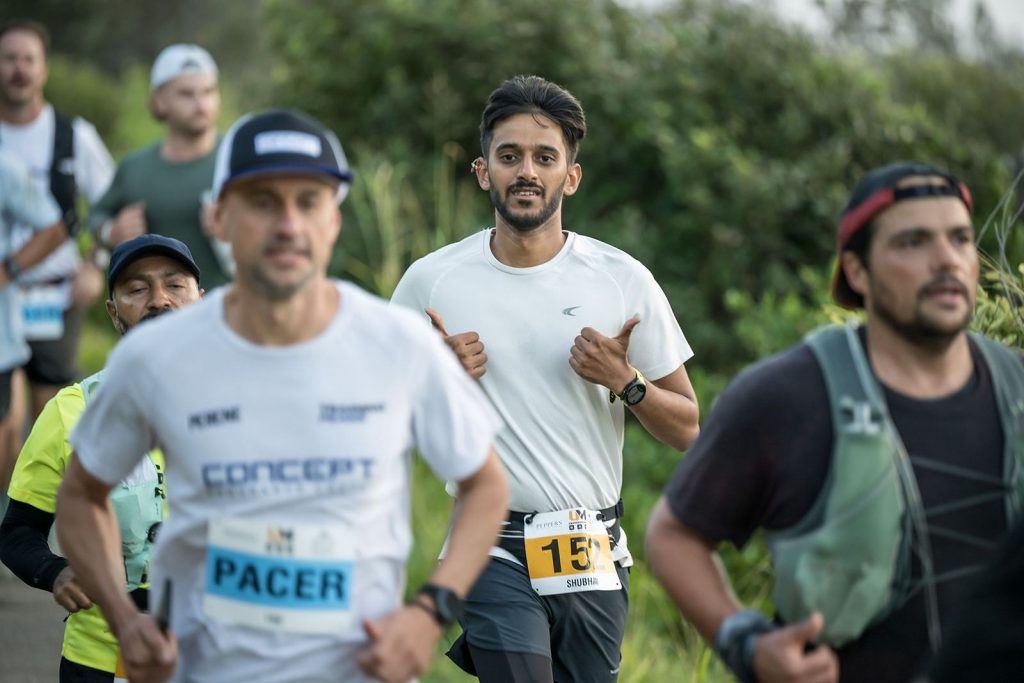
By Sneha Deb
Pune, 28th May 2026: By all conventional standards, finishing Ultraman Australia once should be enough for a lifetime.
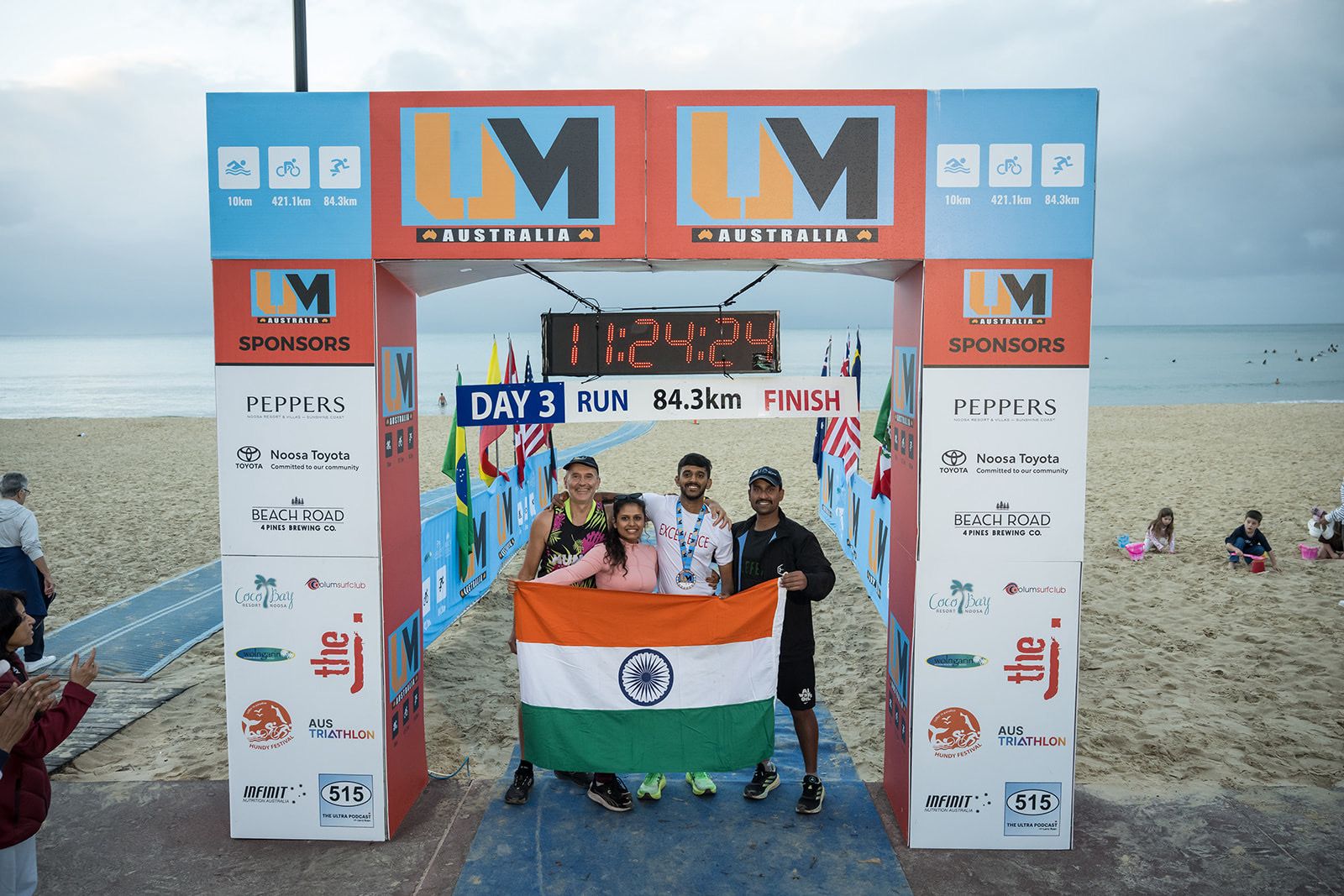
The event is among the most brutal endurance races in the world — a three-day test of physical collapse, mental resistance, and absolute human grit. Athletes must survive a 10 km open-water ocean swim, a punishing 421 km cycling stage, and an 84.3 km double marathon run. In total, participants cover 515.4 kilometres across unforgiving Australian terrain and unpredictable coastal conditions.
For most athletes, simply crossing that finish line becomes the defining achievement of their careers.
But for 28-year-old Pune endurance athlete Shubham Kajale, the finish line was never the destination. It was unfinished business.
This year, Kajale completed Ultraman Australia for the second consecutive time, returning not to chase a record or relive past glory, but to test whether he could master the race that once nearly broke him.
His first finish had already placed him in the history books as India’s youngest-ever Ultraman finisher at the age of 24. Yet, four years later, he arrived back in Australia carrying something far more powerful than youthful adrenaline — preparation built on science, structure, and patience.
“Titles are temporary assets,” Kajale says calmly. “Coming into this second attempt, it acted as pure motivation rather than pressure.”
The Scale of the Challenge
Ultraman is not a race that can be explained through statistics alone, though the numbers themselves are staggering.
Day One begins with a 10 km ocean swim where currents, waves, saltwater, and weather become as dangerous as the distance itself. Day Two pushes athletes through a 421 km cycling course spread across Australian highways and steep terrain. Day Three concludes with an 84.3 km double marathon run, often completed by athletes whose bodies are already functioning deep inside exhaustion.
The cumulative distance — 515.4 km — transforms the event from sport into survival.
For Kajale, the attraction was immediate.
He first discovered endurance sports after completing his Class 10 board examinations, when he stumbled upon the world of Ironman triathlons. At 18, he became an Ironman finisher himself — an achievement many athletes spend decades pursuing.
But even then, his ambitions had already moved further.
“When I saw the sheer scale of a three-day, 515 km race, I didn’t just see an athletic event,” he recalls. “I saw a profound test of human limits. I knew instantly that I had to chase it.”
That pursuit eventually led him to Australia, where he made history with his first Ultraman finish. Yet the second journey, he says, was fundamentally different.
This time, it was engineered.
The Science Behind the Second Finish
Kajale credits much of his transformation to the person who became the central force behind his preparation — his wife, a qualified sports physiotherapist.
If the first Ultraman campaign relied on instinct, resilience, and youthful endurance, the second was built around biomechanics, recovery science, and structured conditioning.
“She systematically structured my physical conditioning to handle the volume safely,” Kajale explains. “My recovery, muscle firing, and structural resilience were flawless because of her sports science expertise.”
Preparing for an event like Ultraman from Pune comes with its own complications. The city has no coastline for ocean swim training, limited endurance infrastructure, and no terrain that fully replicates the demands of the Australian course.
So the couple improvised relentlessly.
Long-distance swimming sessions were recreated through high-volume pool intervals, supported by regular practice sessions in lakes around Pune. The massive cycling load was simulated across highways surrounding the city, while the steep climbs near Sinhagad became critical training grounds for endurance and elevation conditioning.
The difference, Kajale says, became visible during the race itself.
“Physically, my body was in an entirely different league,” he says. “Mentally, it changed from a game of survival panic to absolute patience.”
The Day Everything Nearly Collapsed
Despite months of preparation, the race nearly ended before it truly began.
During the opening 10 km ocean swim, rough sea conditions triggered severe seasickness. Kajale repeatedly swallowed saltwater. Vomiting drained his energy reserves. Far from shore and deep into exhaustion, he found himself confronting the possibility of quitting.
“Physically, I was completely drained of energy, and mentally, I was at a breaking point where I almost considered giving up,” he says.
Then came the thought that changed everything.
“Ultramen don’t quit.”
It was enough.
Kajale continued through the sickness, endured the physical collapse, and completed the swim — a moment he now considers the psychological turning point of the entire event.
By surviving Day One, he had already won the internal battle that Ultraman demands from every athlete.
The Family Behind the Athlete
Like many Indian athletes pursuing unconventional sporting careers, Kajale’s endurance journey was initially met with anxiety at home.
The sight of a young athlete training for 10-hour sessions, pushing his body into extreme exhaustion, naturally raised concerns within the family.
“Initially, there was deep concern for my physical safety,” he says. “But over the years, their perspective evolved into complete trust.”
That trust deepened further once his wife took over the scientific and medical aspects of his training.
“Now, with my wife managing my sports science and training, the family has total peace of mind knowing my extreme pursuits are backed by professional, medical-grade preparation.”
In endurance sport, emotional support often becomes invisible infrastructure — as critical as nutrition plans, recovery protocols, or physical conditioning.
Kajale understands that deeply.
Building the Future of Indian Endurance Sports
Having experienced the gaps in India’s endurance ecosystem firsthand, Kajale now wants to help build what he once lacked himself.
Together with his wife, he is developing a specialised sports performance lab focused entirely on endurance athletes.
The proposed centre aims to provide physiological testing, injury prevention systems, performance analytics, recovery protocols, and structured sports science support for Indian ultra-distance athletes — areas that remain underdeveloped despite India’s growing endurance culture.
“I want to build a platform that provides the exact technical, mental, logistical, and physiological roadmap that I had to figure out by myself,” Kajale says.
“My goal is to make ultra-distance dreams safely achievable for any Indian athlete willing to put in the work.”
For him, the larger issue is not talent.
“India has unbelievable physical potential,” he says. “But we lack scientific guidance. We need to bridge the gap between raw talent and sports science.”
Beyond the Finish Line
For now, Kajale is allowing his body time to recover before deciding on future races. A third Ultraman appearance remains possible, but mentorship and the sports performance lab have become his immediate priorities.
There are practical realities too. Competing internationally at this level demands enormous financial commitment — from race registration fees and international travel to specialised bike maintenance and mandatory crew expenses.
Kajale navigated the costs through disciplined budgeting and family savings.
“It makes crossing the finish line feel doubly earned,” he says.
And perhaps that is what makes his story resonate beyond endurance sport itself.
Because Shubham Kajale’s journey is not simply about covering 515.4 kilometres across Australia. It is about a young athlete from Pune refusing to accept that geography, infrastructure, or limited resources should define the limits of his ambition.
Most athletes dream of reaching the finish line once.
Kajale crossed it twice — and came back carrying a blueprint for those who want to follow.