Beyond the Waves : Ratnagiri’s Most Stunning Escapes
By Samiccha Malik
Ratnagiri, 30th May 2026: If the Konkan coast were a person, Ratnagiri would be its soul. Stretching along roughly 167 kilometres of the Arabian Sea coastline, this district is one of Maharashtra’s most generously gifted and blessed with beaches so clean and unhurried they feel like they belong to another era, forts that have watched centuries pass from clifftops above the sea, forests dense with mango and kokam trees, and a cultural identity so rooted and specific that even a short visit leaves a lasting impression. Ratnagiri is the birthplace of Lokmanya Bal Gangadhar Tilak, one of India’s greatest freedom fighters. It is the home of the Alphonso mango, considered the finest in the world. And it is, above all else, a place that understands the art of being beautiful without trying too hard. Here are ten places in this extraordinary district that are absolutely worth your time.
1. Ganpatipule Beach & Temple
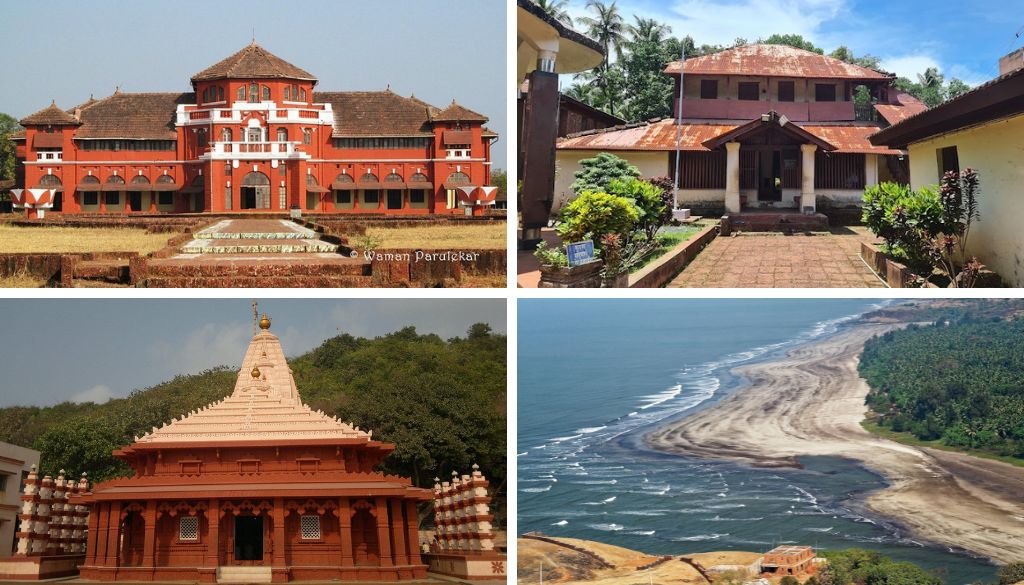
Twenty-five kilometres from Ratnagiri city, Ganpatipule is the kind of place that earns its reputation completely. The beach here is long, clean, and fringed with coconut palms that sway in the sea breeze – a stretch of coastline so unspoiled it almost looks painted. But what makes Ganpatipule truly special is the Swayambhu Ganpati Temple, a 400-year-old shrine dedicated to Lord Ganesha that sits right at the edge of the beach, the sea lapping at the rocks just metres away. The idol here is believed to be self-manifested – swayambhu – emerging naturally from the earth rather than carved by human hands. Thousands of devotees make the pilgrimage here year-round, but the atmosphere never feels overwhelming. The combination of sacred temple and pristine shoreline makes Ganpatipule one of the most quietly extraordinary spots on the entire Konkan coast.
2. Ratnadurg Fort
Rising above the sea on a rocky headland at the edge of Ratnagiri city, the Ratnadurg Fort is one of those places that rewards simply being in it. Built during the reign of the Bijapur Sultanate and later fortified by the Marathas, the fort wraps around the Bhagwati Temple one of the most ancient temples in Maharashtra in a way that makes the sacred and the historic completely inseparable. The walls command sweeping views of the Arabian Sea on one side and the city and harbour on the other. The Ratnagiri Lighthouse stands nearby, its beam sweeping across the water at night. Walk the ramparts at sunset and the entire stretch of coastline turns golden around you.
3. Thiba Palace
Among all the surprising stories that Ratnagiri carries, perhaps the most unexpected is this: the last king of Burma spent the final years of his life here, in exile. King Thibaw Min, deposed by the British in 1885, was brought to Ratnagiri and housed in a palace built specifically for him a three-storeyed structure of elegant Bramhi architecture that still stands today. The palace has been converted into a museum and offers a fascinating window into a deeply unusual chapter of colonial history, with photographs, artefacts, and documents tracing both the king’s story and Ratnagiri’s own layered past. It is the kind of place that makes you pause and reconsider how many unexpected lives this coastline has quietly witnessed.
4. Guhagar Beach
Ninety kilometres north of Ratnagiri city, Guhagar is consistently counted among the finest beaches in Maharashtra and it lives up to every word of that reputation. The sand here is white and fine, the water clean and relatively calm, and the six-kilometre stretch of shoreline is lined with casuarina trees that provide shade and a certain theatrical beauty. The beach faces west, which means the sunsets here are extraordinary the kind that stop conversation entirely. Guhagar town behind the beach retains a genuine Konkani character, with traditional homes, temples, and the smell of coastal cooking in the evening air. It is popular but never overcrowded, and its natural beauty is the kind that improves with every visit.
5. Jaigad Fort & Lighthouse
Where the Shastri River meets the Arabian Sea, on a narrow promontory that juts dramatically into the water, stands the Jaigad Fort – a coastal fortification of considerable beauty and historical weight. Built originally by the Bijapur rulers and later controlled by the Marathas and the British, the fort sits above the confluence of river and sea in a setting of genuine drama. The Jaigad Lighthouse, located within the fort’s westernmost bastion, offers panoramic views of the Arabian Sea that stretch to the horizon. The sight of fishing boats moving across the water far below, with the fort walls framing the scene, is one of those images that stays with you long after you have driven back home.
6. Velas Beach : The Turtle Festival
Velas is a small, quiet village on the Ratnagiri coast that for most of the year goes about its gentle business unnoticed. But every February and March, it becomes one of the most remarkable wildlife experiences in Maharashtra. The Velas Turtle Festival, organised by local conservation groups and the village community, celebrates the hatching of Olive Ridley sea turtles on the beach an endangered species that returns to this stretch of coast year after year to nest. Watching the tiny hatchlings make their way from the sand to the sea at dawn is a deeply moving experience, and the festival has become a model for community-led conservation across the country. Outside turtle season, Velas is simply a beautiful, unhurried Konkani beach village and that alone is worth the trip.
7. Dapoli : The Mini Mahabaleshwar
Inland from the coast, tucked into the hills of the Sahyadris at a comfortable elevation, Dapoli has earned itself the nickname of the Mini Mahabaleshwar and it wears it well. The weather here is cooler than the coast below, the views across the hills and down to the sea are wonderful, and the surrounding landscape of cashew groves, mango orchards, and forest trails makes it ideal for a slow, restorative escape. The area also has several beautiful and relatively uncrowded beaches accessible on the way down ; Ladghar, Murud, and Anjarle among them each with its own character and all far less visited than the more famous stretches of the coast. Dapoli is the kind of destination that rewards those who are willing to look slightly beyond the obvious.
8. Tilak Ali Museum : Birthplace of Lokmanya Tilak
Ratnagiri was the birthplace of Bal Gangadhar Tilak – the freedom fighter, journalist, and social reformer who became one of the most powerful voices against British colonial rule in India. His ancestral home in Ratnagiri city has been preserved and converted into the Tilak Ali Museum, maintained by the Archaeological Department, housing photographs, personal belongings, documents, and artefacts that trace his life and legacy. For anyone with even a passing interest in India’s independence movement, this museum is a genuinely moving experience. Standing in the rooms where one of India’s great minds spent his early years gives the history a texture and closeness that no textbook can quite replicate.
9. Pawas
Twenty kilometres from Ratnagiri city, the small town of Pawas sits quietly on the banks of a creek flowing into the sea, carrying a spiritual weight that is difficult to describe but easy to feel. This is the birthplace and lifelong home of Swami Swaroopanand, one of Maharashtra’s most revered saints of the twentieth century, whose ashram here continues to draw devotees from across the country. The
setting itself a tranquil waterfront town surrounded by coconut groves and the perpetual sound of birds is deeply peaceful. The Pawas Ashram is beautifully maintained and open to visitors, and the atmosphere of the place, with the creek glittering in the light and the hills rising beyond it, stays with you long after you leave.
10. Bhatye Beach
Close to Ratnagiri city and among the most accessible beaches in the district, Bhatye is a long, calm stretch of shoreline that makes an excellent place to simply exhale. The water here is clear, the beach relatively uncrowded, and the views across the Bhatye Bridge and the Someshwar Creek add a layer of scenic interest that most beaches cannot offer. The nearby Ratnagiri Lighthouse is visible from the shore, and the surrounding landscape of hills, water, and coconut palms creates a setting of unhurried beauty. It is not a dramatic beach or a famous one but sometimes the best places are the ones that ask nothing of you except to sit down, look out at the sea, and stay a little longer than you planned.
Best Time to Visit
Ratnagiri is one of the most season-friendly districts in Maharashtra. October to February is peak season – the weather is cool, the sea is calm, and the beaches are at their finest. March to May is warm but the Alphonso mango season makes it entirely worthwhile there is no better place in the world to eat a Hapus mango than in Ratnagiri. The monsoon from June to September transforms the landscape dramatically, with waterfalls appearing across the Sahyadri slopes, rivers running full, and the coastal scenery turning intensely green. The Velas Turtle Festival takes place specifically in February and March and is worth planning a trip around.
Getting There
Ratnagiri district is well connected by the Konkan Railway, with Ratnagiri station serving as the main hub and stations at Chiplun, Guhagar Road, and Khed providing access to the northern parts of the district. The Mumbai-Goa National Highway runs through the district offering comfortable road access. State transport and private buses connect Ratnagiri to major cities across Maharashtra.
Ratnagiri is a district that gives generously mangoes and monsoons, forts and fishermen, ancient temples and forgotten palaces. It is the Konkan at its most layered and most lovely, and every kilometre of its coastline has a story worth stopping for.