BJ Govt Medical College Pune Develops Faster, More Accurate Method to Test ‘Last-Resort’ Antibiotic Colistin
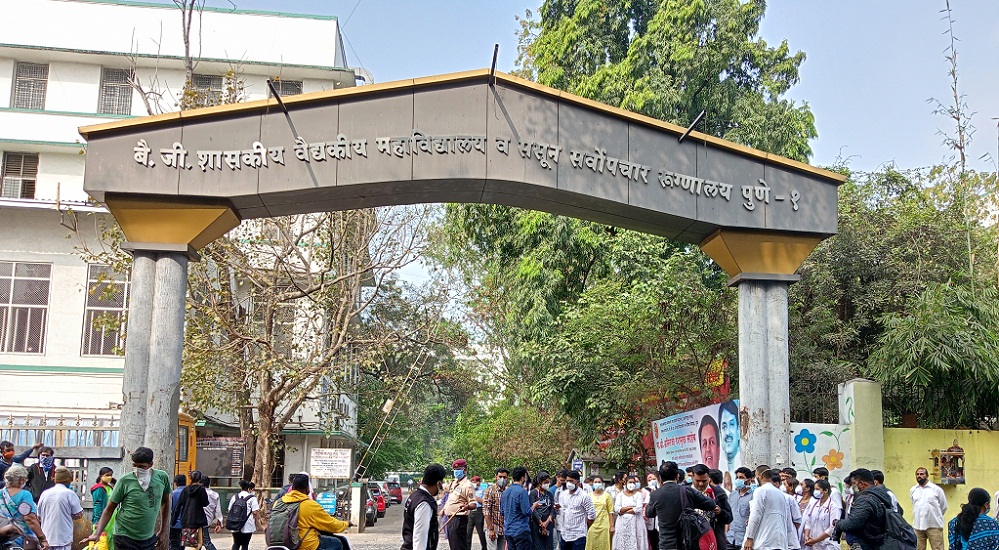
Pune, 5th October 2025: In a major advancement in antimicrobial research, doctors at the Microbiology Department of B.J. Government Medical College (BJGMC), Pune, have developed a new testing method for colistin, a powerful antibiotic often used as the last line of defence against multi-drug resistant (MDR) infections.
The new technique, known as Colistin Broth Disk Elution (CBDE), offers a quicker, more reliable, and cost-effective way to determine whether bacteria are susceptible to colistin. The study highlights that CBDE can potentially replace the existing gold-standard method, Broth Microdilution (BMD), which is highly accurate but too complex and time-consuming for routine use in many laboratories.
“Until now, the BMD method was the only reliable tool to check colistin susceptibility,” said Dr. Rajesh Karyakarte, head of BJMC’s Microbiology Department and the study’s corresponding author. “However, it requires significant time, resources, and technical skill. Our CBDE method shows comparable accuracy with fewer errors and can be implemented even in smaller labs.”
Dr. Karyakarte explained that the new method could prove especially useful in intensive care units (ICUs) where rapid decisions are crucial. “Colistin is a last-resort antibiotic often used in critical cases. The CBDE method cuts down testing time by nearly an hour, which can make a real difference in patient outcomes. It also reduces manpower requirements and ensures more precise treatment decisions,” he said.
The research paper, titled “Comparison of Broth Disk Elution and Broth Microdilution Methods for Colistin Susceptibility Testing in Carbapenem-Resistant Enterobacteriaceae and Pseudomonas aeruginosa”, was published in the peer-reviewed journal Cureus on September 8.
Dr. Karyakarte added that the findings have been sent to the Ministry of Health and Family Welfare for review. “Further validation across different laboratories is required before CBDE can officially replace BMD as the standard method. However, the results are promising and could significantly strengthen antimicrobial stewardship in resource-limited healthcare settings,” he said.