Why Was the RTI on Pune Airport’s No-Pickup Zone Rejected? Advocate Demands Answers
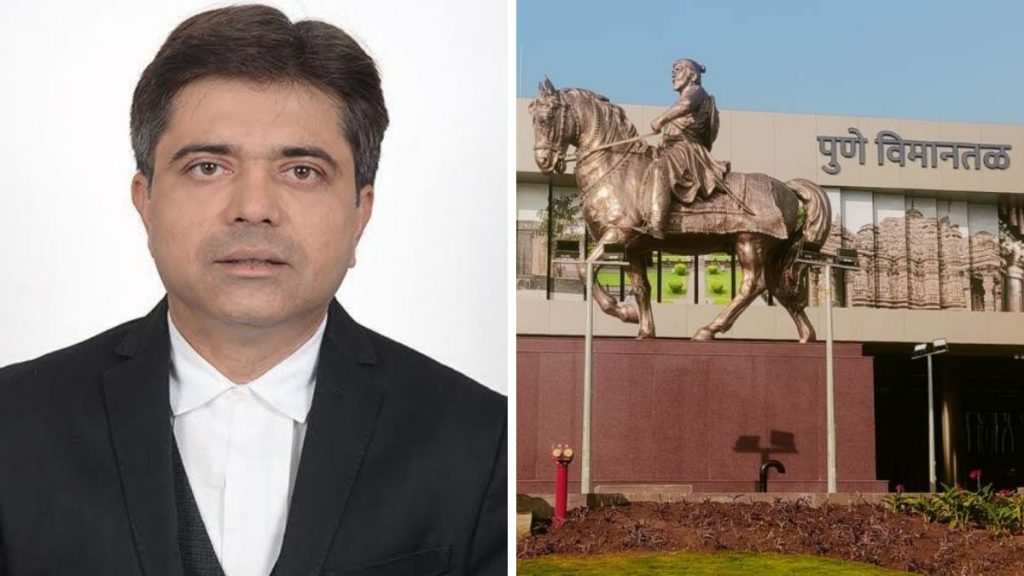
Pune, 29th June 2026: In a major controversy exposing the growing pains and potential misuse of Maharashtra’s newly notified Right to Information (RTI) Rules, 2026, the Pune Traffic Police have rejected an RTI application concerning the controversial “No-Pickup Zone” outside the Pune Airport.
The rejection has sparked outrage among transparency activists, with Advocate Jatin S. Adhav, Advocate-on-Record at the Bombay High Court and President of the People’s Welfare Association (PWA), demanding a high-level government inquiry into what he calls “arbitrary and technical” rejections of public queries under the new rules.
The Controversy: Rejection of Pune Airport No-Pickup Zone Query
The dispute centers around an RTI application filed by Adv. Adhav on June 16, 2026, seeking critical public interest details regarding the implementation of the “No-Pickup Zone” at Pune Airport and AeroMall. The zone directly affects thousands of passengers daily—including families, senior citizens, women, individuals with disabilities, and app-based cab users.
Adv. Adhav sought answers to fundamental public interest questions, including:
Which legal authority established the No-Pickup Zone and under what law?
What are the official maps, exact boundaries, and jurisdictional limits of the zone?
Were public objections invited, or statutory approvals obtained?
Are private entities involved in managing these operations, and have any commercial agreements or Memorandums of Understanding (MoUs) been signed?
Instead of providing these details, the Pune Traffic Police’s Public Information Officer (PIO) rejected the application outright.
Rules Meant to Help Used to Stonewall?
The core of the legal dispute lies in how the newly notified Maharashtra RTI Rules, 2026 (notified in mid-June 2026) are being interpreted.
Under Rule 7 of the new rules, if an RTI application touches upon more than one subject matter, the PIO is mandated to respond to the first subject matter and advise the citizen to file separate applications for the remaining subjects.
However, despite this explicit directive, the Pune Traffic Police PIO rejected the entire application, refusing to provide information even on the first subject—the legal creation and demarcation of the Pune Airport No-Pickup Zone.
“If the Rules themselves require the Public Information Officer to respond to the first subject, why was the application rejected outright? If the officer himself does not follow the Rules he invokes against citizens, how can citizens have confidence in the RTI system?” questioned Adv. Adhav.
Government Portals Caught Unprepared
Adding to the administrative irony, the government’s own RTI portal was unprepared for the transition when the rules came into effect.
When Adv. Adhav filed his first application on June 16, 2026—just days after the rules were notified—the official state portal accepted the application in the old online format.
It accepted the old fee of ₹10 instead of the revised ₹30 prescribed under the new rules.
The portal generated an official registration number and processed the application without raising any objections.
Yet, the application was later technically disqualified. Activists argue that citizens should not be made to suffer or face rejections due to administrative lapses and the government’s failure to update its online infrastructure in tandem with legislative changes.
The Toll on the Public and the Judiciary
Adv. Adhav warned that if such technical and arbitrary interpretations are allowed to continue unchecked, the Maharashtra RTI Rules, 2026 will transition from a tool of transparency into an administrative mechanism to stonewall citizens.
The consequences of such arbitrary rejections are deep and systemic:
Financial and Time Loss: Citizens lose valuable time and money filing repetitive applications.
Systemic Burden: First Appellate Authorities and the Maharashtra State Information Commission will be heavily burdened with avoidable appeals.
Judicial Backlog: Courts will ultimately face unnecessary litigation that could have been resolved with a lawful response at the initial stage.
Instead of proactive disclosure under Section 4 of the RTI Act (which mandates public authorities to place public interest information in the public domain voluntarily), citizens are being forced into prolonged litigation to obtain basic records.
Demands for Accountability and Statewide Review
Adv. Adhav has formally urged the Maharashtra Government to:
Issue immediate, uniform guidelines to all PIOs across the state to ensure the new rules are implemented in a manner that promotes disclosure rather than technical exclusion.
Launch an administrative inquiry into whether the Pune Traffic Police PIO misapplied Rule 7.
Clarify how many RTI applications across Maharashtra have been rejected solely on technical grounds under the new rules since their implementation.
Examine if departmental disciplinary action is warranted against officers acting contrary to the statutory framework of the central RTI Act.
“The Right to Information Act is one of India’s strongest transparency laws. Procedural rules are intended to facilitate disclosure—not to become barriers that discourage citizens from seeking information. The Government must ensure that the spirit of the RTI Act prevails over technical objections,” Adv. Adhav concluded.