“Cancel RAC or Charge Half Fare”: Online Outcry Over Shared Berth System in Indian Railways
Pune, 27th October 2025: A viral social media campaign has reignited debate over Indian Railways’ Reservation Against Cancellation (RAC) system, with thousands of users demanding either its abolition or a revision to charge only half fare for passengers forced to share berths.
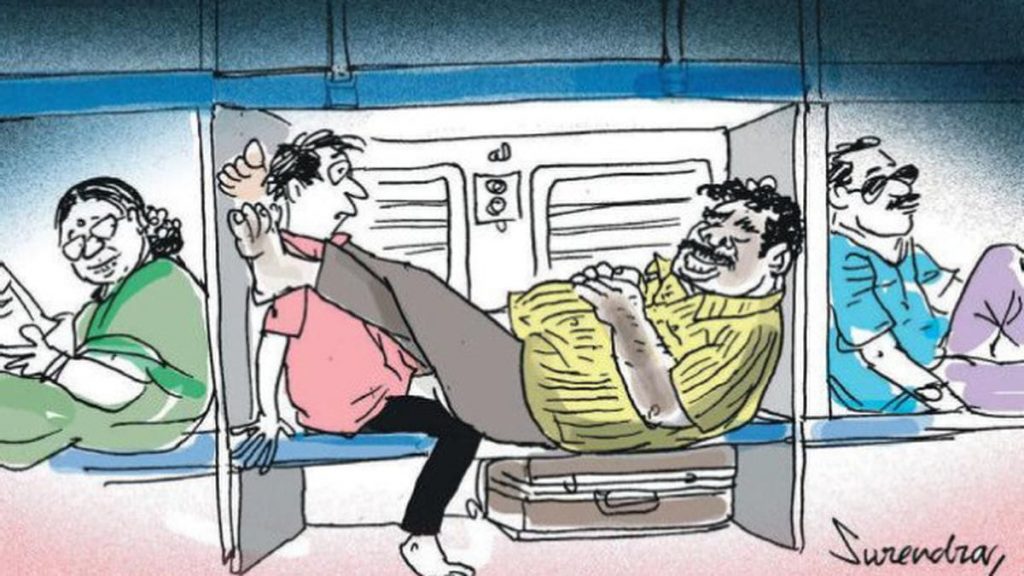
The discussion gained traction on October 26 after a post featuring a cartoon highlighting the discomfort of RAC passengers went viral, garnering over one million views in two days. The post pointed out that passengers under the RAC category pay the full fare despite receiving only half a seat, often sharing a lower berth for overnight journeys. It further demanded an automatic 50% refund — with interest — after chart preparation, a suggestion that has resonated widely across social media platforms.
Several users amplified the issue with data and personal experiences. One post cited figures claiming that Indian Railways earned more than ₹1,250 crore between January 2021 and January 2024 through auto-cancellation of waitlisted e-tickets after chart preparation. Another noted that between 2019 and 2022, over 31 crore tickets were cancelled, generating ₹6,297 crore in revenue — roughly ₹4.31 crore per day — sparking questions about unearned income from passengers who never boarded trains.
Suggestions for reform have poured in. Proposals include introducing a digital check-in system to automatically allocate vacant berths, abolishing the RAC category in favour of a revised waitlist model, and creating a “half-seat” fare option for short-distance or emergency travellers. Many users also raised safety and privacy concerns, particularly over mixed-gender seat sharing during overnight travel.
Passengers have shared multiple accounts of inconvenience. In one instance, a family reportedly spent 15 hours on a shared RAC berth while vacant seats were allegedly resold by railway staff. Several users have demanded that passengers who complete a journey without a full berth should receive a 50% refund, suggesting the introduction of a digital mechanism to monitor such cases.
The campaign has also renewed focus on refund rules. Under existing regulations, no refund is issued for RAC tickets cancelled within 30 minutes of a train’s departure — a policy that has remained unchanged since 2013.
With nearly 46% of passenger fares already subsidized by the government, the debate has struck a chord with the travelling public, highlighting concerns about fairness and comfort. As online calls for reform grow louder, the RAC system has emerged as one of the most discussed passenger rights issues this festive season.