Coldrif Tragedy: No WHO-GMP, No Schedule M, No Audit — Yet Sold Across India
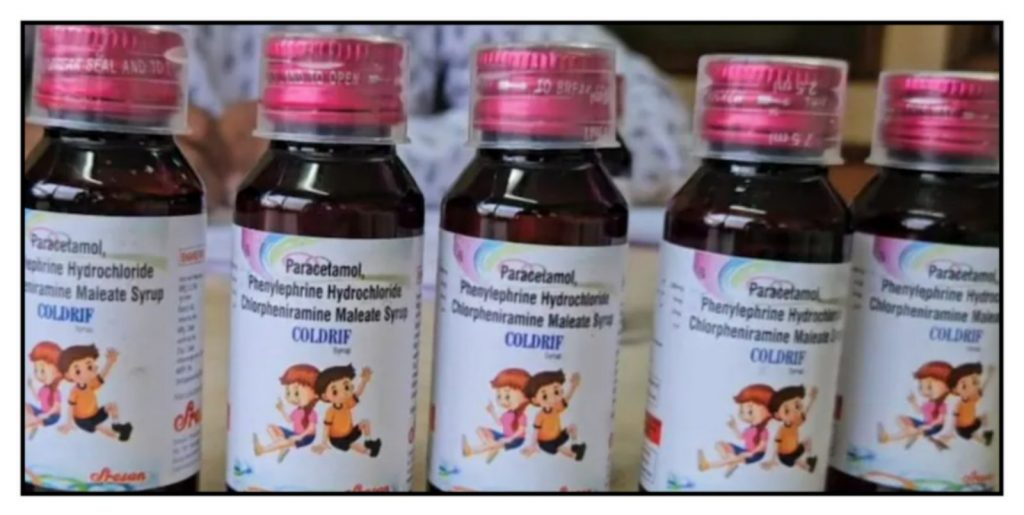
New Delhi, 12th October 2025: In a startling admission, the Central Drugs Standard Control Organization (CDSCO) has acknowledged severe lapses in India’s drug monitoring system following the deaths of at least 29 children in Madhya Pradesh and Rajasthan. The children reportedly died after consuming Coldrif cough syrup, manufactured by Sresan Pharma, a Tamil Nadu-based company that the CDSCO said it had no record of in its database.
CDSCO Had No Information About Drug or Manufacturer
According to CDSCO’s internal report, Coldrif cough syrup and its manufacturer, Sresan Pharma of Kanchipuram, were not registered on the Sugam portal, the national database that maintains information on all licensed drug manufacturers and their products. Under Indian regulations, every drug maker is required to update this information regularly on the portal.
The absence of Coldrif’s details on the system raises serious concerns about how many other drugs are being sold without the CDSCO’s knowledge, despite having state-issued licenses.
Tamil Nadu Firm Went Unchecked for 14 Years
The report revealed that Sresan Pharma was licensed in 2011 by the Tamil Nadu Food and Drugs Department, but the CDSCO never audited the company in the 14 years since its registration. The regulator’s database contained no record of the firm.
In October 2023, the CDSCO sent letters and Google forms to all state drug controllers, asking for complete information on all licensed pharmaceutical manufacturers. However, despite repeated reminders, Tamil Nadu did not share the required data.
Blame Game Between Centre and State
After the deaths were reported, the Tamil Nadu government allegedly attempted to shift responsibility onto the central government. However, CDSCO’s report highlighted that the state regulator had failed to share key information or act promptly.
When Madhya Pradesh authorities requested an inquiry, tests conducted on Coldrif syrup found 48.6% Diethylene Glycol (DEG) — a toxic industrial chemical — whereas the permissible limit is below 0.1%. The CDSCO, astonishingly, said it learned of this finding through media reports rather than official communication.
On October 4, 2023, CDSCO wrote to the Tamil Nadu Food and Drugs Department to revoke Sresan Pharma’s license, but the central agency has yet to receive confirmation of any action taken.
No Compliance with Quality Standards
The regulator noted that Sresan Pharma never applied for Schedule M or WHO-GMP certification, both of which ensure adherence to Good Manufacturing Practices (GMP) — a key measure of quality and safety in the pharmaceutical industry. Despite this, its cough syrups were sold in multiple states, including Madhya Pradesh, Maharashtra, and Rajasthan, without adequate supervision.
Weak Oversight Across India’s Drug Industry
The CDSCO report underscores a systemic failure in India’s drug quality monitoring framework. The regulator’s sample testing capacity remains severely limited, covering only a fraction of the country’s vast pharmaceutical output.
A senior CDSCO official, quoted anonymously, admitted, “In a country of 1.4 billion people, testing a few samples every month cannot ensure drug quality. A strong, real-time monitoring system is the need of the hour, but only superficial measures are being taken.”
The Coldrif case has reignited debate on the urgent need for centralized data transparency, stricter compliance audits, and accountability between state and central regulators to prevent future tragedies linked to substandard medicines.