Doordarshan Anchor Apologises After Calling CBSE Student ‘Pakistani’ Amid Result Dispute
New Delhi, 26th May 2026: What began as a Class 12 student’s attempt to question a discrepancy in his CBSE Physics answer sheet has snowballed into a controversy involving examination errors, online harassment, and criticism of a national broadcaster’s journalist.
Delhi student Vedant Shrivastava found himself at the centre of a social media storm after he alleged that the Physics answer sheet uploaded under his roll number did not belong to him. On May 23, the student shared scanned copies of the answer sheet online, claiming that the handwriting, answers, and presentation style were completely different from his own.
According to Vedant, the apparent mix-up had severely affected his Physics marks and, consequently, his overall PCM score, potentially impacting his college admission prospects.
As his posts gained traction online, the issue quickly became a talking point among students and parents already concerned about the Central Board of Secondary Education’s newly introduced On-Screen Marking (OSM) system. Many users pointed out that if the student’s claims were true, it could raise serious questions about the reliability of the board’s digital evaluation process.
However, instead of focusing solely on the alleged error, a fresh controversy erupted when a Doordarshan News anchor publicly questioned Vedant’s identity. Referring to the location details associated with his recently created X account, the anchor suggested that the account appeared to be operated from Pakistan and referred to the student as “Pakistani.”
The remark sparked immediate backlash.
Several social media users criticised the anchor for attacking a student who was attempting to raise a legitimate grievance. Others questioned how concerns about an examination process had suddenly become a debate about nationality.
One user wrote that questioning a student’s citizenship instead of examining the evidence reflected a worrying trend of dismissing criticism rather than addressing it. Another remarked that the incident showed how quickly online discussions could shift from accountability to personal attacks.
As the debate intensified, many users began demanding that CBSE directly address Vedant’s claims instead of allowing speculation to dominate the conversation.
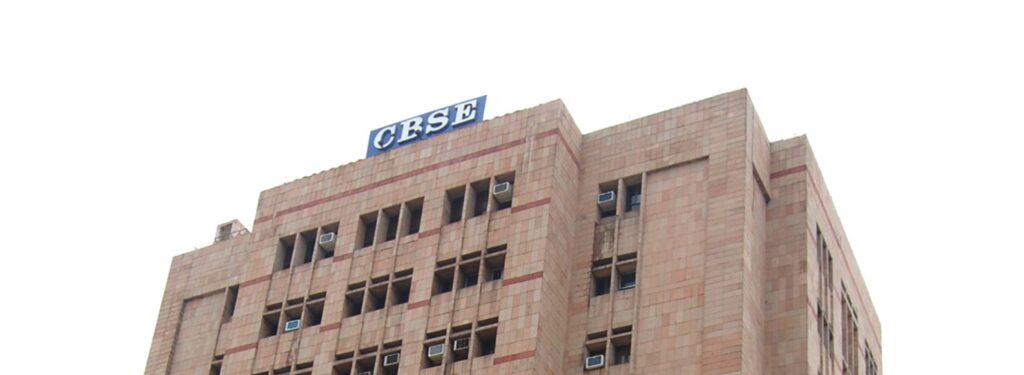
Two days later, the controversy took a dramatic turn. On May 25, CBSE acknowledged that an incorrect Physics answer sheet had indeed been uploaded against Vedant’s roll number. The board reportedly contacted the student’s family, shared the correct answer sheet, and initiated a review of the matter. Reports suggest that CBSE has also begun examining the issue with technical experts, including those associated with the OSM system, to determine how the mismatch occurred.
The admission effectively validated the concerns that Vedant had been raising since the results were declared.
Following CBSE’s clarification, criticism of the Doordarshan anchor intensified. Many users pointed out that the student had been publicly labelled and subjected to online abuse before the facts were verified. Calls for an apology and even defamation proceedings circulated across social media platforms.
The anchor later deleted the controversial post and issued an apology.
Meanwhile, Vedant thanked those who had supported him throughout the ordeal but said the episode had caused significant mental stress to both him and his family. He also expressed concern for other students who may have encountered similar issues but lacked the visibility and online reach needed to draw attention to their cases.
The controversy has also triggered wider scrutiny of CBSE’s On-Screen Marking system, which was introduced to improve efficiency and transparency in evaluation. Following Vedant’s case, several students came forward online, alleging problems ranging from blurred scans and missing pages to unchecked answers and technical glitches on the portal.
While it remains unclear how widespread such issues may be, the incident has prompted calls for a thorough review of the system’s implementation.
For many observers, the story is no longer just about one student’s marks. It has become a larger conversation about accountability in public institutions, the dangers of online labelling, and the consequences of dismissing grievances before verifying facts.
In the end, the student who was accused of being an outsider turned out to be right. The error was real, the answer sheet was wrong, and the institution at the centre of the controversy admitted as much. What remains under scrutiny now is not just the examination system, but the rush to discredit a student before the truth has a chance to emerge.