Historic Turnout in Bihar: Women, Youth, and Unemployment Redefine Electoral Dynamics
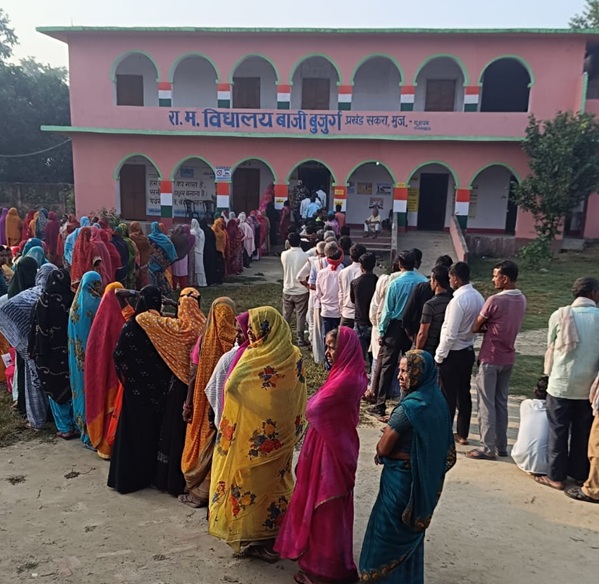
Patna, 8th November 2025: Bihar witnessed a historic voter turnout of 65% in the first phase of the Assembly elections across 121 constituencies, marking the highest participation since Independence. Muzaffarpur and Samastipur topped the charts with over 71% polling, setting new records in electoral participation. In contrast, the first phase of the 2020 elections had registered only 55.68% turnout.
What makes this record significant is not just the number, but who turned out. Women outvoted men by a wide margin—69% to 61%. Analysts say this gender gap, coupled with the removal of duplicate and inactive voters through the Special Intensive Revision (SIR) of the electoral rolls, has dramatically altered the voting landscape in Bihar.
SIR’s Silent Impact: A Cleaner Roll, a Higher Turnout
The Special Intensive Revision (SIR) of the voter list is being credited for part of the increased turnout. According to Election Commission data, Bihar’s total electorate dropped from 7.89 crore in 2020 to 7.41 crore after 69.3 lakh names were deleted and 21.53 lakh new voters added.
“This reduction by nearly 48 lakh voters eliminated duplicate, deceased, and relocated names, resulting in a more accurate denominator for turnout calculation,” explained political analyst Praveen Bagi. “Even if the absolute number of votes cast remained the same, the cleaner voter roll inflated the percentage turnout.”
Experts estimate that around 3.7% of the total 7.7% increase in turnout can be attributed directly to SIR. The rest, they say, reflects genuine voter enthusiasm—especially among women and youth.
Unemployment and Hope, Not Anti-Incumbency
While higher turnout is often linked to anti-incumbency, analysts say Bihar’s case is different.
“Unemployment, not anger, is the main driver,” said social and political analyst Pramod Ranjan. “Nitish Kumar’s infrastructure push has raised aspirations among the youth, but job creation hasn’t kept pace. This vote surge reflects hope—people want results, not rhetoric.”
Ranjan added that many believe Nitish Kumar has done what he could, and now Tejashwi Yadav’s focus on jobs appeals to those seeking a fresh approach.
Youth and First-Time Voters Show Up
The Election Commission noted a remarkable participation from young and first-time voters. Over 7.37 lakh voters aged 18–19 and 80 lakh aged 20–29 cast their ballots. At polling stations in Patna and Muzaffarpur, long queues of first-time voters reflected the generational change in Bihar’s politics.
Women Take the Lead — and Boats
From Siwan to Muzaffarpur, women turned up in record numbers—some even traveling by boat to reach polling booths. According to reports, elderly women and veiled voters also queued patiently for hours.
This enthusiasm was bolstered by over 90,000 Jeevika Didis and female volunteers deployed as polling assistants to guide and assist women voters. Chief Electoral Officer Vinod Gunjyal confirmed that this initiative, combined with awareness drives and better polling facilities, “made the voting experience inclusive and accessible.”
Technology and Management: 17 New Initiatives
The Election Commission rolled out 17 new measures to ensure transparency and convenience. All 45,341 polling stations were webcast live, and for the first time, EVM ballot papers displayed candidates’ color photographs.
Polling station capacity was reduced from 1,500 to 1,200 voters, which shortened queues and wait times. “Our goal was not just high turnout, but comfortable and confident voting,” said CEO Gunjyal.
Festival, Facilities, and Financial Schemes Add Momentum
The first phase of polling took place immediately after Chhath Puja, which brought nearly 70 lakh migrant Biharis back home. Many stayed back to vote, aided by special trains and incentives from political parties.
Analysts also point to recent welfare schemes announced by both alliances. The NDA government’s ₹10,000 cash transfer to women, increased pensions, and free power units may have shored up loyalty, while Tejashwi Yadav’s promises of ₹30,000 family aid, ₹1,500 monthly pensions, and restoration of the Old Pension Scheme energized the opposition’s support base.
Triangular Contest and the Role of “Silent Voters”
For the first time in years, the presence of Prashant Kishor’s Jan Suraj Party, along with smaller regional outfits like VIP, HAM, and IIP, has made the contest triangular in many seats.
These “silent voters”—those unaffiliated with major parties and less vocal on social media—could tilt results in closely fought constituencies, where the winning margin is often below 3,000 votes. “Even a 3–4% vote share by new fronts can be decisive,” noted political analyst Priyadarshi.
Bihar’s Turnout in Context: Lessons from Other States
Comparative data from past elections show that a surge in turnout doesn’t always mean a change in power. Chhattisgarh saw a 7% increase in turnout in 2013, yet the BJP retained power. Similarly, in Madhya Pradesh, voter participation rose from 67% to 72% between 2003 and 2013, and the BJP still held its ground.
Whether Bihar follows the same trend or charts a new course will depend on the second and final phase of voting across 122 seats.
A New Chapter in Bihar’s Political Story
This record-breaking 65% turnout is more than a statistic—it’s a sign of awakening. With women, youth, and migrants driving participation, Bihar’s politics is at a crossroads.
As analyst Priyadarshi summed it up: “When voters are disappointed, they stay home. When they believe their vote matters, they stand in line. This turnout shows that Bihar believes again.”