How Pune Changed Over the Last 25 Years: Growth, Discipline and the Cost of Scale
By Pushpamitra Das
Pune, 3rd February 2026: Twenty five years ago Pune was not a city people chased. It was a city people chose.
It was known as a pensioner’s paradise and an academic centre steady in temperament and predictable in growth. The city expanded slowly absorbed people cautiously and retained a strong sense of proportion. Neighbourhoods were familiar distances were reasonable and the pace of life allowed room for reflection.
Standing in 2026 Pune has changed fundamentally.
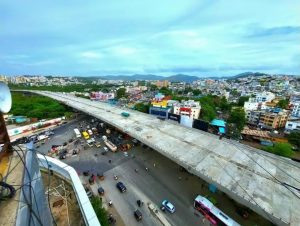
Over the last quarter century the city has transitioned into one of India’s fastest growing metropolitan regions. Between 1995 and 2026 Pune’s built up area expanded by over 330 percent among the highest in the country. This expansion was not cosmetic. It was structural driven not only by the rise of the IT sector and the city’s long standing manufacturing base but also by Pune’s deep rooted institutional strengths. Its role as a national education hub supported by universities research institutions and a continuous inflow of students created a steady talent pipeline. The presence of defence establishments and allied ecosystems added stability employment and long term resilience. Together with sustained infrastructure investment these forces reshaped Pune’s urban and economic trajectory.
Pune did not just grow outward. It recalibrated how it functions as a city.
Real Estate From Housing Supply to Urban Planning
In the early 2000s Pune’s real estate market was simple and largely end-user driven. Independent homes and low-rise buildings dominated. Pricing was modest. A two bedroom apartment could be bought for under ₹10 lakh. Developers built conservatively and buyers purchased primarily for self-use.
By 2026 that same two bedroom apartment is priced anywhere between ₹85 lakh and over ₹1.2 crore depending on location and product positioning. But price escalation alone does not explain the transformation.
The more important shift has been conceptual.
Pune moved from fragmented residential development to planned integrated townships. Projects such as Magarpatta City Amanora Park Town and Life Republic altered how the city thought about housing. This shift was reinforced by corridor led development across Pan Card Road High Street Balewadi and the Hinjewadi Blue Ridge belt where residential density evolved alongside offices retail and social infrastructure. Homes were no longer isolated assets. They became part of ecosystems that combined employment education healthcare retail and open spaces.
Real estate stopped being a static product. It became an urban solution.
A Skyline That Reflects Aspiration
Pune’s skyline has changed as visibly as its housing philosophy.
What was once a low rise city defined by bungalows and four storey apartments now features vertical residential towers integrated commercial districts and mixed-use developments. Taller buildings are not merely an architectural statement. They reflect land scarcity changing buyer aspirations and the need to optimise infrastructure usage.
Importantly Pune’s vertical growth has been selective. Height has followed employment hubs transit corridors and planned clusters rather than speculative sprawl. The skyline today mirrors the city’s transition from a low density town to a high output urban economy.
Regulation Changed Behaviour Not Just Compliance
RERA’s introduction in 2017 did not merely add regulation. It altered behaviour.
Transparency disclosure and timelines forced developers to confront execution realities earlier. Buyers became more analytical. Speculation reduced. Capital allocation improved.
The Pune buyer today is informed and sceptical by default. Decisions are made on approvals construction progress sales velocity and delivery credibility. Marketing narratives without execution no longer sustain demand.
This discipline has strengthened Pune’s real estate market rather than slowing it.
From a Regional Market to One of India’s Largest Homebuyer Cities
One of the most significant shifts over the last 25 years has been Pune’s emergence as one of the country’s largest homebuyer markets.
What was once a predominantly local city now sees sustained demand from professionals entrepreneurs and investors across India. Pune consistently ranks among the top cities for residential absorption driven by employment diversity relative affordability compared to Mumbai and Bengaluru and strong liveability metrics.
Housing demand in Pune is no longer cyclical. It is structural supported by education technology manufacturing and migration.
Geography Shifted the Centre of Gravity
Pune’s growth has been as much geographic as economic.
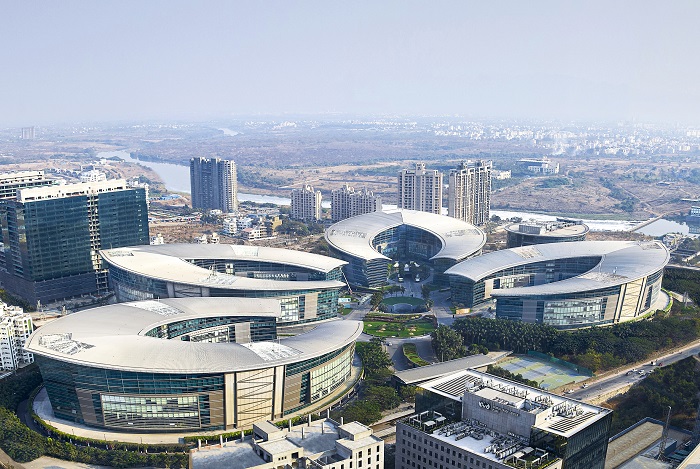
Hinjewadi and West Pune transformed from peripheral land into the city’s primary IT corridor anchored by the Rajiv Gandhi Infotech Park. This reshaped residential demand across Wakad Baner Balewadi and Tathawade.
East Pune followed a similar trajectory. Kharadi and Viman Nagar emerged as major residential and commercial zones driven by EON IT Park and airport proximity. Suburbs such as Wagholi Moshi Punawale and Ambegaon moved from fringe to mainstream.
Instead of forcing density into one core Pune created multiple centres. This decentralisation has been one of its more sensible urban decisions.
Infrastructure and the Mumbai Pune Missing Link
Infrastructure has consistently preceded real estate value in Pune.
The Mumbai Pune Expressway redefined regional connectivity in the early 2000s. More recently the Pune Metro has begun reshaping mobility patterns and property pricing along operational corridors.
The upcoming Mumbai Pune Missing Link is a structural inflection point. By sharply reducing travel time between West Pune and Navi Mumbai it positions the two regions as a twin economic corridor. Over time labour markets residential demand and commercial activity will increasingly overlap.
For Pune this strengthens West Pune’s strategic importance. Real estate will respond accordingly.
Covid Justo and What the Stress Test Revealed
My engagement with Pune’s real estate ecosystem deepened during the Covid period through my work at Justo.
Covid exposed the fragility of poorly structured real estate businesses. Demand stalled liquidity tightened and execution risk became visible overnight. But it also separated resilience from scale.
Working closely with developers during this period I saw a decisive shift particularly among smaller and mid sized developers. Many chose to professionalise instead of retreat. They focused on pricing realism sales discipline cash flow visibility and delivery timelines. Through Justo we worked alongside several of these developers helping structure go to market strategy bring pricing clarity improve channel efficiency and align sales velocity with cash flow realities. That support played a meaningful role in strengthening developer businesses during a period of stress.
Over the last five to six years several developers who once operated at modest scale have grown into credible well governed organisations by finishing projects correcting early and earning buyer trust. In many cases this growth was accelerated by execution led partnerships that converted sales from a fixed overhead into a predictable outcome driven function allowing developers to scale with greater confidence and control.
The Cost of Growth and the Road Ahead
Rapid expansion has consequences. Traffic congestion infrastructure strain and environmental degradation are now visible across several growth corridors. Rising housing costs have narrowed affordability for first time buyers.
The Pune of 2026 is no longer a quiet town. It is a high output metropolitan economy with a GDP exceeding ₹4 lakh crore.
The next chapter will not be about expanding faster. It will be about executing better through transit oriented development realistic pricing disciplined supply and sustainable planning.
Over the last 25 years Pune learned how to expand.
The next 25 years will test whether it can govern that expansion with intent.
That decision will shape the city far more than its skyline ever will.
(Pushpamitra Das is the Chairman & Managing Director, JUSTO RealFintech Ltd)