How Road Safety Trends are Changing Driving Habits in Indian Metros?

Road safety in Indian metropolitan areas is undergoing a visible transformation. Stricter laws, technology-led enforcement, and rising awareness are steadily reshaping the way people drive in cities. Motorists who once treated traffic rules casually are now more conscious of penalties, surveillance, and social expectations. At the same time, improvements in emergency response, insurance mechanisms, and safer vehicle designs are adding further layers of accountability.
Keep scrolling for a detailed overview of how road safety trends are shaping driving habits in Indian metro cities!
How are Current Road Safety Trends Changing Driving Habits?
The following are some current road safety trends that are changing driving habits:
1. Stricter Penalties Shaping Behaviour
The Motor Vehicles Amendment Act of 2019 brought in substantially higher fines for offences ranging from driving without a licence to drunk driving. For city commuters, this has changed the way they perceive risk on the road.
Offences that were earlier treated casually now carry financial consequences that are difficult to ignore. Additionally, the penalty for not carrying a valid vehicle insurance policy has increased significantly under the Motor Vehicles (Amendment) Act, 2019. Currently, it is ₹2,000 for a first-time offence and ₹4,000 for subsequent offences. Therefore, it is important to keep your car insurance up to date.
2. Need for Stronger Enforcement on the Ground
A persistent challenge remains the limited manpower in traffic policing. With barely a fraction of the required officers deployed in cities, the scope for comprehensive enforcement remains restricted.
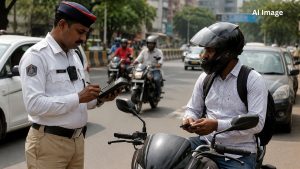
Nonetheless, the visible presence of police personnel at junctions or along busy corridors has a marked effect on compliance. This has sparked conversations in metros around the need for greater recruitment, better training, and a more sustained on-road presence to ensure long-term behavioural change.
3. Declining Space for Casual Violations
Drivers in Indian cities were once adept at exploiting gaps in enforcement, such as signal-jumping or riding without helmets in areas with little police presence. The use of surveillance cameras, automated challans, and targeted enforcement drives has reduced the scope for such opportunistic behaviour.
Although some drivers still attempt to bend rules, there is a growing awareness that violations are more likely to be noticed and punished.
4. Awareness and Social Pressure
Regular campaigns in schools, colleges, and workplaces are embedding safer driving habits at an early age. Peer pressure and social media campaigns have also helped normalise seat belt and helmet use, making safety a part of everyday urban driving culture.
Over time, these trends are expected to normalise safer practices, leading to a shift in urban driving culture from convenience-based behaviour to rule-based compliance.
5. Faster Emergency Response and Tech Integration
The assurance of rapid medical help through GPS-enabled ambulances and trauma centres has improved confidence in the system. At the same time, the spread of in-car telematics, driver assistance tools, and real-time alerts is encouraging more cautious and data-driven driving behaviour in metros.
Role of Insurance in Road Safety Trends and Changing Driving Habits
The following is the role of insurance in supporting safer driving:
1. Mandatory Motor Insurance Ensures Compliance
The Motor Vehicles Act, 1988, makes third-party insurance compulsory for all motor vehicle owners in India. This rule guarantees that:
- Victims of road accidents are financially safeguarded.
- Vehicle owners and drivers remain accountable while on the road.
- Uninsured or unregistered vehicles are kept off the streets.
By making insurance compulsory, the law not only encourages responsible ownership but also reinforces the concept of roadworthiness.
2. Bumper-to-Bumper Insurance Encouraging Comprehensive Repairs
In congested metropolitan areas, minor dents and scratches are common. Bumper-to-bumper insurance, also known as zero depreciation cover, ensures that vehicle owners are reimbursed for the full cost of repairs without deductions for depreciation. This encourages drivers to repair and maintain their vehicles promptly.
Such habits also enable owners to resolve several minor issues in their vehicles that could have escalated into major problems down the line, compromising on-road safety.
3. Risk-Based Premiums Reward Safer Driving
Insurance companies in India calculate premiums after assessing several risk factors, including driving history, type of vehicle, previous claims, and location. This structure encourages:
- Owners have to maintain their vehicles properly to avoid claims.
- Drivers are to adopt safer practices to secure a no-claim bonus (NCB).
- A reduction in high-risk behaviours such as speeding or drunk driving.
4. Accident Data Helps Shape Better Policies
The vast amount of data generated through claims provides valuable insights, including:
- The main causes of road accidents.
- High-risk areas where accidents occur frequently.
- Demographic trends linked to risky driving.
- Vehicle categories most involved in accidents.
This information is used by insurers, government agencies, and NGOs to design safer infrastructure, enforce traffic rules more effectively, and improve road safety initiatives.
5. Faster Claims Settlement Promotes Accountability
Previously, accident victims often faced lengthy delays before receiving compensation. Car insurance policies from modern-day insurers have streamlined this process, ensuring:
- Quicker settlement of claims, easing the burden on the courts.
- Timely medical support and financial relief for victims.
- Higher reporting of accidents and greater compliance with the law.
This efficiency builds public trust and promotes accountability on the roads.
6. Premium Discounts to Promote Safety Features
Comprehensive car insurance policies often provide benefits or discounts when vehicles are fitted with safety enhancements, such as:
- GPS-enabled anti-theft devices
- Anti-lock Braking Systems (ABS)
- Dash cameras
- Speed governors
These features help reduce the likelihood of theft, damage, and accidents. They also align with national safety measures, such as the requirement for ABS in two-wheelers, ensuring safe driving on public roads.
7. Telematics and Usage-Based Insurance Encourage Caution
With the growth of InsurTech, insurers now offer usage-based insurance plans. These use telematics to monitor driving patterns, including speed, braking, and time of use. The result is:
- Safer drivers receive lower premiums.
- Riskier drivers face higher charges.
This personalised approach rewards responsible driving habits and discourages reckless behaviour.
The changing road safety landscape in Indian metros is gradually fostering a culture of responsible driving. Legal reforms, insurance incentives, and digital enforcement are curbing reckless behaviour, while awareness campaigns and peer influence are normalising safer practices.
Although challenges remain, especially in terms of enforcement capacity, the direction is clear. Road safety trends are no longer abstract policies but active forces shaping everyday driving behaviour in India’s cities.