Hybrid Solar Inverter vs Regular Inverter: What is the Difference?
Mumbai, 19th September 2026: Solar power systems have become a necessary option for households and businesses looking to generate electricity and manage their energy consumption more efficiently. However, choosing the right inverter can be confusing, especially when comparing a regular inverter with a hybrid solar inverter.
Both options can help provide backup power, but they work differently and offer distinct advantages depending on the overall solar setup.
Understanding these differences can help users select an inverter that matches their energy requirements, available space, and expectations for backup power. This blog explains how a hybrid solar inverter differs from a regular inverter and what users should consider when choosing between the two.
What is a Regular Inverter?
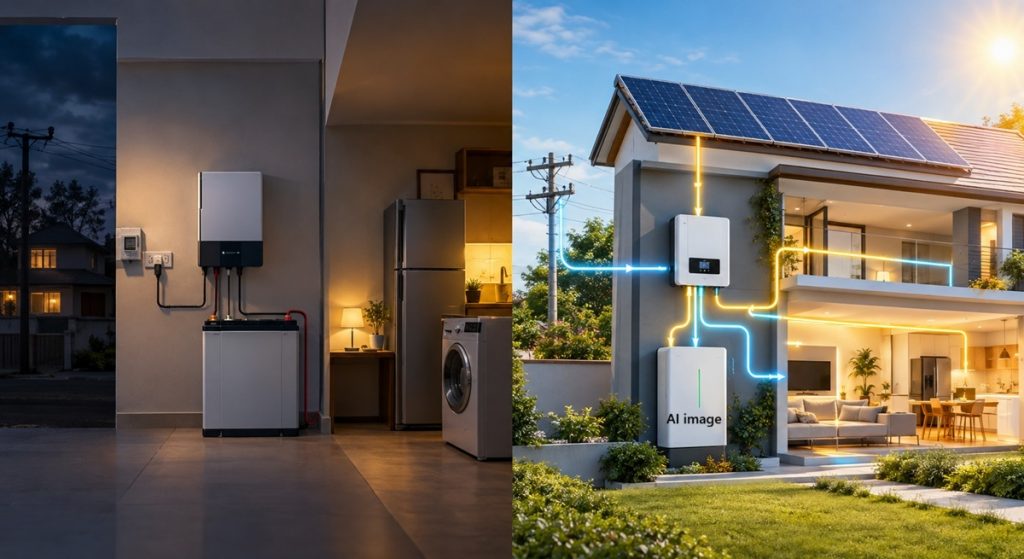
A regular inverter is primarily designed to convert DC in a battery into AC electricity that household appliances can use. When the main electricity supply fails, the inverter draws power from the connected battery to keep selected appliances running.
The battery is usually charged through the grid, although some systems can work alongside separate solar equipment. This means the solar generation, battery storage, and inverter may operate as separate components. On-grid inverters are designed to work with the electricity grid and typically convert solar power for use within a grid-connected system, while off-grid inverters can support independent power systems where there is no grid connection.
Regular inverters can be suitable for users who mainly need backup electricity during power cuts. However, households looking to make greater use of solar energy may need additional equipment to manage solar generation and battery storage.
What is a Hybrid Solar Inverter?
A hybrid solar inverter combines several functions within one system. It can manage electricity generated by solar panels, charge a connected battery, and supply power to appliances when required.
This arrangement can reduce the number of separate components required for a solar power system. Depending on the configuration, electricity can be drawn from solar panels, stored in the battery, or supplied by the grid.
The main advantage is greater flexibility in managing available energy. Solar electricity generated during the daytime can be utilised directly or stored for later use, helping users make better use of the electricity their panels produce.
Difference Between Hybrid Solar Inverter and Regular Inverter
The primary difference lies in how the two systems manage energy sources.
| Feature | Regular Inverter | Hybrid Solar Inverter |
| Primary Function | Provides backup power | Manages solar, battery, and grid power |
| Solar Integration | Usually requires separate equipment | Built into the system |
| Battery Management | Basic charging and discharging | Advanced charging and discharging management |
| Grid Integration | Mainly used as a backup source | Can coordinate grid and solar electricity |
| Solar Energy Utilisation | Limited without additional equipment | Designed for integrated solar use |
| System Expansion | Depends on the setup | Some models support parallel connection |
What Should You Consider Before Choosing an Inverter?
Choosing the right inverter involves more than checking its rated capacity. Users should consider their current electricity consumption, peak loads, solar panel capacity, battery requirements, and the type of electrical connection available at the property.
1. Assess Electricity Consumption
Consider daily electricity usage and peak loads to determine the appropriate inverter capacity. This ensures that the system can handle connected appliances without being consistently overloaded.
2. Check Solar Panel Capacity
The inverter should be compatible with the capacity of the connected solar array. Matching the inverter with the solar panel capacity can support efficient energy conversion and system performance.
3. Evaluate Battery Requirements
Battery requirements should be assessed based on the expected backup duration and connected load. The selected inverter should support the required battery configuration and capacity.
4. Check the Electrical Connection
The property’s electrical connection is another important consideration. A single-phase connection may require a different inverter configuration from a three-phase connection.
5. Match the Overall System Capacity
The hybrid solar inverter should be selected according to the solar array and connected loads rather than the battery size alone. This helps ensure that the inverter is appropriately sized for the overall energy system.
Choosing the Right Inverter for Your Solar Setup
The difference between a regular inverter and a hybrid solar inverter mainly comes down to energy management. A regular inverter primarily provides battery-backed electricity, while a hybrid system can coordinate solar generation, battery storage, and grid power.
Solar solution providers like Eastman Auto & Power Limited can offer systems with features designed to support efficient solar energy management. For users planning a complete solar energy setup, features such as Double MPPT, high PV input voltage, fast battery charging and discharging, parallel connectivity, and AC and DC-side surge protection can make the system more versatile.
The right choice ultimately depends on the property’s electricity requirements, solar capacity, and battery configuration.