Kolhapur Foundries Pilot Decarbonisation Model; Aims to Become India’s First Green MSME Cluster
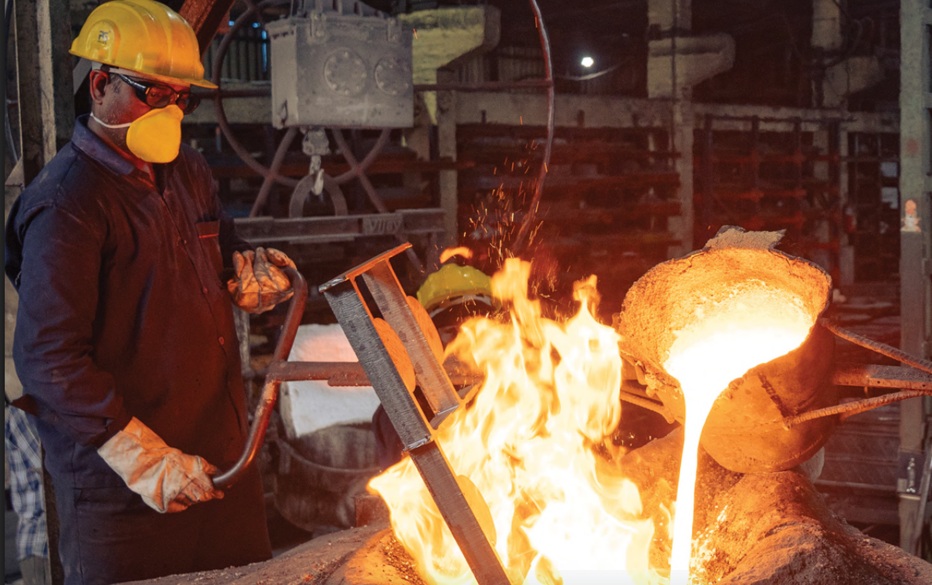
Kolhapur, 21st September 2025: The Kolhapur Foundry Cluster, one of India’s largest hubs for automotive and engineering castings, has commenced taking crucial steps towards sustainability with the launch of a first-of-its-kind collaborative decarbonisation model.
The initiative seeks to transform over 300 foundry units, aiming to be one of India’s leading green MSME hubs while enhancing their competitiveness in domestic and international markets.
A report titled “Forging a greener future together: Decarbonising Kolhapur’s foundries one step at a time,” presented on Friday, documented a first-of-its-kind roadmap for transitioning MSME foundries towards low-carbon growth. It draws on detailed assessments conducted in a pilot study (across three units) within the Kolhapur Foundry Cluster to identify practical opportunities for improving energy efficiency, adopting renewable energy, and reducing greenhouse gas emissions.
The report by Asar Social Impact Advisors (Asar) was launched by Amol Yedge, IAS, District Collector, Kolhapur, during a convening at Kolhapur on Friday. Asar, along with Decarbonisation India Alliance (DIA), Indian Institute of Management (IIM) Nagpur, Institute of Indian Foundrymen (IIF) – Kolhapur Chapter, and Kolhapur Foundry and Engineering Cluster’s Centre of Excellence (CoEK), convened a diverse group of stakeholders, including decision-makers, financers, industry experts, and solution providers, to deliberate on a decarbonisation pathway for Kolhapur’s foundries.
Kolhapur produces nearly 600,000 tonnes of castings annually, serving key sectors including automotive, agriculture, and heavy machinery. With almost 30 percent of this production exported to Europe, Southeast Asia, and the Middle East, the cluster’s ability to meet evolving sustainability norms has become increasingly critical. Global buyers are prioritising low-carbon supply chains, and with the European Union’s Carbon Border Adjustment Mechanism (CBAM) already in effect, reducing emissions has become essential for maintaining market access and unlocking new opportunities abroad.
“Long-term planning must factor in climate impacts, which are already affecting markets. Even small measures can lead to significant achievements. The Government of Maharashtra is taking steps to scale renewable energy projects, with solar expected to play a major role. Foundries are central to the vibrant economy of Kolhapur and the state, and must take the lead in decarbonisation to become an exemplar cluster. I appeal to all foundries to participate and follow the lead of the three champion foundries,” said Amol Yedge, IAS, DC Kolhapur.
The report consolidates the evidence generated through the pilot study, showcases the potential of targeted energy conservation measures, and outlines a replicable decarbonisation model designed to strengthen both business competitiveness and environmental performance. The study also included an assessment of CBAM readiness across three units, while strengthening future preparedness through training sessions and simplifying data collection tools.
- Shyam Sunder, Director, Bureau of Energy Efficiency (BEE), Ministry of Power, Government of India, spoke about how the Kolhapur foundry cluster could be part of the ADEETIE (Assistance in Deploying Energy Efficient Technologies in Industries & Establishments) scheme. Launched by the BEE, the scheme provides financial assistance to accelerate the adoption of proven energy-efficient technologies across industrial clusters.“The ADEETIE scheme is an important initiative and will be expanded to more clusters. Kolhapur has the potential to be part of this scheme, and I suggest submitting a report on the opportunities for decarbonisation in the foundry cluster. The scheme’s features are designed to support such transitions and can provide a framework for moving forward,” he said.
As part of this report, a pilot study was undertaken across three model foundries — Ramkrishna Foundry Pvt Ltd, Mahalaxmi Ferro Cast Pvt Ltd, and Kohinoor Metallics — to evaluate feasible pathways for decarbonisation at the unit level. The study identified 11 targeted energy conservation measures (ECMs) with significant potential to reduce energy consumption and emissions. Several measures, including optimisation of energy management, require no upfront investment and can deliver equipment-specific energy savings of 9 to 45%, resulting in immediate improvements to operational margins. In addition, technology upgrades, including high-efficiency motors, advanced air compressors, and digital monitoring systems, were found to provide attractive returns on investment, with most achieving payback periods of less than two years.
“These findings form the technical foundation of the decarbonisation model presented in the report and demonstrate how MSME foundries can transition to cleaner operations through practical, step-by-step interventions,” said Vishwajeet Poojary, Lead (State Climate Action), Asar, and one of the authors of the report.
The study, which endorses a collective approach for decarbonisation, emphasises a simple three-step model developed through the pilot. The first step involved detailed energy and carbon audits to establish baselines and identify areas of improvement. The second focused on designing customised roadmaps for each participating foundry, outlining interventions that are both techno-economically feasible and operationally practical. The third provided technical implementation support to ensure that foundries could adopt the recommended measures effectively and at scale.
With this initiative, the Kolhapur cluster further advances its efforts in becoming a “Green Hub,” taking decisive steps toward zero-carbon emissions. Recently, Maharashtra’s first Energy Management Centre (EMC) was launched in Kolhapur by the CoEK, enabling around 400 foundry units in the region to cut energy use and reduce production costs by nearly 30%. These units, which currently generate between 250 and 4000 tonnes of output each month, collectively contribute about 10 percent of the country’s total foundry production. By adopting this collaborative model, showcased during Friday’s event, Kolhapur’s foundries are positioning themselves to meet global compliance standards while strengthening their standing in international supply chains.
Dr. Suhas Buddhe, Director, Centre of Excellence for Corporate Governance, CSR & Sustainability (CGCS), IIM Nagpur, said: “We hope to take this initiative forward, and there is a need for a platform that brings together experts. Secondary steel markets are going to be impacted by CBAM, and various discussions are already underway. MSMEs have opportunities for technology upgradation, skills, and innovation along with prototyping. As technology evolves, it will impact all sectors such as steel, cement, and others. Our aim is to work with all stakeholders and make Kolhapur a world-class example of a pioneering cluster.”
Manoj Dingra, Deputy General Manager, Small Industries Development Bank of India (SIDBI), Kolhapur, said: “The MSME sector needs to be better aligned with government schemes, and SIDBI has a vital role to play in driving decarbonisation through energy efficiency measures. Financing is key, and SIDBI is uniquely positioned to support MSMEs alone. Over the years, we have evolved as a financing institution with a range of schemes, from supporting energy audits to facilitating the purchase of energy-efficient equipment. For MSMEs, every unit of energy saved is wealth saved.”
Satish Kadukar, Vice Chairman, IIF Kolhapur, said: “Kolhapur is a major foundry region, and this has also meant rising emissions that impact the local environment and contribute to climate change. As the world moves towards energy transition, overseas clients are increasingly demanding stronger ESG practices and greener products, which makes it important for us to align with CBAM. We welcome the role that Asar is playing in driving decarbonisation efforts in the Kolhapur foundry cluster and the potential for further initiatives in energy efficiency and renewable energy adoption.”
Read the full report here: Forging a greener future together: Decarbonising Kolhapur’s foundries one step at a time