Nagaland Travel Guide 2026: Headhunter Villages, Dzükou Valley, Hornbill Festival and More
By Sneha Deb
Kohima, 4th June 2026: Cloaked in mist, emerald hills, and centuries-old traditions, Nagaland remains one of India’s most fascinating yet least-explored destinations. Perched in the far northeastern corner of the country, this mountainous state is a land where ancient warrior cultures continue to thrive, tribal identities remain fiercely preserved, and breathtaking landscapes unfold around every bend in the road.
From the historic battlefields of Kohima to the headhunter villages along the Myanmar border, from the flower-carpeted meadows of Dzükou Valley to the spectacular migration of millions of Amur Falcons, Nagaland offers an experience unlike anywhere else in India.
This is not merely a destination to visit—it is a place to immerse yourself in with all five senses.
Kohima
Capital • History • Markets
The capital city of Nagaland sits amid rolling hills and carries both historical significance and contemporary charm. Most visitors begin their journey here, where reminders of the past coexist with vibrant local life.
The city’s most poignant landmark is the Commonwealth War Cemetery, built in memory of soldiers who fought during the Battle of Kohima, one of the most decisive engagements of World War II. Beyond its wartime legacy, Kohima is a city of colourful markets, warm hospitality, and deep cultural pride.
Just outside the city lies Kisama Heritage Village, where traditional architecture from all 16 recognised Naga tribes has been carefully preserved. The bustling Bara Bazaar, one of Asia’s largest open-air markets, offers a fascinating glimpse into everyday Naga life, while the State Museum houses priceless collections of tribal jewellery, textiles, weaponry, and ceremonial artefacts.
The striking Cathedral of Reconciliation, with its unique architecture and peaceful surroundings, is another must-visit landmark.
Must Do in Kohima
- Spend a quiet morning at the Commonwealth War Cemetery.
- Explore Bara Bazaar and sample smoked pork, local honey, and indigenous produce.
- Walk through Bara Basti, one of the oldest villages in the region.
- Visit the State Museum for an introduction to Naga culture.
- Attend a Sunday church service and experience Nagaland’s extraordinary choral traditions.
Dzükou Valley
Trekking • Camping • Wildflowers
Often called the “Valley of Flowers of the Northeast,” Dzükou Valley is one of India’s most stunning high-altitude landscapes.
Situated at an altitude of 2,452 metres, the valley unfolds as a vast expanse of rolling green meadows, winding streams, and forested ridges. During the monsoon months, the landscape transforms into a floral paradise as the rare Dzükou Lily blooms across the valley floor.
The trek typically takes four to five hours from either Viswema or Zakhama village. Most travellers choose to spend the night in basic shelters or camps, allowing them to witness the valley’s spectacular sunrise.
Must Do at Dzükou
- Camp overnight beneath a star-filled sky.
- Complete the valley circuit trek.
- Photograph the blooming lily fields during July and August.
- Ascend via Viswema and descend through Zakhama for varied scenery.
Entry permits are required at the trailhead. The Manipur route requires separate permissions.
Mon & Longwa Village
Konyak Tribe • Headhunter Heritage • Myanmar Border
For travellers seeking one of India’s most extraordinary cultural experiences, Mon district is unmatched.
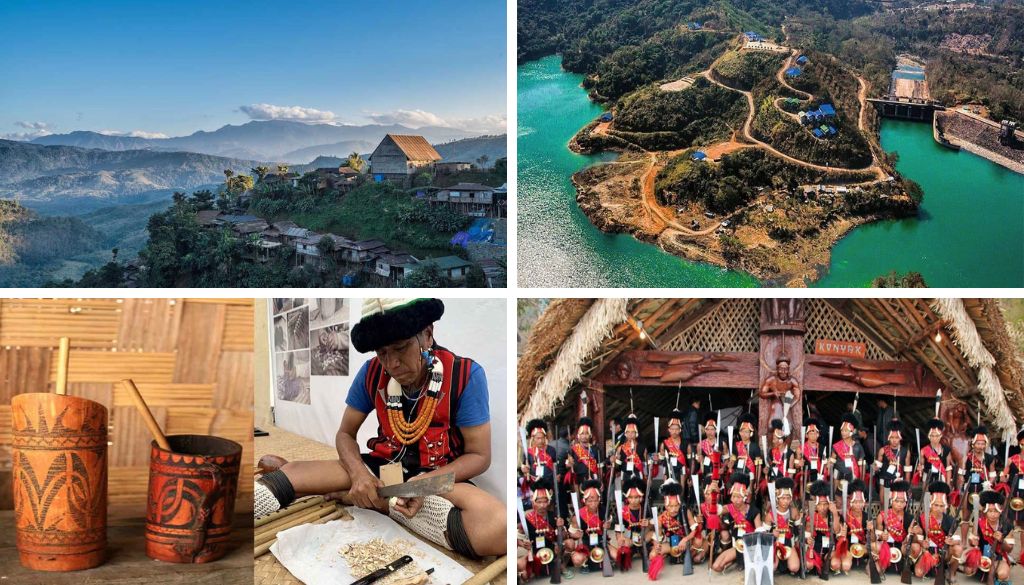
This is the homeland of the Konyak tribe, once feared across the region for its headhunting traditions. Today, elderly Konyak men still bear the distinctive facial tattoos that symbolised their warrior status.
The highlight is Longwa Village, which literally straddles the India-Myanmar border. The residence of the village chief, known as the Angh, is famously divided between two countries. Visitors often joke that the Angh sleeps in India and has breakfast in Myanmar.
The journey to Mon is long and winding, but the reward is a rare opportunity to witness a living culture that has remained remarkably intact.
Must Do in Mon
- Meet tattooed Konyak elders and hear their stories.
- Request an audience with the Angh of Longwa.
- Explore Shangnyu village for panoramic views and a quieter experience.
- Hire a local guide for cultural interpretation and introductions.
- If invited, observe a traditional village council meeting.
Important Note
Always seek permission before photographing elders. Requests should ideally be made through a local guide.
Khonoma
Eco-Village • Conservation • Heritage
Khonoma is often celebrated as Asia’s first green village and stands as one of India’s most inspiring conservation success stories.
Once a community dependent on hunting, Khonoma transformed itself through community-led conservation initiatives. Hunting was banned in 1998, and the Khonoma Nature Conservation and Tragopan Sanctuary was established to protect wildlife and forest ecosystems.
Today, visitors can explore ancient terraced fields, learn about Angami warrior history, and witness how conservation and tradition can coexist.
Must Do at Khonoma
- Trek through the protected conservation sanctuary.
- Stay in a village homestay.
- Visit during the Amur Falcon migration season.
- Learn about the community’s remarkable conservation journey.
- Purchase handwoven Angami shawls directly from local artisans.
Dimapur
Gateway • Commerce • Ancient Ruins
As Nagaland’s only major city located in the plains, Dimapur feels markedly different from the state’s hill towns.
It serves as Nagaland’s primary transportation hub, housing both the state’s busiest airport and its only railway station. Most travellers begin or end their Nagaland journey here.
The city’s most intriguing attraction is the Kachari Ruins, a collection of mysterious stone monoliths believed to date back centuries.
Must Do in Dimapur
- Visit the Kachari Ruins early in the morning.
- Explore Hong Kong Market for handicrafts and textiles.
- Extend permits if required before heading into remote districts.
- Sample authentic Naga cuisine, particularly pork cooked with bamboo shoots.
Mokokchung
Ao Tribe • Literature • Music • Tradition
Often regarded as the cultural capital of the Ao Naga community, Mokokchung is one of Nagaland’s most charming hill towns.
Perched dramatically on a ridge, the town serves as a gateway to picturesque villages such as Longkhum and Ungma, both of which preserve traditional architecture and customs.
The Ao people are renowned for their oral traditions, literature, music, and hospitality.
Must Do in Mokokchung
- Watch sunrise from Longkhum village.
- Explore Ungma, one of the oldest Ao settlements.
- Attend the Moatsu Festival in May.
- Purchase traditional Ao shawls.
- Learn about the fascinating Ao creation legend of Lungterok.
Doyang Reservoir
Birdwatching • Amur Falcons
Every year, one of Asia’s greatest wildlife spectacles unfolds at Doyang Reservoir.
Between October and November, millions of Amur Falcons arrive here during their epic migration from Siberia to southern Africa. As dusk approaches, the sky fills with countless birds returning to roost, creating a breathtaking natural phenomenon.
The reservoir itself remains scenic year-round, with opportunities for boating, fishing, and village homestays.
Must Do at Doyang
- Arrive before sunset to witness the falcon roosting spectacle.
- Carry binoculars and a telephoto lens.
- Stay with conservation-focused families in Pangti village.
- Combine your visit with Wokha town and Mount Tiyi.
Kisama Heritage Village
Living Museum • Hornbill Festival Venue
Located around 12 kilometres from Kohima, Kisama Heritage Village serves as the cultural showcase of Nagaland.
Traditional morungs, tribal houses, museums, and craft centres representing all 16 Naga tribes stand within a single complex, allowing visitors to explore the state’s remarkable diversity in one location.
Must Do at Kisama
- Visit every tribal morung.
- Purchase textiles directly from local artisans.
- Sample traditional dishes from multiple tribes.
- Attend the evening cultural and music performances.
The Hornbill Festival
Known as the “Festival of Festivals,” the Hornbill Festival is the grand celebration of Nagaland’s tribal heritage.
Held annually from December 1 to 10 at Kisama Heritage Village, the festival brings together all 16 Naga tribes for ten days of traditional dances, indigenous sports, music, crafts, food, and cultural performances.
The event also hosts an internationally renowned rock music festival, making it one of India’s most unique cultural gatherings.
When: December 1–10 every year
Where: Kisama Heritage Village, near Kohima
Essential Travel Tips
Inner Line Permit (ILP)
Indian citizens require an Inner Line Permit to enter Nagaland. It can be obtained online or at designated entry points. Foreign nationals generally require a Protected Area Permit.
Getting There
Dimapur Airport connects Nagaland with major Indian cities including Delhi, Kolkata, and Guwahati. Kohima is approximately 75 kilometres from Dimapur and can be reached by road in three to four hours.
Getting Around
Mountain roads can be steep and winding. Shared taxis are common, but hiring a local driver is highly recommended, particularly when visiting remote districts such as Mon and Tuensang.
Respecting Local Culture
Always seek permission before photographing people, ceremonies, or private homes. Remove footwear when required and respect local customs. Nagas are known for their hospitality and appreciate genuine cultural curiosity.
Food
Naga cuisine is bold, smoky, and unforgettable. Signature dishes include smoked pork with fermented bamboo shoots, dried fish preparations, and the famously fiery Naga chilli, among the hottest in the world.
Connectivity
Mobile connectivity can be unreliable in remote districts. Download offline maps before travelling. Airtel and BSNL generally provide the widest coverage across the hills, while Dimapur and Kohima enjoy relatively stable internet connectivity.
Nagaland is a destination unlike any other in India. It is a land of warriors and storytellers, mountains and music, traditions and transformation. Whether you come for the landscapes, the festivals, the wildlife, or the cultures that have endured for centuries, you will leave with something far more valuable than photographs—a deeper understanding of one of India’s most remarkable and resilient societies.