Nashik: Simhastha Health Plan Takes Medical Care Closer to Crowds, 136 Temporary Facilities Planned
Nashik, 23rd September 2026: With large crowds expected to converge on Nashik and Trimbakeshwar during the Simhastha Maha Kumbh Mela, the health preparedness plan focuses on taking medical care closer to devotees, with 136 temporary medical facilities, 190 ambulances and around 3,600 additional medical and paramedical personnel planned across the Kumbh area.
Administrative approval has been granted to the health preparedness plans of the Nashik Municipal Corporation Health Department, District Hospital Nashik, Zilla Parishad Health Department and Regional Referral Hospital through the Nashik-Trimbakeshwar Kumbh Mela Authority (NTKMA).
The four plans, together estimated at around Rs 260 crore, cover temporary hospitals and clinics, ambulances, additional manpower, ICU capacity, medicines, medical equipment, disease surveillance and digital health monitoring.
“The objective is to ensure that devotees can access medical care close to where they are, that patients requiring higher-level treatment can be moved quickly, and that the health system has adequate capacity to handle the additional patient load during the peak period,” said Shekhar Singh, Commissioner, NTKMA.
Medical facilities planned around crowd zones
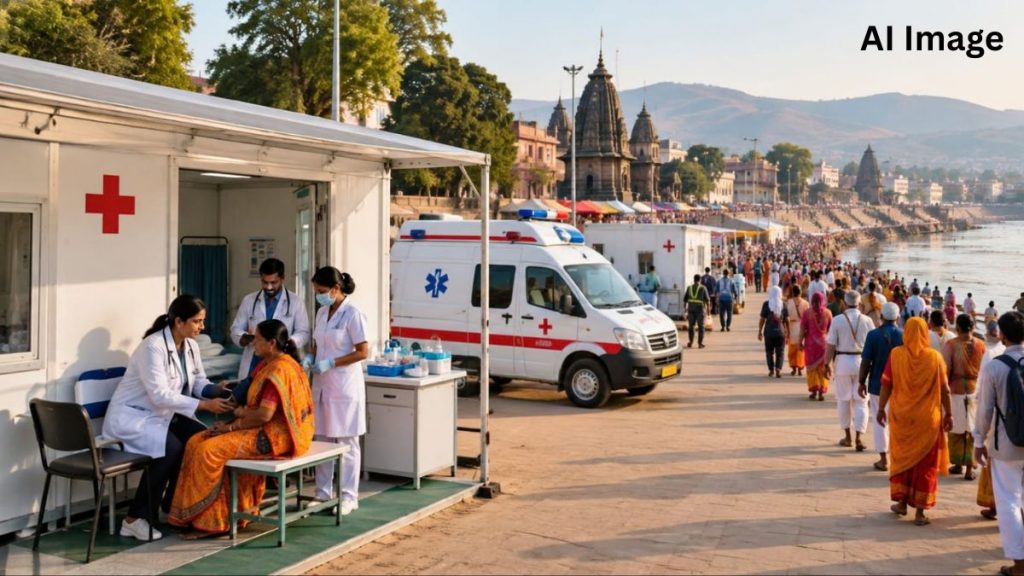
The 136 temporary facilities will be established at locations expected to witness large gatherings, including Sadhugram, parking areas, ghats, holding and staging areas and key routes.
The network will include temporary hospitals, ICUs and clinics. A 10-bed temporary hospital is planned at Nandur Sadhugram, along with other temporary hospitals and medical facilities in Sadhugram and parking areas.
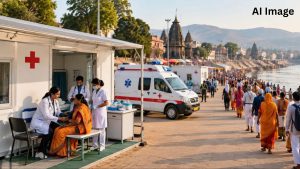
The facilities will be housed in porta cabins equipped with medical services and basic utilities. They are intended to provide primary and immediate medical care close to the point of need, while patients requiring specialised treatment can be shifted to larger hospitals.
190 ambulances for peak pilgrimage days
Patient transportation is another key component of the plan. As many as 190 ambulances will be deployed during the Parvani period, comprising Advanced Life Support (ALS) and Basic Life Support (BLS) vehicles.
The ambulances will be stationed at hospitals, temporary medical facilities, ghats, Sadhugram, parking areas, holding and staging zones, key routes and other strategic locations.
The fleet will include ambulances procured by the health agencies as well as vehicles hired specifically for the Kumbh period. Ambulances purchased as part of the preparedness exercise will continue to serve the public health system after the event.
Around 3,600 additional medical personnel
The expanded medical network will be supported by around 3,600 additional medical and paramedical personnel.
The manpower pool will include specialist medical officers, MBBS and BAMS doctors, nurses, auxiliary nurse midwives, pharmacists, medical technicians and support staff.
The additional personnel will operate temporary facilities and supplement existing hospitals and health services. Training will be conducted ahead of Simhastha, with a focus on managing large patient loads, emergency medical care and coordination between facilities.
Overall hospital capacity to rise to 1,945 beds
The preparedness plan also aims to increase the treatment capacity available during the Kumbh.
The existing capacity of 1,305 beds is planned to increase by 640 beds to 1,945 beds, including 185 ICU beds.
The expanded capacity is intended to accommodate the additional patient load during the peak pilgrimage period while allowing existing hospitals to continue providing routine healthcare services.
Four NMC hospitals to get additional ICU beds
Existing hospitals will also be strengthened as part of the preparedness measures.
Four major Nashik Municipal Corporation hospitals — Hinduhruday Samrat Balasaheb Thackeray Hospital, Dr Zakir Husain Hospital, Indira Gandhi Hospital and Arogyashala Hospital — are planned to receive 73 additional ICU beds.
Their combined ICU capacity is proposed to increase from 17 to 90 beds, while their overall bed capacity is planned to rise from 350 to 550.
Planning and coordination for additional manpower and deployment of medical facilities is being carried out by the health agencies in coordination with Additional Kumbh Mela Commissioner Pramod Pawar and other officials.
Digital disease surveillance system
The health plan also includes a digital surveillance system to track illnesses reported from different medical facilities and monitor them by disease and location.
The system is expected to help health authorities identify emerging health trends and respond to them in a timely manner.
GPS-based ambulance tracking, digital registration at health facilities and emergency communication systems are also part of the preparedness framework.
Portable medical units for on-site care
Three portable emergency medical units are also proposed as part of the arrangements.
These units can be moved and deployed at locations where additional medical support is required, enabling immediate medical care to be provided closer to large crowds.