‘Officers Are Public Servants’: CM Fadnavis Urges People-Centric Revenue Reforms
Reported by Mubarak Ansari
Pune, 5th April 2025: Maharashtra Chief Minister Devendra Fadnavis on Saturday announced that reformed procedures for the state’s Revenue Department will be implemented from August 15, 2025, following the recommendations of newly constituted study groups. These reforms aim to improve transparency, simplify procedures, and enhance citizen services across the state’s administrative machinery.
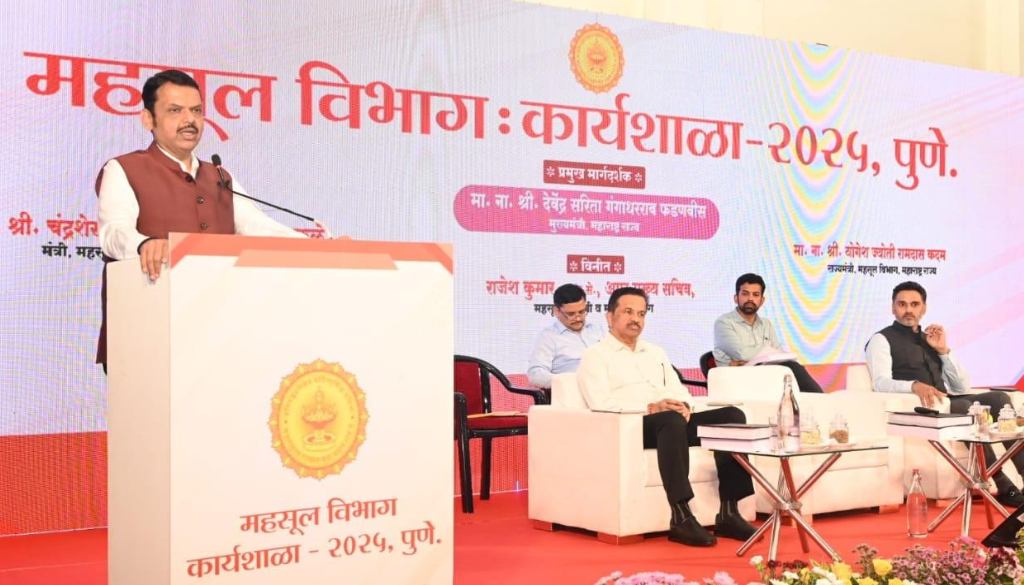
Speaking at the Revenue Divisional Officers’ Workshop organized at Hotel Orchid in Pune, the Chief Minister emphasized that the Revenue Department is the face of the government, being the most directly connected to citizens. “Efficiency, transparency, and accountability in this department define the public’s perception of the entire government,” Fadnavis said.
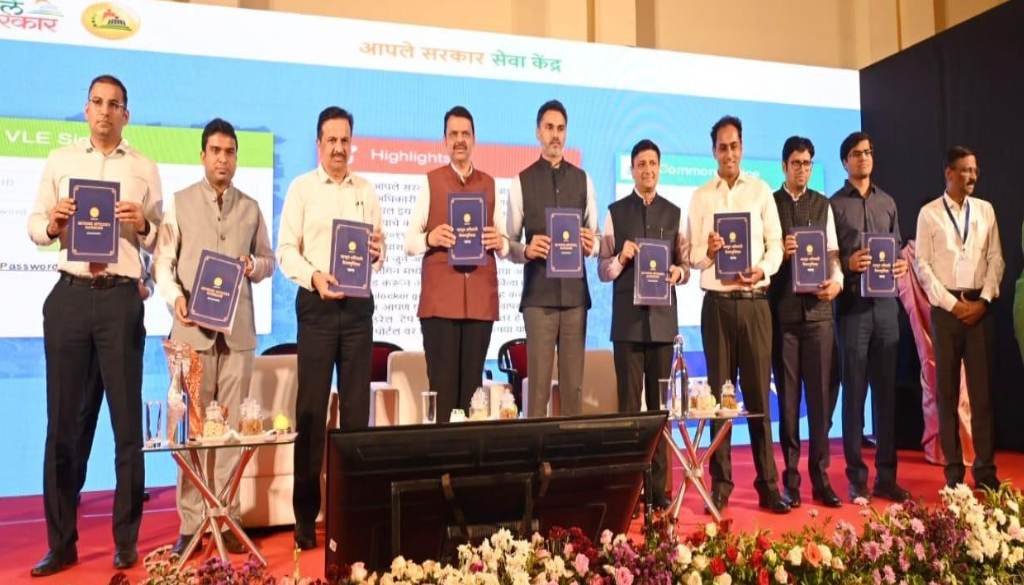
The two-day workshop was held under the department’s ongoing 100-day action plan, with senior officials including Minister of State for Revenue Yogesh Kadam, Additional Chief Secretary Rajesh Kumar, and Divisional Commissioners from all six divisions in attendance.
CM Fadnavis announced the formation of six study groups under the leadership of the state’s six Divisional Commissioners. These groups will submit their reports by June 30, focusing on key areas such as:
Ease of Living: Studying citizen grievances and suggesting reforms in revenue laws (led by Pune Division).
Performance Metrics: Developing KPIs to assess officer performance (Amravati Division).
Effective Committees: Streamlining District Collector-led committees (Chhatrapati Sambhajinagar Division).
Best Practices: Identifying and standardizing successful initiatives (Nagpur Division).
District Planning: Enhancing the efficiency of planning committees (Konkan Division).
Capacity Building: Proposing recruitment reforms and institutional strengthening (Nashik Division).
The Chief Minister said these recommendations would be reviewed and a digitized, uniform, and automated revenue process will be rolled out across Maharashtra from August 15.
AI, Satellites, and Citizen-Centric Digital Push
Fadnavis praised the department for leveraging both human intelligence and artificial intelligence to create smart dashboards, websites, and other digital tools. He directed that all Right to Information (RTI) data frequently requested by citizens be proactively disclosed on the updated website within the next four to six months.
“In the coming years, digitization must simplify not just the business environment but also improve the daily experience of every citizen,” he added.
Revenue officers were urged to conduct field visits twice a week to gain direct insight into citizen issues and to ensure accountability at the ground level.
Land Reforms, Solar Goals, and Investment Facilitation
Fadnavis highlighted the progress under the Kusum Yojana, under which solar agriculture pumps generating 16,000 MW are being set up on government land, largely made possible by improved land availability through tech-based mapping.
He added that Maharashtra had submitted a Rs 4,000 crore proposal to the Centre under the scheme and emphasized that land acquisition processes must become faster, transparent, and accurate using drones, satellite imagery, and the PM Gati Shakti portal.
To promote ease of doing business, a “relationship manager-like” coordination officer will be appointed in each district collector’s office to monitor and support the implementation of industrial MoUs.
Clean Offices, Smart Services, and Capacity Building
The 100-day program covers 12,436 government offices across the state, with visible changes already underway in over 11,000 of them, including those in Pune (1,984 offices) and Konkan (2,427 offices).
From clean toilets and drinking water facilities to modern waiting areas and notice boards, the emphasis is on making citizens feel welcomed. Offices are also being instructed to declassify outdated records, dispose of old furniture and vehicles, and ensure functional grievance redressal systems.
Following the conclusion of the 100-day plan on May 1, a three-dimensional evaluation will be conducted by the Quality Council of India, and top-performing officials will be felicitated.
Public Engagement and Awareness
The Chief Minister also proposed a dedicated digital channel by the Revenue Department to educate citizens on land-related issues like 7/12 extracts, alteration processes, and others through short videos and explainers.
He also suggested organizing a hackathon to crowdsource innovative tech solutions from the public and assured that officers working in good faith would always be supported. “However, there will be zero tolerance for deliberate wrongdoing,” he warned.
महसूलविषयक सुधारित कार्यपद्धतींची अंमलबजावणी 15 ऑगस्टपासून- मुख्यमंत्री देवेंद्र फडणवीस
Satellite-Based Crop Inspections, Solar-Powered Offices Ahead
Additional Chief Secretary Rajesh Kumar revealed that the department is working on conducting crop inspections entirely via satellite imagery, and that construction of over 4,500 Talathi offices is underway. The Revenue Officers’ Rule Book has also been revamped using AI and will be updated regularly.
As per Central Government directives, all revenue offices in Maharashtra will be solar-powered by December 2025, using funds from the District Planning Committee or department-specific budgets.
Fadnavis concluded by urging the identification and development of at least two tourist spots in every district to boost local tourism. “Those who excel in these initiatives will be recognized and honored,” he said.